

Coating Service Overview
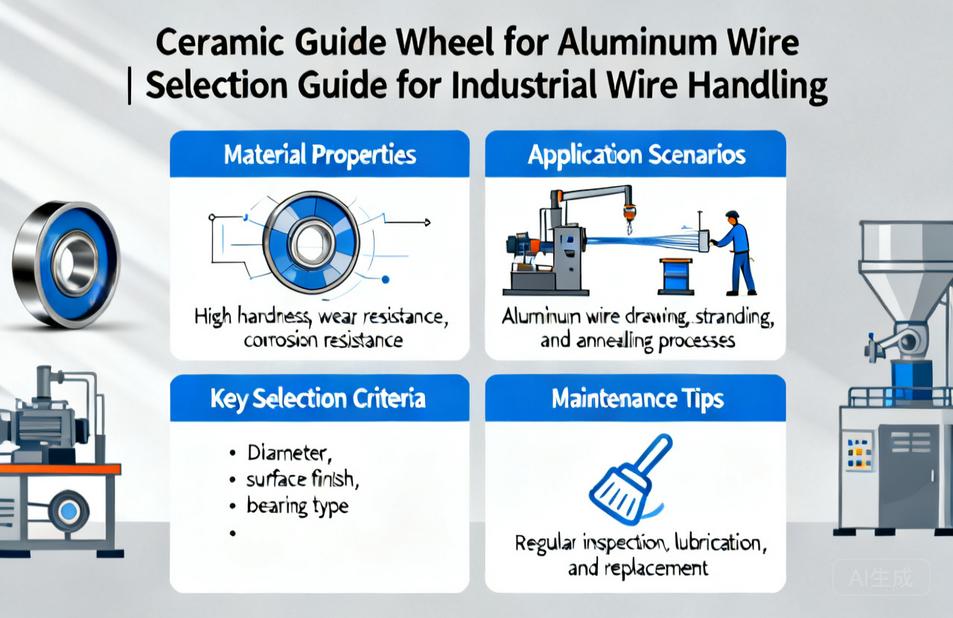
A ceramic guide wheel for aluminum wire is a precision wire-guiding component used to control the path, tension, and alignment of aluminum conductor as it moves through drawing, stranding, bunching, winding, and coating equipment. Unlike metal pulleys, a ceramic guide wheel uses a hard, low-friction ceramic contact surface that reduces abrasion, prevents surface scratching, and helps maintain consistent wire quality in cable manufacturing and wire processing operations.
What a Ceramic Guide Wheel Does in Aluminum Wire Processing
Aluminum wire is softer and more prone to surface damage than many other conductor materials. When it passes over a steel or aluminum roller, small particles and friction can cause scratches, galling, and oxide buildup. A ceramic guide wheel provides a smooth contact surface that allows the wire to travel with minimal resistance. The ceramic ring also resists wear from continuous contact, which helps maintain a stable wire path over long production runs.
These guide wheels are commonly mounted on wire drawing machines, bunching machines, stranding lines, coil winding equipment, extrusion lines, and rewinding stations. They may be used as a single guide point or as part of a multi-wheel tension control and wire routing assembly.
Key Features Buyers Look For
When evaluating ceramic guide wheels for aluminum wire, purchasing teams typically focus on features that affect wire quality, machine uptime, and replacement frequency.
- Low friction surface: reduces drag on soft aluminum wire and helps avoid tension fluctuation.
- Wear resistance: ceramic contact surfaces resist abrasion better than many metal alternatives in continuous wire contact.
- Smooth groove profile: a properly shaped groove supports the wire without pinching or flattening it.
- Chemical stability: ceramic materials generally tolerate lubricants, coolants, and cleaning agents used in wire production.
- Balanced rotation: a well-balanced wheel and bearing assembly supports stable wire travel, especially at higher line speeds.
- Replaceable ceramic ring: some designs allow the ceramic contact ring to be replaced without discarding the entire wheel assembly.
Materials and Construction
The ceramic component is often made from alumina or zirconia-based technical ceramics. These materials are chosen for hardness, dimensional stability, and resistance to wear. The wheel body may be made from aluminum alloy, steel, or engineering plastic, depending on the load, speed, and mounting requirements. Bearings can be shielded or sealed to suit dusty or lubricated environments.
Because aluminum wire is sensitive to surface defects, the ceramic ring should be free from chips, sharp edges, and surface porosity. The groove radius and surface finish need to match the wire diameter and line speed. A supplier or manufacturer with experience in wire handling components can advise on the appropriate ceramic grade, groove profile, and bearing configuration.
Typical Industrial Applications
Ceramic guide wheels for aluminum wire appear in a range of industrial applications:
- Cable and wire manufacturing: guiding aluminum conductor through drawing, annealing, bunching, and stranding.
- Transformer and motor winding: routing aluminum wire in coil winding equipment where surface damage must be minimized.
- Welding wire production: maintaining wire alignment in feeding and spooling systems.
- Metal wire coating and plating: guiding wire through pretreatment, coating, and drying stages.
- Rewinding and spooling: controlling wire path and tension during transfer between spools.
In each application, the guide wheel works together with other components such as ceramic eyelets, guide rollers, tension pulleys, and wire straighteners. Paying attention to the entire wire path, not just one wheel, usually leads to better results.
How to Choose the Right Guide Wheel
Selecting a ceramic guide wheel for aluminum wire is not only a matter of matching a part number. Buyers should consider several practical factors.
Wire diameter and groove size
The groove should support the wire without excessive side clearance. Too wide a groove can allow the wire to wander; too narrow a groove can pinch or deform the wire. The wire diameter range and expected line speed are basic inputs for guide wheel selection.
Load and speed
Higher line speeds and tension loads place greater demands on bearing quality, wheel balance, and mounting precision. A wheel that performs well at low speed may generate vibration or heat in a high-speed drawing line.
Environmental conditions
Lubricants, coolants, dust, and temperature can affect bearing life and ceramic performance. In dusty or wet environments, sealed bearings and corrosion-resistant body materials may be preferable.
Mounting and replacement
Check shaft diameter, mounting method, and available space. A design that allows quick replacement of the ceramic ring or bearing can reduce maintenance downtime.
Customization and OEM Options
Many wire processing lines use non-standard guide wheel dimensions or specific groove profiles. A manufacturer or supplier that offers OEM and custom production can often adjust outer diameter, bore size, groove radius, ceramic material, bearing type, and mounting configuration. Custom ceramic guide wheels can also be produced for specific aluminum wire sizes or machine models.
When requesting a custom guide wheel, buyers should provide drawings, dimensions, wire diameter, line speed, load conditions, and any special environmental requirements. Clear technical communication at the quotation stage helps avoid fitment problems later.
Buying Considerations for Importers and Distributors
For importers, OEM buyers, and maintenance teams, supplier selection is as important as product specification. A reliable ceramic guide wheel supplier should be able to discuss material selection, groove geometry, bearing options, and inspection criteria. It also helps to confirm whether the factory can maintain consistent tolerances across repeat orders.
Practical points to verify include:
- Available ceramic materials and their suitability for aluminum wire contact.
- Standard sizes versus custom dimensions.
- Bearing type and sealing options.
- Packing method for safe international shipping.
- Sample availability for testing on your equipment.
- Communication and technical support during selection.
Rather than focusing only on unit price, buyers should compare total cost of ownership, including replacement frequency, downtime, and wire quality impact. A guide wheel that lasts longer and protects the aluminum wire surface can reduce hidden production losses.
Frequently Asked Questions
What is a ceramic guide wheel for aluminum wire used for?
It is used to guide, position, and control aluminum wire as it moves through drawing, stranding, winding, coating, or spooling equipment. The ceramic contact surface helps reduce friction and protect the soft aluminum surface.
Can ceramic guide wheels be customized for specific machines?
Yes. Many manufacturers and suppliers offer OEM and custom production. Dimensions, groove profile, ceramic material, bearing type, and mounting style can be adjusted to match specific equipment and wire sizes.
How do I choose between ceramic and metal guide wheels?
Ceramic wheels are often preferred for aluminum wire because they resist wear and reduce surface scratching. Metal wheels may be suitable in some lower-speed or less demanding applications, but the final choice depends on wire diameter, speed, tension, and surface quality requirements.
What information should I provide to a supplier for a quotation?
Provide wire diameter, line speed, load conditions, mounting dimensions, groove requirements, environmental factors, and the quantity you need. Drawings or photos of the existing part can also help the supplier recommend a suitable replacement or custom design.
Conclusion
Choosing the right ceramic guide wheel for aluminum wire involves matching the wheel to the wire, the machine, and the production environment. Buyers should pay attention to groove profile, ceramic material, bearing quality, mounting dimensions, and the supplier’s ability to support custom or OEM requirements. For projects that involve specific aluminum wire sizes or non-standard equipment, contacting an experienced manufacturer or supplier with clear technical details is the most practical next step.
