

Coating Service Overview
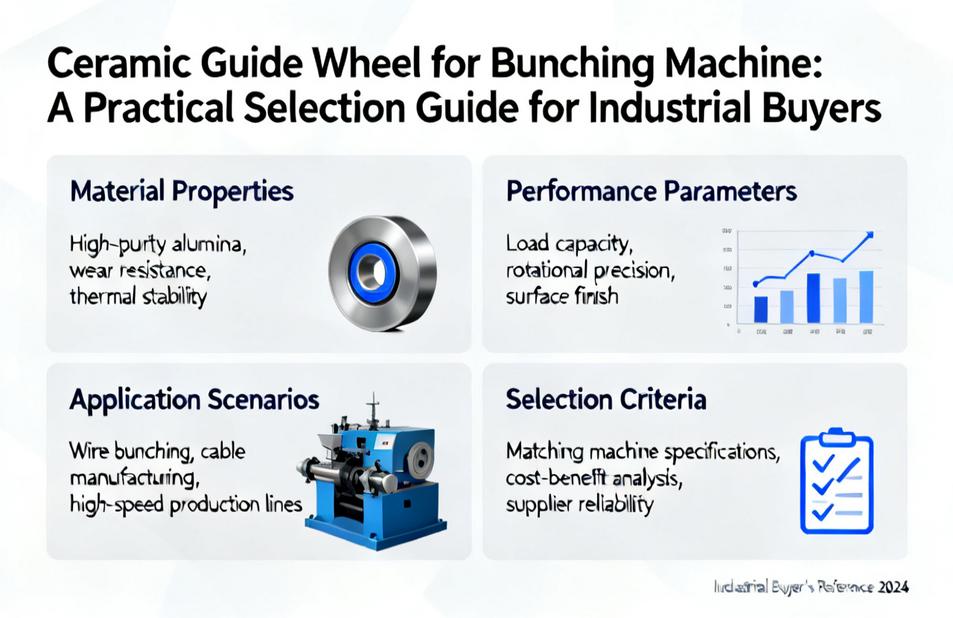
A ceramic guide wheel for a bunching machine is a small but critical component that guides and tensions wire, cable, or thread as it is twisted and collected. Unlike metal pulleys, ceramic guide wheels resist wear, reduce friction, and help maintain consistent wire path alignment during high-speed bunching. For overseas buyers sourcing components for wire and cable manufacturing, choosing the right guide wheel directly affects machine uptime, product quality, and operating cost. This guide explains what these wheels do, how they are constructed, where they are used, and how to select a reliable ceramic guide wheel supplier or manufacturer for your specific bunching equipment.
What Is a Ceramic Guide Wheel for a Bunching Machine?
A bunching machine, also called a stranding or twisting machine, combines multiple wires or strands into a single conductor. During this process, the wire passes through a series of guide points to control tension and direction. The ceramic guide wheel is one of these contact points. It typically consists of a ceramic ring or groove mounted on a bearing or bushing, allowing the wheel to rotate freely as the wire moves. The ceramic surface contacts the wire directly, while the wheel body supports rotation and mounting.
The term ceramic guide wheel is often used interchangeably with ceramic pulley, ceramic roller, or ceramic wire guide. In bunching applications, these wheels are usually small in diameter and designed for continuous high-speed rotation. Their main job is to keep the wire centered, prevent lateral movement, and avoid damage to the conductor surface.
Why Ceramic Instead of Metal?
Metal guide wheels, such as those made from steel or aluminum, can wear quickly when running against hard wire. Wear creates grooves that change the wire path and may damage the wire surface. Ceramic materials offer several advantages for bunching applications:
- High hardness and wear resistance, extending service life
- Low friction coefficient, reducing tension variation
- Chemical stability, suitable for clean and dusty environments
- Ability to maintain a smooth surface without galling or metal pickup
These properties help manufacturers reduce downtime and maintain consistent wire quality, especially when processing fine wires or demanding alloys.
Typical Materials and Construction
Most ceramic guide wheels for bunching machines use alumina (Al2O3) or zirconia (ZrO2) ceramics. Alumina is common for general wire guiding due to its hardness and cost-effectiveness. Zirconia offers higher toughness and is often chosen for high-impact or high-speed applications. Some wheels use silicon nitride or other advanced ceramics when specific mechanical or thermal properties are required.
The ceramic ring is usually pressed and sintered to a precise shape, then polished to a low surface roughness. The wheel body may include a metal hub, a bearing, or a simple bore for mounting on a shaft. Bearings can be open, shielded, or sealed depending on the operating environment. In some designs, the ceramic ring is press-fitted or bonded into a metal carrier. The choice of construction affects load capacity, speed limits, and maintenance needs.
Key Performance Factors for Bunching Applications
When evaluating a ceramic guide wheel for bunching, buyers should consider several performance factors that influence wire quality and machine efficiency:
Groove Geometry and Surface Finish
The groove profile must match the wire diameter and the desired contact angle. A properly designed groove keeps the wire centered without pinching or excessive side pressure. Surface finish matters because a rough surface can abrade the wire or create friction. Polished ceramic surfaces are generally preferred for fine wire and high-speed bunching.
Bearing Type and Speed Rating
The wheel must rotate smoothly at the machine’s operating speed. Bearings with low friction and adequate clearance help prevent heat buildup and vibration. For high-speed bunching, precision bearings or ceramic bearings may be specified. Buyers should confirm the maximum speed rating with the supplier and match it to the machine specifications.
Balance and Runout
Poor balance or excessive runout causes vibration, which can lead to uneven tension and wire damage. A well-manufactured guide wheel maintains tight tolerances on concentricity and axial runout. This is especially important in multi-wire bunching where many guide points work together.
Chemical and Environmental Resistance
Ceramic wheels are generally resistant to most industrial lubricants and coolants. However, the bearing and hub materials may be affected by certain chemicals. If the bunching process uses specific oils or cleaning agents, confirm compatibility with the wheel assembly.
Applications Beyond Bunching Machines
Although this article focuses on bunching machines, ceramic guide wheels are also used in related wire and cable processes. These include:
- Stranding and twisting machines
- Wire drawing lines
- Cable taping and shielding equipment
- Coil winding machines
- Textile and thread processing machinery
Understanding the broader application range helps buyers evaluate whether a supplier has experience with similar challenges and can recommend the right wheel for their specific equipment.
How to Choose the Right Ceramic Guide Wheel
Selecting a guide wheel for a bunching machine involves matching the component to the wire, the machine, and the production environment. Consider the following steps:
1. Identify Wire Material and Diameter
Different wire materials, such as copper, aluminum, steel, or alloy, have different hardness and surface sensitivity. The wheel groove should be sized to the wire diameter to avoid unnecessary movement or pressure. Fine wires may require a smaller groove and a smoother surface.
2. Check Machine Specifications
Review the bunching machine manual for guide wheel dimensions, mounting type, and maximum speed. The replacement wheel should fit the existing shaft or bracket without modification, unless you plan to adjust the setup.
3. Evaluate Operating Conditions
Consider temperature, dust, moisture, and lubricant exposure. These factors influence the choice of bearing seals and ceramic grade. For harsh environments, sealed bearings and tougher ceramics may be appropriate.
4. Confirm Customization Needs
Many suppliers offer custom ceramic guide wheels with specific groove profiles, dimensions, and bearing configurations. If your machine uses a non-standard size or you need a unique groove shape, ask about OEM and custom manufacturing options.
Customization and OEM Options
For buyers with specific requirements, working with a ceramic guide wheel manufacturer that offers OEM and custom services can be beneficial. Custom options may include:
- Non-standard outer diameters, bore sizes, and widths
- Special groove profiles for unique wire shapes or multi-wire bunching
- Different ceramic materials, such as alumina or zirconia
- Custom bearing types, seals, and mounting features
- Private labeling or branded packaging
When requesting a custom quote, provide detailed drawings or samples, along with information about wire type, speed, and environment. A capable supplier will review the application and suggest suitable materials and tolerances.
Buying Considerations and Supplier Selection
Choosing a reliable supplier is as important as choosing the right product. Here are practical points to evaluate:
Technical Support
A good supplier asks about your application and helps match the wheel to your machine. They should understand bunching processes and be able to explain how groove design and bearing selection affect performance.
Quality Consistency
Ceramic components require precise manufacturing to avoid variation between batches. Ask about quality control procedures and whether the supplier can provide dimensional inspection reports. Consistency in groove dimensions and surface finish is critical for repeatable wire quality.
Production Capacity and Lead Time
For ongoing production, confirm the supplier’s capacity to handle your order volume. While specific lead times depend on the supplier, discussing your schedule early helps avoid surprises.
Communication and Responsiveness
Clear communication during quoting, sampling, and order processing reduces the risk of errors. A supplier who responds promptly and provides technical feedback is often a better long-term partner.
Frequently Asked Questions
What is the difference between an alumina and zirconia ceramic guide wheel?
Alumina ceramic wheels are hard, wear-resistant, and cost-effective for general wire guiding. Zirconia wheels offer higher toughness and are often chosen for high-impact or high-speed bunching where chipping resistance is important. The best choice depends on wire material, speed, and operating conditions.
Can I replace a metal guide wheel with a ceramic one?
In many cases, yes, but you need to check dimensions, mounting, and speed ratings. Ceramic wheels may have different weight and bearing characteristics. Consult the machine manufacturer or a ceramic guide wheel supplier to ensure compatibility.
How do I know when to replace a ceramic guide wheel?
Inspect the groove for wear, cracks, or surface damage. Increased wire tension variation, wire surface defects, or unusual noise from the bearing are also signs that replacement may be needed. Regular inspection helps prevent unexpected downtime.
Do you offer custom ceramic guide wheels for bunching machines?
Many ceramic guide wheel manufacturers and suppliers provide custom and OEM options. You can typically specify dimensions, groove profile, ceramic material, and bearing type. Providing a drawing or sample helps the supplier quote accurately.
Conclusion
Ceramic guide wheels play a small but vital role in bunching machine performance. They guide wire with low friction, resist wear, and help maintain consistent tension and wire quality. When selecting a ceramic guide wheel for a bunching machine, focus on groove design, ceramic material, bearing type, and compatibility with your equipment. If your application requires non-standard dimensions or specific performance characteristics, custom and OEM options are available from experienced manufacturers. To get the right wheel for your machine, share your wire specifications, operating conditions, and any drawings or samples with a qualified supplier. They can recommend a suitable ceramic guide wheel and discuss customization or volume production to meet your needs.
