

Coating Service Overview
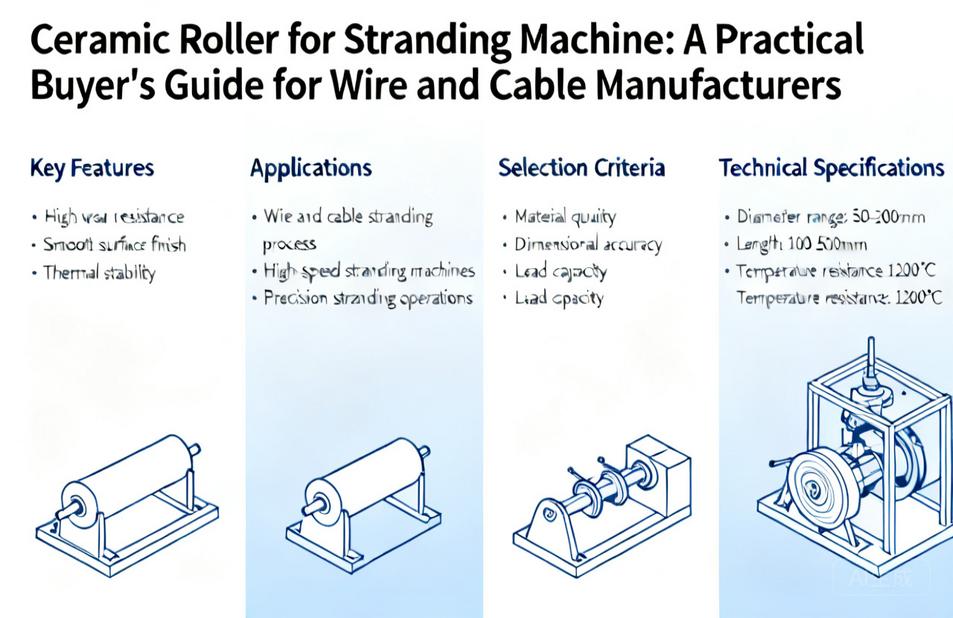
A ceramic roller for stranding machine is a wear-resistant guide component used to control wire and cable movement as strands are twisted or bunched together. In a stranding or bunching line, the wire passes over and under multiple rollers at fairly high speed, and each contact point affects tension, surface quality, and machine uptime. Ceramic rollers are chosen where metal rollers would wear quickly or damage conductor surfaces, making them a common upgrade component in wire drawing, stranding, cabling, and coil winding operations. For overseas buyers sourcing this part, the discussion usually comes down to material selection, groove geometry, bearing or bushing configuration, mounting dimensions, and the supplier’s ability to match existing machine interfaces.
What Does a Ceramic Roller Do in a Stranding Machine?
Stranding machines combine individual wires into a conductor or cable core. The wire path includes payoff, tension control, guiding, stranding, and take-up. Ceramic rollers serve as guide rollers, dancer rollers, or deflector rollers along that path. Their job is to keep the wire aligned, reduce friction, maintain stable tension, and prevent the conductor from being scratched by abrasive contact.
Compared with steel or aluminum rollers, ceramic rollers offer a smooth, hard contact surface. This is important for fine wire, tinned copper, aluminum, and alloy conductors where surface defects can affect electrical performance or downstream insulation. The ceramic surface also resists wear from continuous wire movement, which helps maintain a consistent groove profile over time.
Key Features Buyers Look For
Purchasing teams and maintenance engineers typically evaluate ceramic guide rollers on several practical points:
- Surface finish: A smooth ceramic surface reduces friction and the risk of wire marking. Surface roughness requirements should match the wire type and diameter.
- Groove profile: The groove radius and shape should support the wire without pinching it. A groove that is too sharp can damage fine strands; one that is too shallow may allow the wire to jump.
- Wear resistance: Ceramic materials such as alumina and zirconia are common choices because they resist abrasion better than many metals in continuous contact applications.
- Rotational accuracy: For rotating rollers, bearing or bushing quality influences vibration, noise, and tension stability.
- Balance and weight: Lighter rollers can reduce inertia in high-speed stranding and bunching operations.
- Chemical and temperature resistance: Depending on the plant environment and cleaning processes, the roller assembly should be compatible with lubricants, solvents, and operating temperatures.
Materials and Construction
Ceramic rollers are not all the same. Alumina ceramic is widely used for general guide and wear applications because it offers good hardness and abrasion resistance. Zirconia ceramic is another option, often considered where higher toughness is needed. The exact grade should be discussed with the manufacturer based on wire material, speed, and load.
The ceramic body is usually combined with a metal hub, shaft, or bearing assembly. Construction details matter: the bond between ceramic and hub, the bearing type, the shaft tolerance, and the mounting method all affect service life. Some rollers are designed as full ceramic parts, while others use a ceramic ring or ceramic-coated surface. Buyers should clarify which construction is being quoted, because the performance and maintenance requirements differ.
Common configurations include grooved rollers with a single or multiple grooves, flat rollers, and custom profiles. The housing and shaft may be stainless steel or another suitable metal, depending on the machine environment.
Industrial Applications
Ceramic rollers for stranding machines are used in several wire and cable processes:
- Copper stranding and bunching: Guide rollers keep fine copper wires aligned and reduce surface damage.
- Aluminum and alloy conductor stranding: Abrasion-resistant ceramic surfaces help protect softer conductors.
- Cable core assembly: Rollers guide insulated cores and fillers without causing deformation.
- Wire drawing and annealing lines: Ceramic guide rollers are used where wire contact wear is a concern.
- Coil winding and rewinding: Smooth ceramic surfaces help maintain wire quality during transfer.
These rollers also appear in related equipment such as bunching machines, cabling machines, and wire guiding systems. If you are sourcing for a specific machine model, the application details should be shared with the supplier so the roller dimensions and groove profile can be matched correctly.
How to Choose the Right Ceramic Roller
Selecting a ceramic roller for stranding machine use starts with the wire and the machine, not with a generic catalog number. A useful selection process includes:
1. Define the wire and process conditions
Wire material, diameter range, strand count, line speed, tension range, and lubrication all influence roller choice. Fine wire and soft conductors usually require a smoother surface and a carefully matched groove radius.
2. Match the machine interface
Check shaft diameter, mounting bore, roller width, outer diameter, groove position, and fixing method. If the roller replaces an existing part, provide drawings or sample dimensions. Tolerance stack-up can cause vibration or wire misalignment if the fit is not correct.
3. Confirm the bearing or bushing requirement
High-speed stranding may require a specific bearing type, clearance, and lubrication approach. Some applications prefer sealed bearings; others use bushings for simplicity. The supplier should be able to recommend a configuration based on operating speed and maintenance practice.
4. Review ceramic material and surface quality
Ask about the ceramic grade, surface finish, and inspection criteria. Avoid assuming that all ceramic rollers are interchangeable. The material and finish should be appropriate for the wire surface and wear environment.
5. Consider maintenance and replacement
Rollers that are easy to inspect and replace reduce downtime. Standardizing mounting dimensions across a production line can simplify spare parts management.
OEM and Customization Options
Many wire and cable equipment builders and end users require custom ceramic rollers rather than off-the-shelf parts. A capable manufacturer or factory can produce rollers to drawings, samples, or machine specifications. Custom options may include outer diameter, bore size, groove count, groove radius, shaft length, hub material, bearing selection, and marking.
OEM projects usually require clear communication on tolerances, inspection methods, packaging, and documentation. Before placing an order, confirm what the supplier can customize and what must remain standard. This is especially important for replacement parts that must fit existing stranding equipment without modification.
Buying Considerations for Overseas Purchasers
When comparing ceramic roller suppliers, buyers should look beyond the unit price. Request dimensional drawings, material descriptions, and inspection reports that are actually available. Clarify packaging suitable for international shipping, spare parts availability, and technical support for installation.
For trial orders, ask for a small batch to verify fit, surface quality, and running performance before committing to larger quantities. Keep communication focused on measurable requirements: dimensions, tolerances, surface condition, and operating conditions. This helps reduce misunderstandings and supports a stable supply relationship.
How to Select a Reliable Supplier
A reliable supplier should understand stranding machine applications, not just ceramic part production. Look for a manufacturer or supplier that can discuss wire path geometry, roller mounting, and wear conditions. Ask how they control dimensional consistency and surface quality, and whether they support OEM or custom orders.
Useful questions include: Can you produce from our drawings or samples? What information do you need to recommend a groove profile? How are rollers packed for export? What is the lead time for repeat orders? Clear answers to these questions indicate a supplier with practical experience in industrial ceramic components and wire handling equipment.
Frequently Asked Questions
What is the difference between a ceramic roller and a metal roller for stranding machines?
Ceramic rollers generally offer a harder, smoother contact surface that resists abrasion and reduces the risk of wire surface damage. Metal rollers may be suitable for some applications, but wear and surface marking can become issues in high-speed or fine-wire stranding. The right choice depends on wire material, speed, and tension.
Can ceramic rollers be customized for a specific stranding machine?
Yes. Many manufacturers offer OEM and custom production based on drawings, samples, or machine specifications. Customization can cover dimensions, groove profile, bore, shaft, bearing type, and hub material. Buyers should provide complete technical details to ensure the replacement part fits correctly.
How do I choose the correct groove size for my wire?
The groove should support the wire without pinching or allowing it to jump. Wire diameter, strand count, and tension are key inputs. Sharing these details with the supplier helps determine a suitable groove radius and profile. Trial testing on the machine is recommended before full-scale replacement.
What information should I provide when requesting a quotation?
Provide the machine model if available, roller drawing or sample dimensions, wire material and diameter range, line speed, tension range, and required quantity. If you need OEM or custom rollers, state the expected tolerances and any inspection or packaging requirements.
Conclusion
Choosing a ceramic roller for stranding machine applications requires attention to wire type, groove geometry, mounting dimensions, bearing configuration, and ceramic material. The goal is not simply to buy a wear-resistant part, but to find a roller that matches the machine and protects the conductor throughout the stranding process. Buyers working with an experienced manufacturer or supplier can usually simplify this process by sharing application details and drawings for review. If you are evaluating options for a new line, a replacement part, or an OEM project, discussing your specifications with a supplier is a practical next step.
