

Coating Service Overview
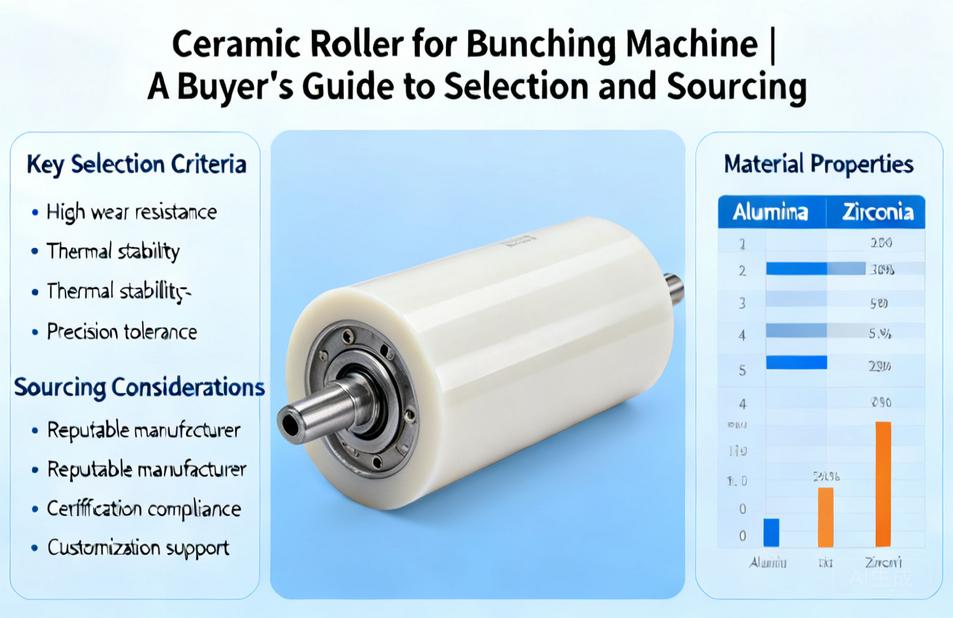
A ceramic roller for bunching machine is a precision guide component used to control wire tension and path direction during the bunching or stranding process. In a bunching machine, multiple thin wires are twisted together at high speed to form a stranded conductor, and the wire must pass through guide rollers with minimal friction and wear. Ceramic rollers are chosen because their hard, smooth surfaces resist abrasion from the wire and help protect conductor surfaces from damage. For overseas buyers sourcing these parts, understanding the roller’s role, material options, dimensional matching, and supplier capabilities is essential for stable production and reduced downtime.
What the Ceramic Roller Does in a Bunching Machine
In wire and cable manufacturing, a bunching machine combines several strands into a single conductor. The wire runs at high linear speed, changes direction repeatedly, and contacts guide points under tension. Any roughness or wear at these contact points can cause scratches, wire breaks, or inconsistent lay length. The ceramic roller serves as a low-friction contact surface that guides the wire without introducing damage. Because the roller rotates with the wire rather than resisting it, tension fluctuation is reduced and the wire path remains stable.
The roller also plays a role in machine uptime. Metal guide surfaces can wear and develop grooves over time, and worn grooves alter the wire path and may damage the conductor. Ceramic surfaces are hard and smooth, which helps them maintain their shape and finish through extended running. This is why many bunching machine builders and maintenance teams specify ceramic guide rollers for critical wire contact positions.
Key Features Buyers Should Look For
When evaluating a ceramic roller for bunching machine use, several practical features matter. The contact surface should be smooth and free of chips or pits, because surface defects can mark the wire. The roller bore and outer diameter should match the machine’s mounting shaft and wire path requirements. The ceramic ring should be securely fixed to the roller body, since a loose fit can cause vibration or runout at high speed. Dynamic balance is another consideration for high-speed bunching, as imbalance increases bearing load and noise.
- Consistent surface finish on the wire contact area
- Accurate bore and outer diameter to match the machine shaft
- Secure ceramic-to-body bonding or press fit
- Low runout and suitable balance for the machine speed
- Edge treatment that avoids sharp corners or wire snagging
Materials and Construction
Ceramic rollers for wire bunching are commonly made with an alumina-based ceramic ring fitted to a metal or ceramic body. Alumina offers good wear resistance and a smooth surface, and it is widely used for wire guide applications. Other ceramic grades may be selected for specific wear or friction requirements, and the choice should be based on the wire type, speed, and operating conditions rather than a generic preference. The roller body may be metal for structural strength or ceramic for a fully non-metallic guide surface.
Construction details affect service life. The fit between the ceramic ring and the body should remain stable under rotation, and the bearing or bushing arrangement should suit the machine’s speed and load. Buyers should confirm how the roller is assembled and whether replacement rings or complete rollers are available, because maintenance planning affects total operating cost.
Typical Industrial Applications
The primary application is wire bunching and stranding in cable manufacturing, where multiple conductors are combined into stranded wire. These rollers are also used in related wire handling processes such as drawing, annealing, and rewinding, wherever a smooth guide surface is needed. Industries include building wire production, automotive wire, electronics cable, and general conductor manufacturing. In each case, the roller should be matched to wire diameter, machine speed, and the tension level in the process.
How to Choose the Right Roller
Selection starts with the machine drawing and the existing roller dimensions. Confirm the shaft diameter, roller outer diameter, width, and mounting method. Check the wire diameter and line speed, because high speed demands good balance and a secure ring fit. Consider the wire material and surface sensitivity; softer or plated wires may require an especially smooth contact surface. Also review the machine builder’s specification or the maintenance manual, since original dimensions and tolerances are the most reliable reference.
Buyers should avoid selecting by appearance alone. A roller that looks similar may have a different bore tolerance, ceramic grade, or balance quality, and these differences can affect performance. Request dimensional drawings and material details from the supplier, and compare them with the machine requirements before ordering.
Customization and OEM Options
Many ceramic roller suppliers offer custom dimensions, ceramic grade selection, and OEM production for machine builders and replacement part distributors. Custom options may include non-standard outer diameters, special bore sizes, alternative ceramic materials, and specific edge profiles. For OEM projects, buyers should provide drawings, samples, or clear dimensional requirements, and agree on inspection criteria before production. A factory with in-house ceramic processing and assembly capability can often support these requests more consistently than a trading-only supplier.
Supplier Selection and Buying Considerations
When sourcing ceramic rollers for bunching machines, evaluate the supplier’s technical communication, dimensional control, and experience with wire industry components. Ask for drawings, material descriptions, and inspection reports where available. Confirm packaging suitable for fragile ceramic parts and clarify how the supplier handles dimensional deviations. For repeat orders, consistent tolerances matter as much as the first sample. A manufacturer that understands bunching machine operation can help match the roller to the application rather than simply filling a dimensional request.
Frequently Asked Questions
How do I confirm the correct roller size for my bunching machine?
Use the machine drawing, maintenance manual, or the dimensions of the existing roller. Measure the shaft diameter, outer diameter, width, and mounting features, and share these details with the supplier for confirmation before ordering.
Can ceramic rollers be customized for OEM production?
Yes. Many manufacturers support custom dimensions, ceramic grade selection, and OEM production. Provide drawings or samples and agree on tolerances and inspection criteria before the order is placed.
Why does the ceramic surface need to be smooth?
A smooth contact surface reduces friction and helps prevent scratches or marks on the wire. Surface defects can also accelerate wear and affect wire path stability during high-speed bunching.
What information should I provide when requesting a quotation?
Provide the machine model or drawing, roller dimensions, wire diameter, line speed, and any special requirements such as ceramic grade or edge profile. This helps the supplier recommend a suitable roller and prepare an accurate quotation.
Conclusion
Choosing a ceramic roller for bunching machine applications comes down to matching dimensions, surface quality, ring fit, and balance to the actual wire process. Buyers should work from machine drawings, confirm material and tolerance details, and select a supplier with relevant experience in wire industry components. If you have specific dimensions, application conditions, or OEM and custom requirements, contact the supplier with your details to discuss a suitable specification.
