

Coating Service Overview
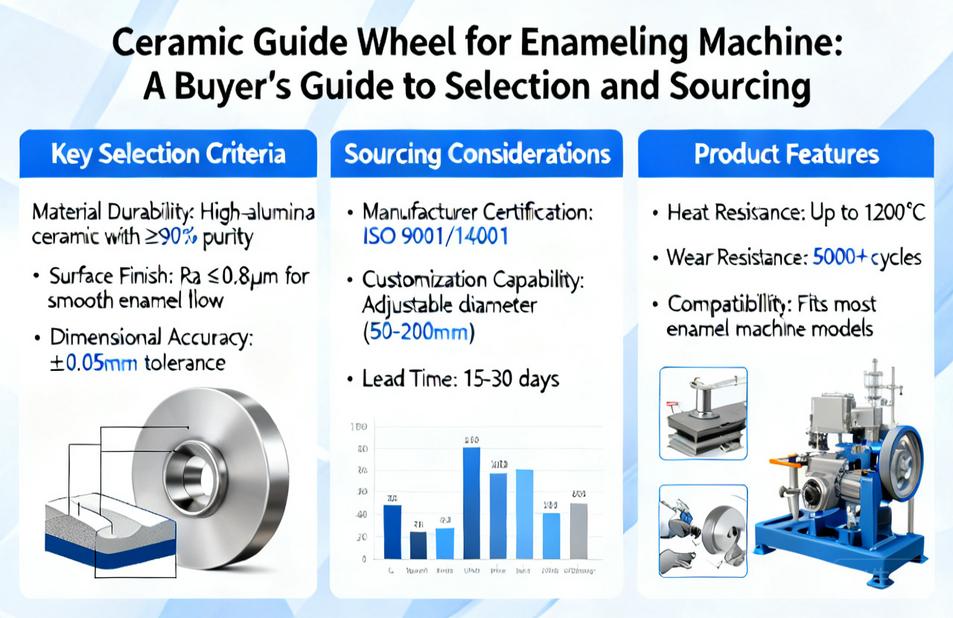
A ceramic guide wheel for enameling machine is a small but critical component that controls wire or strip positioning as it passes through the enamel coating process. These wheels are made from technical ceramics such as alumina or zirconia, which resist wear, heat, and chemical attack far better than metal or plastic alternatives. In continuous enameling lines, the guide wheel keeps the conductor aligned with the coating die, preventing scratches, uneven enamel thickness, and wire breakage. For overseas buyers sourcing components for wire enameling, motor winding, or transformer production, understanding how ceramic guide wheels work and how to specify them is essential for stable output and low downtime.
What Is a Ceramic Guide Wheel for Enameling Machine?
A ceramic guide wheel is a rotating guide element installed at the entry and exit points of an enameling machine. Its job is to maintain consistent tension and lateral position of the wire or flat conductor as it enters the enamel applicator and curing oven. Unlike steel guide rollers, ceramic wheels do not magnetize, do not create metallic contamination, and can operate at elevated temperatures without softening. The wheel typically consists of a ceramic ring pressed or bonded onto a metal hub, with a precision-ground groove that matches the wire diameter. Common materials include 99% alumina (Al2O3) for general wear resistance and zirconia (ZrO2) for higher toughness in demanding wire sizes.
How Ceramic Guide Wheels Work in Enameling Lines
In a typical enameling machine, bare copper or aluminum wire is pulled from a pay-off spool through a series of guide wheels, a felt or feltless cleaning section, an enamel bath or die applicator, and then into a curing oven. The ceramic guide wheel contacts the wire surface directly, so its surface finish and groove geometry determine whether the wire stays round and free of mechanical damage. Because ceramic has low friction and high hardness, it reduces wire dragging and extends the interval between wheel replacements. The wheel also acts as an electrical insulator in some machine designs, which helps isolate the wire from stray currents in the coating area.
Key Features Buyers Look For
When evaluating a ceramic guide wheel for enameling machine use, procurement teams and process engineers usually focus on several practical features. These include:
- High wear resistance to maintain groove dimensions over long production runs.
- Low friction coefficient to minimize wire tension variation.
- Chemical stability against enamel solvents and cleaning agents.
- Thermal stability for lines that run at elevated temperatures.
- Precision groove profile and surface finish to avoid wire marking.
- Balanced rotation to prevent vibration at high line speeds.
These features are not marketing claims; they are measurable characteristics that affect enamel quality, scrap rate, and maintenance frequency. A well-made ceramic wheel should show consistent concentricity and a smooth contact surface when inspected.
Materials and Construction
Most ceramic guide wheels are produced from fine-grained alumina or zirconia powder, pressed and sintered to high density. Alumina wheels offer excellent hardness and dielectric strength at a relatively lower cost, making them suitable for many standard enameling applications. Zirconia wheels provide higher fracture toughness and are often chosen for thinner wires or lines with frequent starts and stops. The ceramic ring is usually mounted on a stainless steel or aluminum hub using shrink fitting or high-temperature adhesive. Some designs include sealed bearings, while others use a simple bushing for low-speed operation. The choice depends on line speed, load, and maintenance philosophy.
Industrial Applications
Ceramic guide wheels are used in a range of wire and strip processing industries. In magnet wire production, they guide copper and aluminum conductors through enamel coating and baking. In transformer and motor manufacturing, they help maintain wire alignment during winding and insulation processes. They also appear in cable coating, resistance wire production, and specialty wire enameling for electronics. Because enameled wire is used in motors, generators, transformers, inductors, and sensors, the guide wheel indirectly affects the performance and reliability of many end products. For this reason, buyers often treat the guide wheel as a quality-critical consumable rather than a generic accessory.
How to Choose the Right Ceramic Guide Wheel
Selecting a ceramic guide wheel for enameling machine use requires matching the wheel to the wire and the machine. Start with the wire diameter and cross-section, because the groove radius and depth must support the wire without pinching or excessive clearance. Next, consider line speed and tension; higher speeds demand better dynamic balance and lower friction. Check the mounting dimensions, shaft diameter, and wheel width against the machine drawing or existing part number. If the wheel runs inside an oven or near a curing zone, confirm the temperature rating of the ceramic and the hub material. Finally, review the surface finish requirement. A wheel that is too rough can scratch the wire, while an overly polished groove may reduce traction in some drive configurations.
Matching the Wheel to the Enameling Machine
Machine builders and retrofitters should provide the original wheel drawing or a sample whenever possible. Key dimensions include outer diameter, inner bore, groove profile, and overall width. Tolerances matter, especially for high-speed lines where a few micrometers of runout can cause vibration. If the machine uses multiple guide wheels in a row, keep the groove geometry consistent across the set to avoid uneven tension. For OEM projects, a ceramic supplier can often reverse-engineer a wheel from a worn sample or a CAD model.
OEM and Customization Options
Many ceramic manufacturers offer OEM and custom production for guide wheels. Customization can include specific groove profiles, hub materials, bearing types, and surface treatments. Some buyers require laser marking or engraved part numbers for traceability. Others need small batch sizes for specialty wire lines. When discussing a custom ceramic guide wheel, provide the wire material, diameter range, line speed, operating temperature, and available mounting space. A capable factory will review these inputs and recommend a suitable ceramic grade and geometry rather than simply quoting a catalog item.
Buying Considerations for Overseas Procurement
Price is only one factor in total cost of ownership. A low-cost wheel that wears quickly can increase wire scrap, downtime, and labor. Ask for dimensional inspection reports and material grade certificates where available. Confirm whether the supplier manufactures the ceramic in-house or sources it from a third party, because in-house sintering usually gives better control over density and microstructure. Check packaging to ensure wheels arrive without chipping or contamination. For repeat orders, request batch consistency and lead time information. It is also useful to know whether the supplier can provide technical support for troubleshooting enamel defects related to guide wheel performance.
Supplier Selection and Quality Checks
When searching for a ceramic guide wheel supplier or manufacturer, look for experience in wire processing and enameling applications. A factory that understands enamel lines can often suggest improvements in groove design or wheel placement. Review their production capabilities, including pressing, sintering, grinding, and assembly. Ask about their quality control process for concentricity, surface roughness, and crack detection. If you need OEM or custom wheels, confirm their engineering support and sample lead time. A reliable partner will be transparent about what they can and cannot do, and will not promise unverified performance figures.
Frequently Asked Questions
What is the difference between alumina and zirconia guide wheels?
Alumina wheels are harder and more cost-effective for general enameling, while zirconia wheels offer higher toughness and are often preferred for thin wires or high-vibration lines. The best choice depends on wire size, speed, and the type of enamel being applied.
Can ceramic guide wheels be customized for my machine?
Yes. Many manufacturers offer custom groove profiles, hub dimensions, bearing options, and markings. Provide a drawing or sample, along with operating conditions such as wire diameter, line speed, and temperature, so the supplier can recommend a suitable design.
How do I know when to replace a ceramic guide wheel?
Inspect the groove for wear, chipping, or surface changes that could mark the wire. Increased wire tension variation, enamel defects, or visible groove enlargement are common signs that replacement is due. Keep spare wheels on hand to avoid unplanned downtime.
Do ceramic guide wheels work with both copper and aluminum wire?
They can be used with both, but the groove geometry and surface finish should be matched to the wire material and diameter. Aluminum is softer than copper, so a smoother contact surface may be required to prevent scratching.
Conclusion
Choosing the right ceramic guide wheel for enameling machine applications comes down to matching the wheel to your wire, line speed, and machine geometry, then selecting a supplier who can deliver consistent quality and support OEM or custom requirements. Focus on ceramic grade, groove precision, hub construction, and the supplier’s experience with enameling lines. If you are reviewing specifications for a new line or replacing a worn component, contact a ceramic guide wheel manufacturer or supplier to discuss your application, request a sample, and explore custom options that fit your production needs.
