

Coating Service Overview
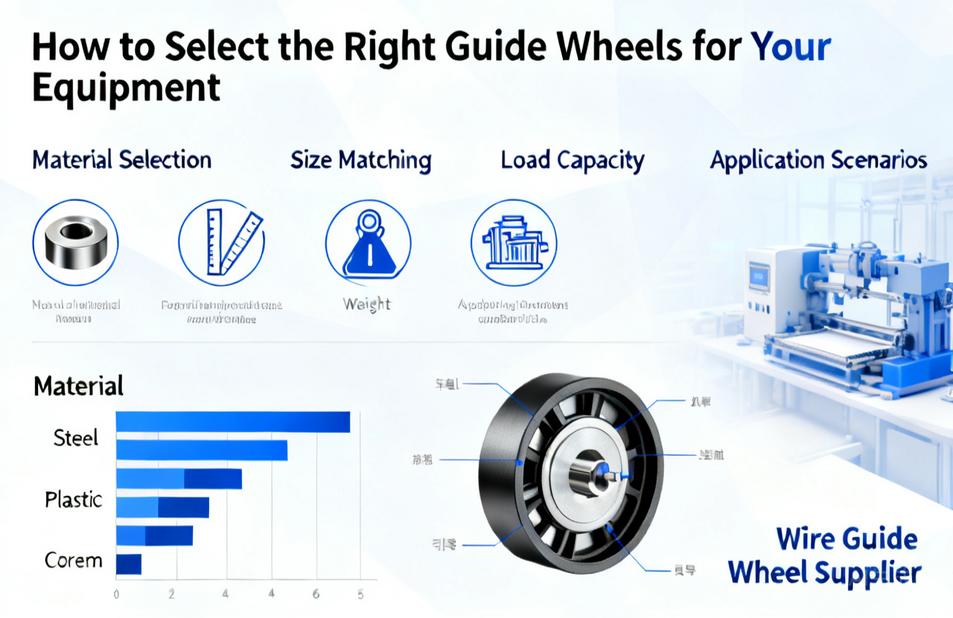
When sourcing precision components for wire handling and feeding systems, working with a reliable wire guide wheel supplier is essential for maintaining consistent wire tension and preventing damage during production. A wire guide wheel, sometimes called a wire guide pulley or wire guide roller, is a rotating component designed to guide, support, and redirect wire as it moves through machinery such as wire forming equipment, cable manufacturing lines, welding systems, and automated wire processing stations. These wheels help reduce friction, minimize wire deformation, and keep the wire path stable, which is critical for product quality and equipment uptime. For manufacturers and integrators, choosing the right supplier means balancing material selection, dimensional accuracy, bearing performance, and customization capability.
What a Wire Guide Wheel Does in Wire Handling Systems
Wire guide wheels are used wherever wire needs to change direction or stay aligned without excessive friction. In practice, they are found in wire drawing machines, wire straighteners, coil winding equipment, spring making machines, cable stranding lines, and automated wire cutting and stripping systems. The wheel itself typically consists of an outer rim with a groove profile matched to the wire diameter, a central bore or bearing seat, and sometimes an integrated bearing. The groove shape, width, and surface finish directly affect how the wire tracks and whether it is deformed or scratched.
Because wire can be soft or hard, thin or thick, and may carry insulation or coatings, the guide wheel design must suit the specific wire and process. A supplier that understands these variables can recommend the appropriate wheel geometry and material rather than offering a one-size-fits-all solution.
Key Features Buyers Look for in Guide Wheels
When evaluating wire guide wheels for industrial applications, procurement teams and engineers typically focus on several functional features:
- Groove profile: Matched to wire diameter and shape to ensure stable guidance without pinching or lateral movement.
- Low friction rotation: Smooth spinning achieved through precision bearings or bushings, reducing drag on the wire.
- Wear resistance: Ability to maintain groove geometry after extended contact with moving wire.
- Concentricity and balance: Important for high-speed lines where vibration or wobble can affect wire position.
- Corrosion resistance: Relevant in environments with moisture, lubricants, or chemical exposure.
- Mounting compatibility: Bore size, width, and fastening method must match existing shafts and brackets.
These features determine how well the wheel performs in a given wire handling application, and they are often the starting point for a technical discussion with a supplier.
Materials and Construction Options
Wire guide wheels are produced from a range of materials depending on the wire type, speed, load, and operating environment. Common options include hardened steel, stainless steel, aluminum, engineering plastics such as nylon or POM, and ceramic-coated or ceramic inserts for specialized wear resistance. The material choice affects weight, friction characteristics, noise, and service life.
The construction may be a solid wheel with a machined groove, a wheel with an inserted bearing, or a composite design that combines a metal hub with a plastic or ceramic rim. Bearings can be ball bearings, roller bearings, or simple bushings, and may be shielded or sealed depending on contamination levels. A capable wire guide wheel manufacturer will discuss these options in relation to the wire material, speed, and tension rather than promoting a single material as universally suitable.
Typical Industrial Applications
Wire guide wheels appear in a wide range of industries, including automotive wire harness production, electrical cable manufacturing, metal wire processing, welding wire feeding, textile machinery, and packaging equipment. In welding applications, guide wheels help feed filler wire smoothly from spools to the torch. In cable making, they maintain tension and alignment during stranding and insulation. In spring and fastener production, they guide wire into forming stations where dimensional accuracy matters.
Each application places different demands on the wheel. High-speed welding wire feeding may prioritize low inertia and smooth rotation, while heavy wire drawing may require robust construction and high wear resistance. Understanding the application is therefore the first step in selecting or customizing a guide wheel.
How to Choose the Right Wire Guide Wheel
Selecting a guide wheel involves matching the wheel to both the wire and the machine. Start by reviewing the wire diameter and type, including whether it is solid, stranded, coated, or insulated. Next, consider line speed, wire tension, and the frequency of direction changes. These factors influence groove dimensions, wheel diameter, bearing type, and material.
It is also important to check the mounting interface: shaft diameter, keyway or flat, retention method, and available space. In some cases, a standard catalog wheel can be adapted, while in others a custom profile or bore is required. A supplier that asks detailed questions about the application is more likely to deliver a wheel that performs as expected.
Customization and OEM Requirements
Many buyers require custom wire guide wheels rather than off-the-shelf items. Customization can include specific groove profiles, non-standard diameters, special bore sizes, integrated shafts, alternative materials, and branding or marking. OEM production is common in this category, where the guide wheel is designed to fit a particular machine model or a proprietary wire handling system.
When discussing customization with a supplier, provide drawings or samples whenever possible, along with details about the wire, speed, load, and environment. Clear specifications reduce the risk of mismatched parts and help the supplier recommend feasible manufacturing methods. It is also useful to clarify whether the supplier can support small trial batches before full production.
Supplier Selection and Buying Considerations
Choosing a wire guide wheel supplier involves more than comparing prices. Evaluate the supplier’s technical understanding of wire handling, their ability to communicate about groove geometry and materials, and their experience with similar industrial applications. A manufacturer with in-house machining, turning, milling, and assembly capabilities can often control quality more consistently than a trading company.
Ask about quality control procedures, dimensional inspection, and how bearing performance is verified. Confirm whether the supplier can provide material certificates or inspection reports if needed, but avoid assuming certifications that have not been discussed. Delivery planning, packaging for export, and responsiveness during the quotation stage are also practical indicators of a reliable partner. For buyers in Europe, North America, or other regions, working with a supplier experienced in international shipping and documentation can simplify procurement.
Frequently Asked Questions
What is the difference between a wire guide wheel and a wire guide roller?
In many industrial contexts, the terms are used interchangeably. Both refer to a rotating wheel or roller that guides wire along a controlled path. The choice of term often depends on the industry or the specific machine manufacturer. What matters is the groove profile, bearing type, and material, which determine performance.
Can wire guide wheels be customized for specific wire diameters?
Yes. Customization typically involves adjusting the groove profile, wheel diameter, bore size, and material to match a specific wire diameter and application. Providing wire samples or detailed drawings helps the supplier propose a suitable design.
How do I know which material is best for my application?
The best material depends on wire type, speed, load, and environment. Steel offers durability for heavy-duty use, stainless steel provides corrosion resistance, and engineering plastics or ceramics can reduce weight or friction in specific cases. A supplier can help evaluate these trade-offs based on your operating conditions.
What information should I provide when requesting a quote?
Include wire diameter and type, line speed, tension, mounting dimensions, groove requirements, expected quantity, and any environmental factors such as temperature or moisture. Drawings or photos of the current setup are also helpful for accurate quoting.
Conclusion
Finding the right wire guide wheel supplier is about technical fit as much as commercial terms. Focus on groove accuracy, material suitability, bearing performance, and the supplier’s ability to support OEM or custom requirements. A supplier who understands your wire handling process can help you avoid premature wear, wire damage, and unplanned downtime. If you are reviewing guide wheel options for a new line or replacing a current component, share your specifications and application details with potential suppliers to compare feasible solutions and move forward with confidence.
