

Coating Service Overview
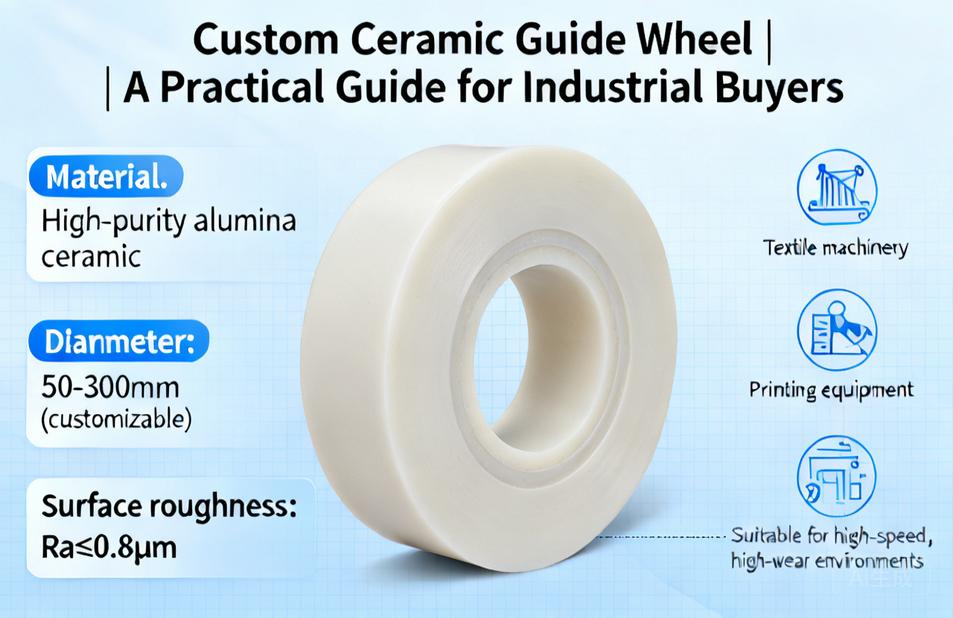
A custom ceramic guide wheel is an engineered rotating component made from technical ceramic materials and produced to match specific dimensions, tolerances, and mounting requirements in a machine or production line. Unlike a standard off-the-shelf roller, it is designed around the actual contact surface, load direction, and operating environment of the equipment. Buyers typically source these wheels for wire and cable guiding, textile yarn paths, film and foil handling, optical fiber processing, battery electrode coating lines, and other applications where metal rollers would wear too quickly, scratch the product, or introduce contamination. Because the wheel often determines product quality and line uptime, the purchasing decision usually involves both the machine builder and the end user.
What a Ceramic Guide Wheel Does in a Machine
A guide wheel contacts a moving material and keeps it aligned, tensioned, or redirected. In high-speed lines, the contact point experiences continuous friction, heat, and sometimes abrasive particles. Ceramic materials are chosen because they resist wear, hold a smooth surface finish, and can operate without lubrication in many setups. A custom version takes this further by matching the wheel profile, bore, width, edge radius, and surface condition to the specific material being handled. For example, a flat-faced wheel may be used for film, while a grooved or U-shaped profile is common for wire and yarn. The mounting method also matters. Some wheels are supplied with a ceramic bore for a shaft, others are bonded into a metal hub, and some are mounted with precision bearings or bushings.
Materials and Construction Options
Technical ceramics used for guide wheels include alumina, zirconia, and silicon nitride, among others. Each material family offers a different balance of hardness, toughness, thermal behavior, and chemical resistance. The selection should be based on the application rather than a generic preference. Alumina is often considered for general wear resistance and electrical insulation. Zirconia can be relevant where higher toughness and a smoother surface are needed. Silicon nitride is sometimes selected for higher mechanical demands. Construction also affects performance. A solid ceramic wheel provides a uniform contact surface, while a ceramic ring pressed or bonded onto a metal hub can reduce cost and simplify mounting. Surface finish, edge quality, and concentricity are critical because they influence friction, vibration, and the risk of damaging the moving material. Buyers should discuss these details with the manufacturer before ordering.
Typical Industrial Applications
Custom ceramic guide wheels appear in a wide range of industrial applications. In wire and cable manufacturing, they guide conductors and strands without introducing scratches or metal contamination. In textile machinery, they control yarn tension and reduce fiber damage. In film, foil, and paper converting, they help maintain web alignment at high speed. In optical fiber production, they protect delicate glass surfaces. In battery and electronic component manufacturing, ceramic wheels can be used where cleanliness and wear resistance are important. Other examples include coating lines, printing equipment, packaging machines, and automated assembly systems. Because each application has its own material, speed, load, and environmental conditions, there is no single wheel design that fits all cases.
How to Choose the Right Custom Ceramic Guide Wheel
Choosing the right wheel starts with a clear understanding of the working conditions. Buyers should define the material being guided, its width and thickness, the running speed, the tension or load, and the surrounding temperature or chemicals. The wheel dimensions, including outer diameter, bore diameter, width, and profile, must match the machine interface. The type of bearing or bushing, the required runout, and the mounting method also need to be considered. If the wheel will run at high speed, dynamic balance and bearing selection become more important. If the environment contains abrasive dust or coolant, the material and surface finish may need special attention. A useful approach is to share drawings, photos, or samples with the supplier and explain what problem the current wheel is experiencing, such as wear, marking, noise, or breakage.
Customization and OEM Options
Many ceramic guide wheel suppliers offer OEM and custom manufacturing services. Customization can cover dimensions, tolerances, surface finish, edge treatment, groove profile, bore configuration, hub material, and bearing installation. Some buyers need a direct replacement for an existing part, while others are developing a new machine and require design support. In both cases, the manufacturer should be able to review the application and recommend a suitable ceramic grade and wheel geometry. Prototyping is common before mass production. When discussing a custom project, it is helpful to provide technical drawings, quantity expectations, and any assembly requirements. Clear communication at this stage reduces the risk of mismatch later.
Buying Considerations for Overseas Procurement
When purchasing from an overseas supplier, buyers should focus on consistency, documentation, and communication. Ask how the factory controls dimensions, surface quality, and material properties. Clarify what inspection records or material certificates can be provided. Confirm the packaging method, because ceramic parts need protection during shipping. Discuss the order quantity, sample availability, and production schedule without assuming fixed lead times. It is also important to understand the supplier’s experience with similar applications. A supplier who has worked with wire, film, or textile equipment may be able to point out design issues before they become costly. Price should be evaluated together with total cost of ownership, including downtime, replacement frequency, and product quality impact.
How to Evaluate a Ceramic Guide Wheel Supplier
A reliable supplier should be able to explain material selection, manufacturing limits, and inspection methods in practical terms. Look for a manufacturer or factory that offers both standard and custom production, because this often indicates flexibility and technical depth. Ask for drawings or samples of previous work where possible. Check whether the supplier can handle small trial orders and scale up later. Responsiveness matters, especially when the wheel is part of a critical production line. A good supplier will ask questions about the application instead of only quoting a price. This approach helps ensure the final wheel performs as expected.
Frequently Asked Questions
Can ceramic guide wheels be made to match my existing drawing?
Yes. Most custom manufacturers can produce wheels based on customer drawings, samples, or detailed specifications. The supplier will review dimensions, tolerances, material, and mounting details before quoting.
What information should I provide when requesting a quote?
Provide the material being guided, wheel dimensions, bore and profile details, operating speed, load, temperature, chemical exposure, and the type of bearing or mounting used. Photos and drawings are very helpful.
Are ceramic guide wheels suitable for high-speed applications?
They can be, but the design must account for balance, bearing selection, and heat. High-speed use should be discussed with the manufacturer so the wheel and mounting system are matched to the application.
Can I order a small quantity for testing before mass production?
Many suppliers offer sample or trial orders. Availability depends on the wheel design and manufacturing process. It is best to discuss this early in the project.
Conclusion
Selecting a custom ceramic guide wheel is a technical purchasing decision that affects product quality, line efficiency, and maintenance costs. Buyers should start with a clear application profile, then work with a manufacturer or supplier who can translate that profile into a suitable material, profile, and mounting design. OEM and custom options make it possible to match existing equipment or develop a new solution. If you are reviewing specifications, comparing materials, or planning a custom guide wheel project, contact a qualified supplier to discuss your application and requirements.
