

Coating Service Overview
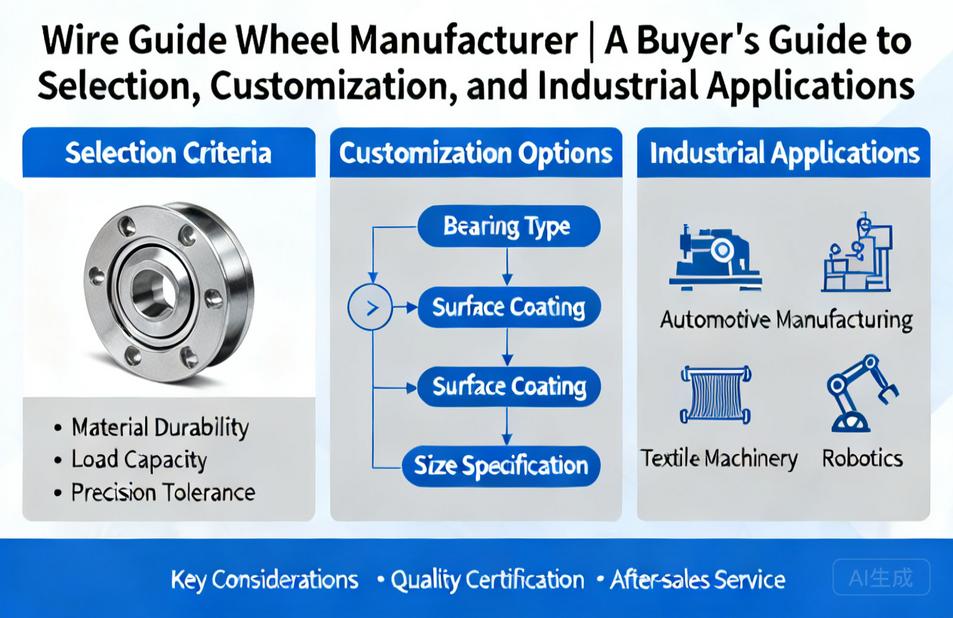
A wire guide wheel is a precision-engineered component used to guide, tension, and route wire, cable, or filament through industrial machinery without causing abrasion, deformation, or misalignment. When sourcing from a wire guide wheel manufacturer, buyers typically seek durable wheels that match specific wire diameters, line speeds, and environmental conditions. These wheels are common in wire drawing, cable manufacturing, textile machinery, welding systems, and automated wire processing equipment. Choosing the right supplier involves understanding materials, bearing options, groove profiles, and how well the manufacturer can support OEM or custom requirements.
What a Wire Guide Wheel Does in Industrial Systems
Wire guide wheels, also called wire guide rollers or guide pulleys, control the path of moving wire. They reduce friction at direction changes, maintain consistent tension, and prevent the wire from jumping or twisting. In high-speed wire drawing lines, a poorly matched guide wheel can cause surface scratches, ovality, or rapid wear on both the wheel and the wire. In cable stranding and bunching equipment, guide wheels keep individual conductors aligned before they enter the closing die. Welding wire feeders rely on guide wheels to deliver filler wire smoothly to the torch without kinking. Because these wheels operate continuously, their design and material directly affect machine uptime and product quality.
Key Features Buyers Look For
When evaluating a wire guide wheel, procurement teams and maintenance engineers usually compare several functional features. The groove profile is critical: V-grooves suit round wire, U-grooves work well for softer materials, and flat or radius grooves may be used for flat wire or delicate coatings. The wheel diameter affects the bend radius, which must be compatible with the wire to avoid plastic deformation. Bearing type is another factor. Pressed-in ball bearings support higher speeds, while plain bushings or ceramic bearings may be chosen for high-temperature or cleanroom environments. Surface finish influences friction and wear; polished or coated grooves help extend service life. Finally, concentricity and dynamic balance matter in high-speed applications, where even slight wobble can cause vibration and inconsistent wire tension.
Materials and Construction Options
A wire guide wheel manufacturer typically offers wheels in several materials to match different wire types and operating conditions. Hardened steel and stainless steel are common for general industrial use, offering good wear resistance and structural strength. Aluminum alloys are chosen when weight reduction is important, such as in robotic wire feeding arms. Ceramic materials, including alumina and zirconia, provide excellent wear resistance and electrical insulation, making them suitable for wire EDM and high-temperature processes. Plastic and polymer wheels, such as POM or nylon, are used where soft wire or delicate insulation must not be damaged. Many wheels combine a metal core with a coated or polymer outer ring. Bearing selection also varies: sealed bearings protect against dust and coolant, while open bearings may be used in clean environments. Buyers should confirm that the manufacturer can supply the exact material, hardness, and coating required for their application.
Typical Industrial Applications
Wire guide wheels appear across many sectors. In wire and cable manufacturing, they guide copper, aluminum, and steel wire through drawing, annealing, and stranding lines. In the welding industry, they feed MIG and TIG filler wire from spools to torches. Textile machinery uses guide wheels for yarn and thread routing. Spring making and wire forming machines rely on them to maintain precise feed paths. Electronics assembly may use small ceramic guide wheels for fine wire bonding. Additionally, wire guide wheels are found in 3D printing filament feeders, agricultural fencing machines, and automated wire cutting and stripping equipment. Because each application has different speed, tension, and environmental requirements, a single wheel design rarely fits all. This is why working with a manufacturer that offers both standard and custom guide wheels is often more efficient than sourcing generic parts.
How to Choose the Right Wire Guide Wheel
Start by defining the wire or cable specifications: diameter, material, surface finish, and maximum line speed. Then determine the required groove profile and wheel diameter based on the allowable bend radius. Consider the operating environment: temperature, moisture, dust, chemicals, and whether electrical insulation is needed. Bearing type and lubrication should match the maintenance schedule and speed. Mounting style is equally important; wheels may be supplied with plain bores, threaded studs, or flanged housings. If the wheel is part of an existing machine, reverse engineering from a sample or drawing can help. A reliable supplier will ask detailed questions about the application rather than simply quoting a catalog number. They should also be able to recommend alternative materials or designs if the initial choice is not optimal.
Customization and OEM Capabilities
Many industrial buyers need wire guide wheels that are not available off the shelf. A capable manufacturer can produce custom groove profiles, non-standard diameters, specific bore sizes, and special coatings. OEM production is common in this field, where the guide wheel is designed to fit a particular machine model or wire processing line. Customization may also include branding, special packaging, or kitting with bearings and mounting hardware. When discussing a custom project, provide clear drawings or samples, expected quantities, and any performance requirements. A good manufacturer will review manufacturability, suggest tolerances, and provide samples for testing before mass production. Keep in mind that custom tooling and setup may affect lead time and unit cost, so early communication is important.
Buying Considerations and Supplier Selection
Price alone is a poor indicator of value for wire guide wheels. Cheap wheels may wear quickly, damage expensive wire, or fail prematurely, leading to downtime costs that far exceed the initial savings. Instead, evaluate the supplier’s technical support, quality control, and production consistency. Ask about their experience with your specific industry and wire type. A manufacturer that regularly serves wire drawing or cable machinery customers will understand the subtle requirements better than a general parts supplier. Check whether they can provide material certificates, dimensional inspection reports, and samples. Review their production capacity and whether they can handle both small batches and high-volume orders. Communication is also key: a supplier that responds clearly and promptly to technical questions is easier to work with during urgent replacements or new product development. Finally, consider logistics and packaging to ensure wheels arrive without damage.
Frequently Asked Questions
What is the difference between a wire guide wheel and a wire guide roller?
In practice, the terms are often used interchangeably. Both refer to a wheel or roller that guides moving wire. Some suppliers use guide wheel for smaller, precision components and guide roller for larger, heavier-duty parts. The key is to match the groove profile, diameter, and bearing to your specific wire and machine.
Can wire guide wheels be customized for my machine?
Yes. Many manufacturers offer custom groove profiles, diameters, bore sizes, materials, and coatings. To get an accurate quote, provide drawings or samples, wire specifications, operating speed, and environmental conditions. Custom OEM production is common for original equipment builders and replacement parts.
How do I know which material is best for my application?
The choice depends on wire material, surface sensitivity, speed, temperature, and chemical exposure. Hardened steel is a general-purpose option, stainless steel suits corrosive environments, ceramics resist wear and heat, and polymers protect delicate wire. Consult the manufacturer with your application details for a recommendation.
What information should I provide when requesting a quote?
Include wire diameter and material, line speed, required groove profile, wheel diameter, bore or mounting details, operating environment, and estimated annual usage. If you have a sample or drawing, share it. This helps the supplier recommend the most suitable wheel and avoid costly trial and error.
Conclusion
Selecting the right wire guide wheel manufacturer is about more than finding a catalog item. It requires matching the wheel to your wire, machine, and operating conditions while ensuring the supplier can support custom or OEM needs. Focus on groove profile, material, bearing type, and dimensional accuracy, and choose a supplier that asks the right questions and provides consistent quality. If you are developing a new wire processing line or replacing worn guide wheels, contact a manufacturer with your specifications and application details. They can help you evaluate options, provide samples, and discuss customization to keep your production running smoothly.
