

Coating Service Overview
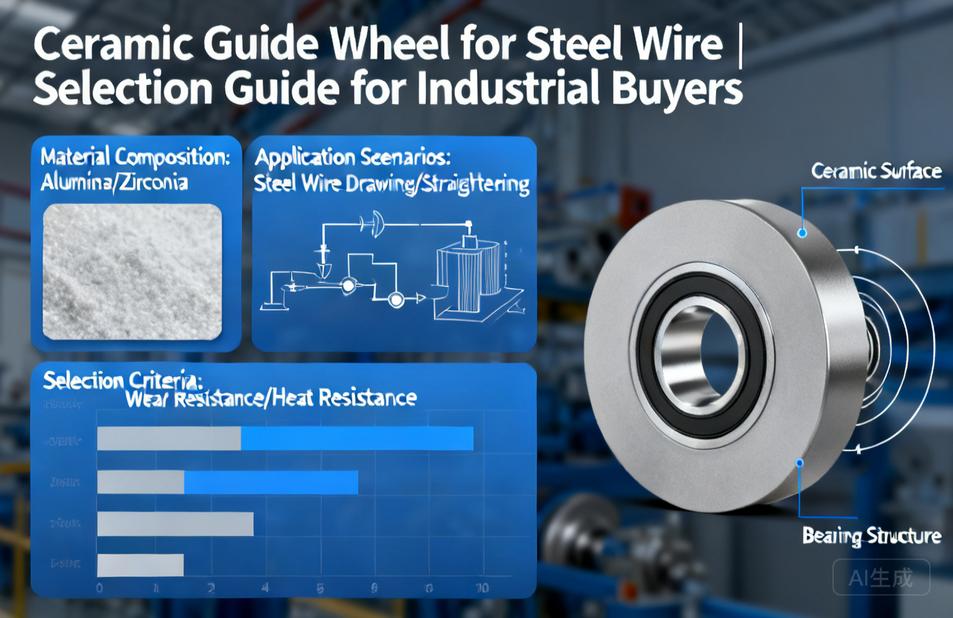
A ceramic guide wheel for steel wire is a precision wire-guiding component used to route, tension, and support steel wire, cable, and similar metal strands through drawing, winding, stranding, and processing equipment. In steel wire production and downstream metalworking, the guide wheel controls wire position and reduces friction at points where the wire changes direction under tension. For procurement teams sourcing wear-resistant wire contact parts, understanding material choice, groove geometry, and shaft fit is essential before contacting a manufacturer or supplier.
What a Ceramic Guide Wheel Does in Steel Wire Processing
Steel wire moves continuously at speed through machines such as wire drawing lines, stranders, coiling machines, and pay-off and take-up units. Every change of direction creates contact between the wire and a guide surface. If that surface wears quickly or generates excessive friction, wire surface quality suffers, tension fluctuates, and maintenance intervals shorten. Ceramic guide wheels are used precisely because ceramic is hard and resistant to abrasion, so the contact surface holds its shape longer than many metal alternatives when running abrasive steel wire.
These wheels are most common at critical contact points: before and after dies, at capstans and sheaves, on stranding and bunching machines, in wire winding heads, and in cable-making equipment. They are also found in fencing wire machines, welding wire feeding systems, spring making machines, and steel rope production. The specific application determines groove profile, wheel diameter, bearing type, and mounting style.
Key Features Buyers Look For
When evaluating a ceramic guide wheel for steel wire, purchasing and engineering teams typically focus on the following characteristics.
- Abrasion resistance: The ceramic contact surface resists wear from hard steel wire, which helps maintain the groove profile over long production runs.
- Low friction: A smooth ceramic surface reduces drag and heat generation at high wire speeds.
- Groove accuracy: A consistent, well-formed groove keeps the wire centered and prevents lateral movement that can damage wire or cause tangling.
- Chemical and heat stability: Many ceramic grades tolerate lubricants, coolants, and elevated temperatures better than polymer contact surfaces.
- Balance and concentricity: For high-speed operation, the wheel and bearing assembly must run true to avoid vibration and wire chatter.
Materials and Construction
Guide wheels for wire handling commonly use alumina (Al2O3) or zirconia-based ceramics, though other technical ceramic grades may be selected for specific wear or temperature conditions. The ceramic ring is typically mounted in a metal hub or pressed onto a shaft, often with a sealed or shielded ball bearing to allow free rotation. Some designs use a solid ceramic wheel with an integrated bearing seat, while others combine a ceramic outer ring with a steel or stainless core.
Because ceramic is brittle compared with metal, the mounting design matters. Sharp impacts during installation or wire breakage can chip the wheel edge. Suppliers who understand wire industry service conditions usually design rounded edges, protective hubs, or reinforced mounting to reduce this risk. Buyers should discuss wire diameter, line speed, and expected shock loads with the manufacturer so the construction matches the actual working environment.
Industrial Applications
Ceramic guide wheels appear across many wire and cable processes. In wire drawing, they guide wire between dies and capstans. In annealing and plating lines, they route wire through process sections where corrosion resistance and heat tolerance are useful. In stranding and bunching, multiple wheels guide individual strands into lay. In welding wire production, they help feed and tension wire without marking the surface. Other uses include wire rope closing, spring coiling, nail making, fencing mesh production, and steel cord manufacturing.
Each application has different priorities. A high-speed strander may prioritize dynamic balance and low friction. A wet drawing line may prioritize corrosion resistance and compatibility with lubricants. A heavy wire application may prioritize impact resistance and robust hub design. Sharing these details with a supplier leads to a more suitable wheel rather than a generic catalog part.
How to Choose the Right Guide Wheel
Selecting a ceramic guide wheel for steel wire is mainly a matching exercise between the wheel and the machine, the wire, and the operating conditions. The following factors help narrow the options.
Wire Diameter and Groove Profile
The groove must match the wire diameter closely enough to support the wire without pinching it. A groove that is too narrow can damage the wire surface; one that is too wide allows the wire to wander. Buyers should provide the wire diameter range, not just a single value, if the line runs multiple products.
Load and Speed
Line speed and tension affect bearing selection and wheel balance. High-speed applications generally call for precision bearings and a tightly controlled rotating assembly. Low-speed, high-tension applications may place more demand on the hub and shaft connection.
Mounting and Shaft Fit
Guide wheels are mounted in different ways, including bore-mounted, stud-mounted, and bracket-mounted configurations. The shaft diameter, keyway or flat requirements, and available space determine which style fits. Providing a drawing or sample prevents mismatches.
Environment
Presence of coolant, lubricant, dust, or elevated temperature influences the choice of ceramic grade, seal type, and hub material. In wet or dirty environments, sealed bearings usually last longer than open bearings.
Customization and OEM Options
Many ceramic guide wheel manufacturers and suppliers offer OEM and custom production. Customization may include non-standard outer diameters, specific groove radii, alternative bore sizes, different hub materials, special bearing fits, and private labeling. For replacement parts, a custom wheel can match the original equipment dimensions so it drops into existing brackets without modification.
When requesting a custom quote, prepare the wire diameter, wheel outer diameter, groove dimensions, bore or shaft size, mounting method, operating speed, and environmental conditions. A dimensioned drawing or worn sample is often more useful than a verbal description. A capable factory will review the application and confirm the critical tolerances before production.
Buying Considerations
Price alone is a weak basis for choosing a wire guide wheel because premature wear leads to downtime, wire defects, and repeated replacement labor. Buyers should compare the expected service interval, groove consistency, and bearing quality across quotations. It also helps to ask how the supplier controls roundness, groove surface finish, and concentricity, since these affect wire tracking and vibration.
Order quantity, spare parts planning, and packaging are practical factors as well. Many plants keep a small stock of critical guide wheels to avoid line stoppages. If the wheel is part of a larger machine build, coordinating delivery with the equipment schedule reduces storage and handling.
Supplier Selection
Choosing a reliable supplier is as important as choosing the wheel itself. A manufacturer with experience in wire and cable machinery understands that a guide wheel is a wear part with specific contact geometry, not a generic ceramic ring. Useful evaluation points include technical communication, willingness to review drawings, experience with similar industrial applications, and consistency between sample and production parts.
Buyers sourcing internationally often work with a factory that supports both standard and custom orders. During supplier evaluation, request dimensional drawings, material information, and inspection practices. If possible, test a sample under real line conditions before committing to volume. This step reveals more about fit and wear behavior than catalog specifications alone.
Frequently Asked Questions
What is a ceramic guide wheel for steel wire used for?
It is used to guide, tension, and support steel wire at points where the wire changes direction in drawing, stranding, winding, and wire processing machines. The ceramic contact surface resists abrasion from the moving wire.
Can ceramic guide wheels be customized for my machine?
Yes. Many suppliers and factories offer custom and OEM production, including specific outer diameters, groove profiles, bore sizes, hub materials, and bearing arrangements. Providing a drawing or sample helps ensure a proper fit.
How do I choose between ceramic and metal guide wheels?
Ceramic is often selected where abrasion resistance, low friction, and long groove life are priorities. Metal wheels may suit applications with severe impact risk. The final choice depends on wire type, speed, tension, and environment.
What information should I send to a supplier for a quotation?
Send wire diameter range, wheel dimensions, groove details, bore or shaft size, mounting style, operating speed, and environmental conditions. A drawing or sample photo helps the supplier confirm the correct design.
Conclusion
A ceramic guide wheel for steel wire is a small but important wear component that affects wire quality, line uptime, and maintenance cost. Focus on groove accuracy, bearing quality, mounting fit, and material suitability for your specific process rather than price alone. If you are evaluating options, contact a qualified manufacturer or supplier with your wire and machine details, and discuss standard, OEM, or custom requirements directly. Sharing application information early usually leads to a better-matched wheel and fewer surprises during installation.
