

Coating Service Overview
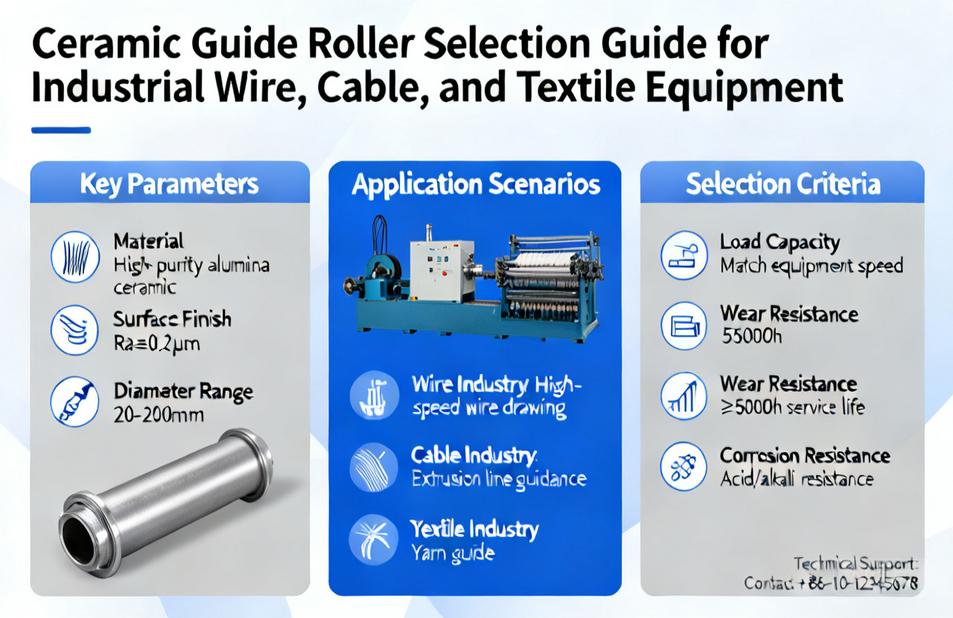
A ceramic guide roller is a rotating or stationary cylindrical component made from advanced ceramic material, used to guide, tension, and protect wire, cable, thread, film, and other flexible materials as they move through industrial machinery. Unlike metal rollers, ceramic guide rollers reduce friction, resist abrasion, and help prevent surface damage to the product being processed. They are commonly found in wire drawing machines, cable manufacturing lines, textile equipment, coil winding systems, and optical fiber production. For procurement teams and equipment engineers, understanding how these rollers work and how to specify them correctly is essential for maintaining line efficiency and product quality.
What Is a Ceramic Guide Roller?
A ceramic guide roller is typically a cylindrical roller body fitted with ceramic rings, ceramic sleeves, or a full ceramic surface. The ceramic element contacts the moving material and provides a smooth, hard, and wear-resistant path. In many designs, the roller consists of a metal core or shaft with ceramic components mounted on the outer diameter. Some units use full ceramic construction for specific chemical or high-temperature environments. The roller may rotate on bearings or remain fixed while the material slides across the ceramic surface, depending on the machine design and the application requirements.
The primary function is to control the path of the material without introducing scratches, deformation, or excessive tension. Because ceramic materials are much harder than most metals, they maintain their surface finish far longer in continuous production environments. This reduces downtime for replacement and helps keep product quality consistent across long production runs.
Key Features and Performance Advantages
Ceramic guide rollers are selected for several performance characteristics that directly affect production economics and product quality.
- High wear resistance: Ceramic surfaces resist abrasion from wire, cable, and thread, extending service life compared with many metal rollers.
- Low friction: The smooth ceramic surface reduces drag on the moving material, which can lower tension fluctuations and energy consumption.
- Chemical stability: Many technical ceramics resist acids, alkalis, and solvents, making them suitable for demanding process environments.
- Electrical insulation: Ceramic materials are non-conductive, which is valuable in wire and cable applications where electrical isolation is required.
- Thermal resistance: Ceramic rollers can operate at elevated temperatures where some polymer or metal components may degrade.
- Surface protection: The polished ceramic contact surface helps prevent scratching and deformation of delicate materials.
These features make ceramic guide rollers a practical choice when metal rollers wear too quickly or when product surface quality is critical.
Materials and Construction
The most common ceramic materials used in guide rollers include alumina (Al2O3), zirconia (ZrO2), and silicon nitride (Si3N4). Each material offers a different balance of hardness, toughness, and cost. Alumina is widely used for general wear applications because it provides good hardness and chemical resistance at a relatively economical cost. Zirconia offers higher toughness and is often chosen where impact resistance is important. Silicon nitride provides high strength and thermal shock resistance for more demanding conditions.
The roller construction usually includes a metal shaft or core, ceramic rings or sleeves, and a bearing system if the roller rotates. The ceramic surface is typically ground and polished to a specific surface roughness and profile. The groove shape, radius, and width are designed to match the material being guided. Common profiles include U-groove, V-groove, flat, and custom radius shapes. The choice of profile affects how the material tracks and how much contact stress is applied.
Industrial Applications
Ceramic guide rollers are used across many industries where continuous material handling and surface quality matter.
Wire and Cable Manufacturing
In wire drawing, stranding, and cable jacketing lines, ceramic rollers guide conductors and cables without causing scratches or copper dust. They also provide electrical insulation in some setups.
Textile and Fiber Production
Textile machines use ceramic guide rollers to control yarn and thread tension. The smooth surface reduces fiber damage and helps maintain consistent yarn quality.
Optical Fiber and Electronics
During optical fiber drawing and processing, ceramic rollers guide delicate glass fibers with minimal contact stress. In electronics production, they are used in coil winding and wire handling equipment.
Film and Packaging
Plastic film and packaging lines use ceramic rollers to guide webs without scratching or stretching the material.
Metal Processing
In metal strip and foil processing, ceramic rollers help maintain surface finish and reduce wear in continuous lines.
How to Choose the Right Ceramic Guide Roller
Selecting the correct roller requires matching the roller specifications to the material, machine, and operating conditions. Buyers should consider the following factors.
Material Compatibility
Identify the material being guided and its sensitivity to contact stress, temperature, and chemicals. Wire and cable may require a specific groove profile to avoid flattening. Textile yarns may need a smooth radius to prevent fiber damage.
Roller Dimensions and Profile
Confirm the shaft diameter, roller outer diameter, width, and groove shape. The profile must match the existing machine mounting and the material path. Custom profiles are often required for specific equipment.
Speed and Load
Consider the line speed and tension. Higher speeds may require a balanced rotating roller with suitable bearings. Higher tensions may require a larger contact area or a stronger ceramic material.
Environmental Conditions
Check for temperature, humidity, and chemical exposure. Some ceramics perform better in specific environments. Bearing selection must also match the operating temperature and contamination level.
Mounting and Interface
Verify the mounting method, shaft tolerances, and any required fasteners. The roller should fit the machine without modification unless the supplier offers custom mounting solutions.
Customization and OEM Options
Many industrial buyers require custom ceramic guide rollers rather than standard catalog items. A manufacturer or supplier with OEM capabilities can produce rollers to specific drawings, including custom groove profiles, shaft dimensions, ceramic material selection, and surface finish. Customization may also include special markings, packaging, or documentation for inventory management. When requesting a custom quote, provide detailed drawings or samples, operating conditions, and the expected production volume. Working directly with a factory that controls ceramic forming, grinding, and assembly can simplify communication and reduce lead time risk.
Buying Considerations for Overseas Procurement
When sourcing ceramic guide rollers from international suppliers, several practical points deserve attention.
- Specification clarity: Provide complete dimensions, material grade, groove profile, and surface finish requirements.
- Sample evaluation: Request samples to verify fit, surface quality, and performance before placing a bulk order.
- Quality consistency: Ask about the supplier’s process control for ceramic density, dimensional tolerance, and surface defects.
- Technical support: A supplier that understands your application can recommend the right material and profile.
- Packaging and logistics: Ceramic components require careful packaging to prevent breakage during shipping.
- Documentation: Confirm what material certificates or inspection reports are available without assuming specific certifications.
These factors help reduce the risk of receiving rollers that do not match the machine or fail prematurely.
Supplier Selection and Partnership
Choosing a reliable ceramic guide roller supplier is as important as choosing the right product. Look for a manufacturer with experience in ceramic precision components and a track record in your industry. A supplier that also offers OEM and custom services can support future modifications and new product development. Communication is critical: a good supplier will ask about your application, operating conditions, and machine interface before quoting. They should be able to explain material options, profile limitations, and tolerance capabilities in practical terms. Visiting the factory or requesting a video audit can help confirm production capability, especially for custom or high-volume orders.
Frequently Asked Questions
What is the difference between a ceramic guide roller and a metal guide roller?
Ceramic guide rollers generally offer higher wear resistance, lower friction, and better chemical stability than metal rollers. They also provide electrical insulation. Metal rollers may be more economical for low-wear applications but often require more frequent replacement in abrasive or high-speed lines.
Can ceramic guide rollers be customized for my machine?
Yes. Many manufacturers and suppliers offer custom ceramic guide rollers with specific dimensions, groove profiles, ceramic materials, and mounting features. Providing drawings or samples helps ensure the custom roller fits your equipment correctly.
How do I select the right ceramic material for my application?
The choice depends on wear conditions, impact risk, temperature, and chemical exposure. Alumina is common for general wear resistance, zirconia offers higher toughness, and silicon nitride provides high strength and thermal shock resistance. Discussing your operating conditions with the supplier helps narrow the options.
What information should I provide when requesting a quote?
Provide roller dimensions, groove profile, material grade if known, operating speed and tension, environmental conditions, and quantity. If available, include a drawing or sample. This information allows the supplier to quote accurately and recommend the best configuration.
Conclusion
Ceramic guide rollers play a critical role in protecting materials and maintaining production efficiency across wire, cable, textile, fiber, and film industries. Selecting the right roller involves matching the ceramic material, dimensions, profile, and bearing system to the specific application. Custom and OEM options allow equipment builders and end users to optimize performance for their machinery. When evaluating suppliers, focus on specification accuracy, process control, technical support, and customization capability. For projects requiring tailored ceramic guide rollers, contacting a qualified manufacturer or supplier with your application details is the most practical next step to obtain accurate recommendations and quotations.
