

Coating Service Overview
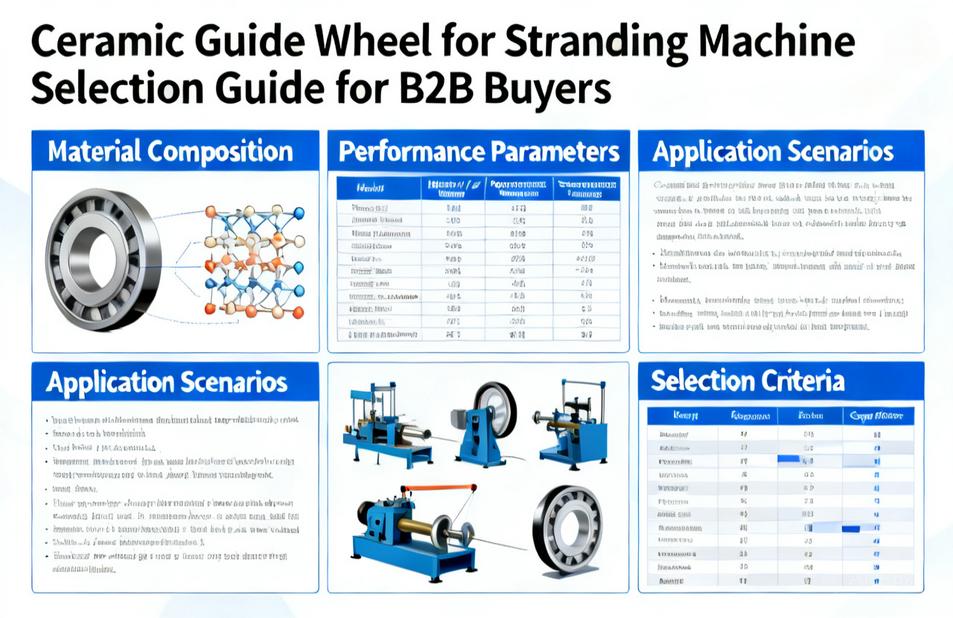
A ceramic guide wheel for stranding machine is a precision wire-contact component used to guide, tension, and route individual conductors or strands as they are twisted into a finished cable. In a stranding machine, the wheel sits at the entry, exit, or intermediate points of the wire path, where it keeps strand spacing consistent, reduces friction, and helps maintain the lay length of the twisted conductor. Because it is often produced from advanced ceramic materials with polished contact surfaces, the wheel is chosen by cable and wire manufacturers who need low wear, stable wire tracking, and reduced risk of surface damage to conductors. For overseas buyers sourcing these components, understanding the relationship between wheel geometry, ceramic grade, mounting style, and machine compatibility is essential to getting a part that performs reliably in continuous production.
What Is a Ceramic Guide Wheel for a Stranding Machine?
In a wire and cable stranding line, multiple strands are fed from pay-off bobbins through a rotating bow or cradle and then combined into a twisted conductor. Guide wheels are placed at key points along this path to constrain strand movement and prevent contact with metal machine parts. A ceramic guide wheel uses a ceramic ring as the wire-contact surface, while the hub, bearing seat, or shaft may be ceramic, metal, or a hybrid assembly depending on the design. The ceramic surface can be polished to a fine finish, which is important when running fine strands, tinned copper, or delicate alloy conductors.
Engineers often use the term ceramic pulley, ceramic sheave, or ceramic guide roller when referring to the same functional part. The naming depends on the machine builder and the region. In practice, the wheel is selected by outer diameter, groove profile, bore size, bearing type, and the strand diameter range it must handle.
Why Ceramic Is Used Instead of Metal in Stranding Applications
Cable manufacturers choose ceramic wheels when metal guide surfaces create problems such as wear grooves, metal transfer, or strand marking. Ceramic materials are typically very hard, which helps the wheel maintain its profile over long production runs. They are also chemically stable, so they resist many lubricants and cleaning agents used in wire drawing and stranding areas. Compared with anodized aluminum or steel, a ceramic contact surface can offer lower friction in many strand-guiding positions, though the exact result depends on ceramic grade, surface finish, strand material, and running speed.
The ceramic ring is usually mounted on a metallic hub, which provides the bore and mounting interface. This hybrid construction allows a factory to replace the ceramic ring if it becomes worn or damaged, rather than scrapping the entire assembly. In some designs, the wheel uses a precision bearing that allows free rotation as the strand passes over it.
Key Features Buyers Look For
When evaluating a ceramic guide wheel for stranding equipment, procurement teams and process engineers usually review the following features:
- Groove profile: V-groove, U-groove, or radius groove must match the strand diameter and the guidance requirements of the stranding position.
- Surface finish: A polished contact surface helps reduce friction and avoids scratching fine conductors.
- Concentricity and runout: Low runout keeps the strand path stable, especially at higher line speeds.
- Bearing type: Sealed, shielded, or open bearings may be specified depending on speed, lubrication, and contamination exposure.
- Mounting interface: Bore diameter, hub width, keyway, or shaft adaptor must fit the machine bracket.
- Ceramic grade: Alumina, zirconia, and silicon-based ceramics have different toughness and wear characteristics.
Typical Industrial Applications
Ceramic guide wheels appear in many wire and cable processes beyond simple stranding. They are used in rigid stranding, bow stranding, bunching, and double-twist machines, as well as in taping, shielding, and rewinding lines. Cable types include automotive wire, building wire, control cable, data cable, and specialty conductors. In fine-wire production, the wheel helps maintain tension without flattening or marking the strand. In larger conductor stranding, the wheel may function as a support roller or guide at the closing point.
Because the part touches the product directly, it is often treated as a wear component and included in preventive maintenance schedules. Buyers may order sets rather than single pieces so that multiple positions on one machine can be refreshed together.
How to Choose the Right Wheel for Your Stranding Machine
The selection process should start with the machine builder’s drawing or the existing part number. If that information is not available, the following details are needed: strand diameter range, wire material, line speed, wheel outer diameter, groove shape, bore size, and mounting method. The required rotation behavior is also important. A wheel that must rotate freely needs a bearing, while a fixed guide may use a plain bore or bushing. Tension and wrap angle around the wheel affect side load, so these values help determine bearing and hub design.
Buyers should also consider the environment. Dust, metal fines, and lubricant mist can enter an unprotected bearing, so sealed or shielded options may be preferred. If the wheel runs in a clean enclosure, a lighter or more compact assembly may be acceptable. For high-speed stranding, dynamic balance and low runout become more critical.
Customization and OEM Options
Many ceramic guide wheel suppliers offer custom and OEM production for stranding machine builders and cable manufacturers. Customization may include non-standard outer diameters, special groove profiles, specific bore tolerances, integrated shafts, custom hub materials, and branded identification. OEM programs often require sample approval, drawing control, and consistent batch-to-batch quality. When requesting a custom wheel, provide a dimensioned drawing or a physical sample, along with the operating conditions and the strand range. This reduces the risk of mismatch and shortens the development cycle.
Material and Construction Choices
Alumina ceramics are widely used for general guide wheel applications because they offer good hardness and wear resistance. Zirconia ceramics may be chosen where higher toughness is needed. The hub and bearing housing are commonly made from stainless steel, aluminum, or engineering plastic, depending on weight and corrosion requirements. The assembly method, such as shrink fitting, adhesive bonding, or mechanical fastening, affects concentricity and service life.
Quality Checks Before Ordering
Before placing a production order, buyers should confirm dimensions, surface finish, runout, and bearing fit. If the wheel is intended for a critical stranding position, a trial sample on the actual machine is the most practical validation. Inspect for chips, cracks, or uneven groove surfaces, as these can damage strands. Packaging should protect the ceramic surface during transport.
Supplier Selection for Overseas Buyers
Working with a reliable manufacturer or supplier is as important as the product specification. A qualified factory should be able to provide drawings, material information, inspection reports, and samples. Communication matters: the supplier should understand stranding machine terminology and be able to recommend a suitable wheel based on the application. Buyers sourcing from overseas should clarify shipping terms, packing methods, and whether the supplier can support repeat orders with consistent quality. Visiting a factory or reviewing its production process can help verify capability, but the first step is usually a technical discussion based on the machine and strand requirements.
Frequently Asked Questions
What is the difference between a ceramic guide wheel and a metal guide wheel?
A ceramic guide wheel uses a ceramic contact surface, which is generally harder and more wear-resistant than metal. It can reduce friction and the risk of marking delicate strands, while a metal wheel may wear faster or transfer material to the wire in some applications. The best choice depends on strand material, speed, and tension.
Can a ceramic guide wheel be customized for my stranding machine?
Yes. Many manufacturers offer custom dimensions, groove profiles, bore sizes, bearing options, and hub materials. Provide a drawing or sample plus the operating conditions, and the supplier can produce a wheel that matches the machine interface and strand range.
How do I know which groove profile to choose?
The groove should match the strand diameter and the guidance needs of the position. A V-groove is common for centering, while a U-groove or radius groove may be used for larger or more delicate conductors. The machine builder’s specification is the best starting point.
What information should I provide when requesting a quote?
Supply the wheel outer diameter, bore size, groove details, strand diameter range, wire material, line speed, mounting method, and quantity. If available, include a part number or drawing. This helps the supplier recommend a suitable design and avoid unnecessary back-and-forth.
Conclusion
Selecting the right ceramic guide wheel for a stranding machine comes down to matching the wheel geometry, ceramic material, bearing arrangement, and mounting interface to the actual wire path and production conditions. Buyers should confirm dimensions and performance requirements before ordering, and consider custom or OEM options when standard parts do not fit. A supplier with technical understanding of stranding equipment can help shorten the selection process. If you are sourcing guide wheels for a specific machine or strand application, contact the supplier with your specifications to discuss standard options, customization, or OEM production.
