

Coating Service Overview
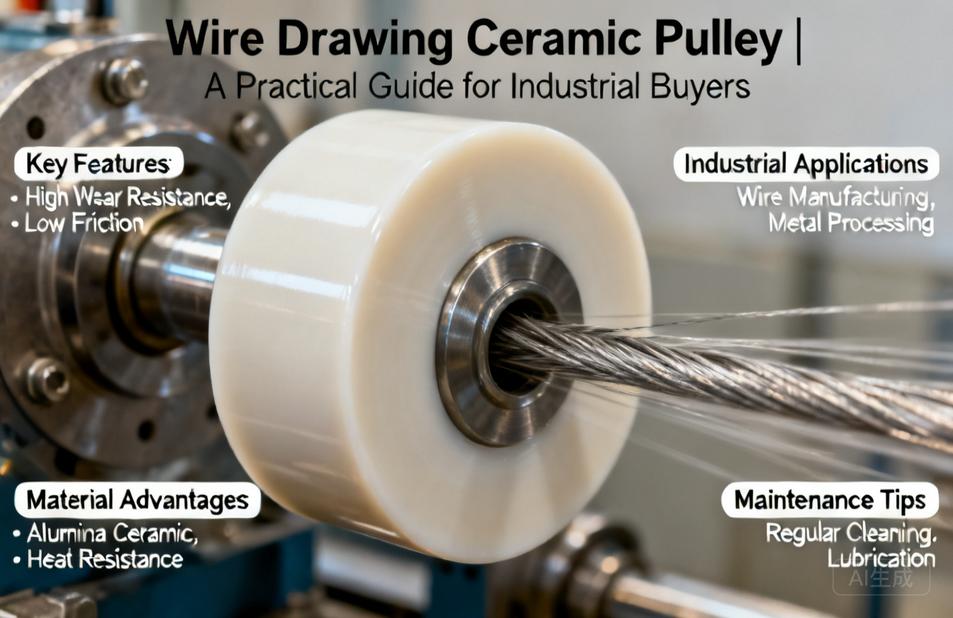
A wire drawing ceramic pulley is a precision guide component used in wire drawing lines, cable manufacturing, and metal forming equipment to route and tension wire without causing surface damage or excessive wear. Unlike metal sheaves, the ceramic insert or ceramic-coated groove provides a hard, smooth contact surface that reduces friction and helps protect the wire surface as it passes through the drawing process. For overseas buyers sourcing components for wire drawing machines, cable twisting equipment, or steel cord production lines, understanding the construction, selection criteria, and supplier capabilities is essential for maintaining consistent output and reducing downtime.
What Is a Wire Drawing Ceramic Pulley?
A wire drawing ceramic pulley, sometimes called a ceramic guide pulley or ceramic sheave, is a pulley assembly in which the wire contact surface is made from technical ceramic. The pulley body is usually aluminum, steel, or a composite material, while the groove is fitted with a ceramic ring or coated with a ceramic layer. The ceramic surface is designed to resist abrasion from wire sliding at speed and to minimize friction that could otherwise scratch, ovalize, or otherwise damage the wire.
These pulleys are commonly found at the entry and exit of drawing machines, in dancer systems, in accumulators, and in wire guides that control wire path and tension. In high-speed operations, the pulley must handle continuous wire contact without generating heat buildup or contaminating the wire surface. This makes ceramic a practical choice where metal pulleys would wear quickly or leave marks on soft or coated wire.
Key Features Buyers Should Evaluate
When reviewing ceramic pulleys for wire drawing, purchasing teams typically focus on several functional characteristics. The ceramic contact surface should be dense and uniformly finished so that it does not introduce scratches. The groove profile must match the wire diameter and the angle of wire approach, because an incorrect radius can cause the wire to ride incorrectly and wear unevenly.
- Low friction coefficient to reduce drag and energy loss
- High hardness for extended service life in abrasive wire environments
- Corrosion resistance for wet or chemically exposed drawing lines
- Smooth surface finish to protect bare, plated, or coated wire
- Balanced pulley body to reduce vibration at high rotational speeds
- Compatibility with existing shaft, bearing, and mounting configurations
These features matter most in continuous production, where even a small amount of groove wear can affect wire diameter consistency and surface quality.
Materials and Construction
Ceramic pulleys used in wire drawing are generally produced with alumina-based or zirconia-based ceramics, depending on the required toughness and wear resistance. The ceramic ring is often press-fitted, bonded, or mechanically locked into the pulley body. Some designs use a full ceramic insert, while others apply a ceramic coating over a metallic substrate. The pulley body may be machined from aluminum for lower inertia or from steel for higher load capacity.
Bearings also influence performance. Sealed bearings are common in dusty or wet environments, while open bearings may be used where lubrication access is easy. The shaft mounting style, whether fixed, rotating, or with an integrated stud, must match the wire drawing machine design. Buyers should confirm the pulley outer diameter, groove width, groove depth, and bore size against the equipment manual before ordering.
Industrial Applications
Ceramic pulleys are used across a range of wire and cable processes. In wire drawing, they guide wire between capstans, dies, and spoolers. In cable manufacturing, they route conductors through stranding and twisting operations. In steel cord and bead wire production, they help maintain tension and prevent surface defects. Other applications include welding wire production, enamelled wire lines, rope and cordage manufacturing, and optical fiber processing where surface integrity is critical.
Because different processes expose pulleys to different speeds, wire diameters, lubricants, and ambient conditions, a pulley that performs well in one line may not be suitable for another. This is why application details should always be shared with a manufacturer or supplier before finalizing a specification.
How to Choose the Right Ceramic Pulley
Match the groove to the wire
The groove radius and depth should suit the wire diameter and the expected contact angle. A groove that is too narrow can pinch the wire, while one that is too wide reduces guidance and may allow the wire to wander.
Confirm speed and load capacity
High line speeds require a balanced pulley and a bearing arrangement that can handle the resulting rotational speed. Buyers should provide the maximum wire speed and tension so the supplier can recommend a suitable bearing and body design.
Check environmental conditions
Wet drawing, emulsion exposure, and elevated temperatures can affect both the ceramic and the bearing. Specify the operating environment so the pulley construction can be selected accordingly.
Review mounting and space limits
Available shaft space, bracket design, and adjacent components often determine whether a standard pulley can be used or a custom design is required.
Customization and OEM Options
Many wire drawing ceramic pulley manufacturers offer OEM and custom production for equipment builders and replacement part buyers. Customization can include specific outer diameters, groove profiles, bore sizes, ceramic materials, pulley body materials, bearing types, and mounting features. Private labeling and custom packaging are also common for distributors. When requesting a custom quote, provide drawings, samples, or detailed measurements, along with the wire material, wire diameter, line speed, and operating environment. A capable factory will review these details and propose a workable design rather than simply quoting a catalog number.
Buying Considerations and Supplier Selection
Price alone is rarely a reliable indicator of suitability in wire drawing components. Buyers should evaluate dimensional consistency, ceramic surface quality, bearing fit, and the supplier’s ability to communicate technical requirements clearly. Requesting samples for trial runs is a practical way to verify performance before committing to volume orders.
When comparing suppliers, look for experience with wire drawing or cable machinery applications, clear documentation of materials and tolerances, and a willingness to discuss application details. A manufacturer that asks about wire type, speed, and environment is generally better positioned to deliver a pulley that fits the process. For buyers sourcing from overseas, confirming packing methods and inspection procedures can also help reduce the risk of damage during transit.
Frequently Asked Questions
What wire materials can ceramic pulleys handle?
Ceramic pulleys are commonly used with steel wire, stainless steel wire, copper wire, aluminum wire, coated wire, and cable conductors. The specific ceramic grade and surface finish should be selected based on the wire hardness and surface sensitivity.
Can ceramic pulleys replace metal pulleys directly?
In many cases they can, but the replacement should account for groove dimensions, pulley weight, bearing type, and shaft fit. A direct swap without checking these factors may affect wire tension or cause misalignment.
Do you offer custom ceramic pulleys for specific machines?
Yes. Custom and OEM production is common in this category. Provide drawings, samples, or measurements along with application details, and the manufacturer can propose a suitable pulley design.
How do I know when a ceramic pulley needs replacement?
Signs include visible groove wear, surface scratches on the wire, increased tension variation, unusual noise, or bearing play. Inspection intervals should be set according to line speed and production hours.
Conclusion
Selecting the right wire drawing ceramic pulley depends on matching the groove, material, bearing, and mounting design to the actual wire process. Buyers who share clear application details with a qualified manufacturer or supplier can reduce trial-and-error and improve wire quality and equipment uptime. If you are evaluating options for a new line, replacing worn pulleys, or developing an OEM component, contact the supplier with your wire specifications and machine requirements to discuss standard or custom solutions.
