

Coating Service Overview
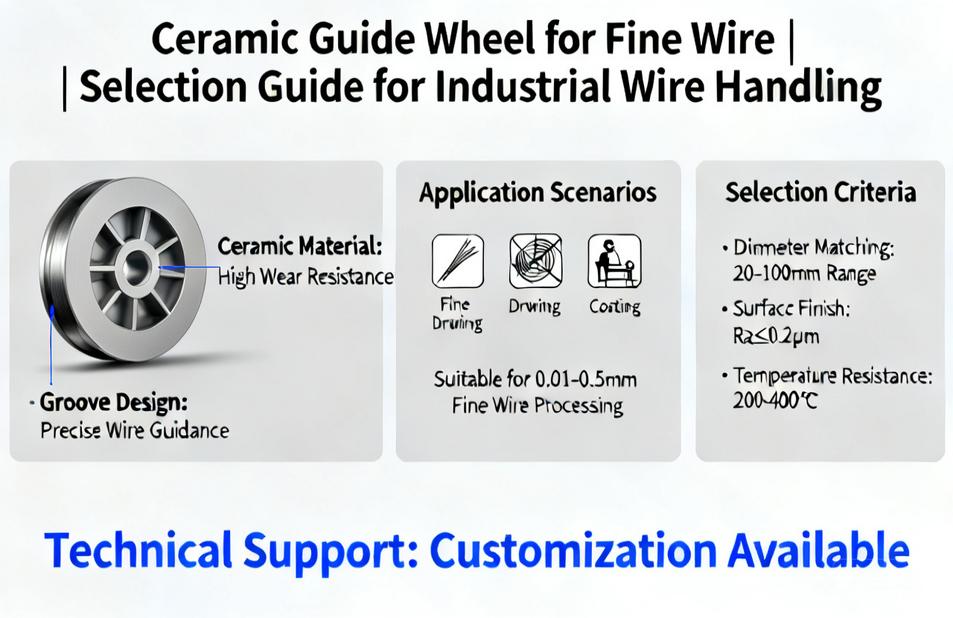
A ceramic guide wheel for fine wire is a precision wire-handling component used to guide, redirect, or tension small-diameter wire without damaging the wire surface or introducing contamination. In applications such as enamelled copper wire winding, wire drawing, cable manufacturing, and precision coil production, the guide wheel controls wire travel and helps maintain consistent tension. Because fine wire is easily scratched or deformed, the wheel material, groove geometry, and surface finish directly affect wire quality and production efficiency.
What a Ceramic Guide Wheel Does in Fine Wire Handling
In a wire processing line, the guide wheel serves as a contact point between the moving wire and the machine. Its primary role is to keep the wire aligned along a defined path while minimizing friction. For fine wire, even a small amount of friction or surface roughness can cause insulation damage, scratching, or wire breakage. Ceramic materials are often selected because they offer smooth surfaces, wear resistance, and stable performance over long production runs.
Typical positions for these wheels include pay-off and take-up stations, tension control units, wire guides before and after dies, and routing points inside winding machines. In each case, the ceramic guide wheel works with other components such as pulleys, rollers, and tensioners to maintain a stable wire path.
Key Features Buyers Look For
When sourcing ceramic guide wheels for fine wire, overseas buyers typically evaluate several practical characteristics rather than a single specification.
Surface Finish and Wire Contact
A smooth contact surface reduces the risk of scratching or abrading fine wire. The groove radius and profile should match the wire diameter range so the wire is supported without pinching or excessive side pressure. A well-matched groove helps prevent wire jumping and lateral movement.
Wear Resistance
Fine wire may run continuously at high speed, so the guide wheel must resist wear from constant contact. Ceramic materials such as alumina or zirconia are commonly used in these applications because they maintain a hard, stable surface compared with some metal alternatives.
Low Friction and Heat Generation
Low friction helps reduce heat build-up at the contact point. Excessive heat can affect insulation or wire properties, especially with enamelled wire or temperature-sensitive materials. Ceramic surfaces can help keep friction consistent and reduce localized heating.
Chemical and Corrosion Resistance
Depending on the production environment, guide wheels may be exposed to lubricants, cleaning agents, or moisture. Ceramic components are generally chosen for their ability to resist chemical attack and corrosion, contributing to dimensional stability and a longer service life.
Materials and Construction
Most ceramic guide wheels for fine wire are made from technical ceramics such as alumina (Al2O3) or zirconia (ZrO2). Alumina offers good hardness and wear resistance, while zirconia can provide higher mechanical strength and toughness in certain designs. The choice depends on the wire material, running speed, tension level, and the specific demands of the application.
The wheel body may be a solid ceramic piece or a ceramic insert mounted on a metal hub or bearing. In some designs, the ceramic ring is fixed to a metal core for easier mounting and replacement. Bearings, if used, should be selected according to speed, load, and contamination conditions. Buyers should confirm the mounting style, bore size, and overall dimensions to match existing machine shafts or brackets.
Industrial Applications
Ceramic guide wheels for fine wire are used in a wide range of wire-related industries:
- Enamelled wire and magnet wire production
- Wire drawing and annealing lines
- Cable and wire harness manufacturing
- Precision coil winding and transformer production
- Textile and technical fiber processing
- Electronic component and sensor manufacturing
Each application may require a different groove profile, wheel diameter, or ceramic grade. For example, coil winding often demands smooth wire travel and low tension fluctuation, while wire drawing may require higher wear resistance at higher speeds.
How to Choose the Right Ceramic Guide Wheel
Selecting a guide wheel for fine wire involves matching the component to the wire and the machine. Buyers can use the following checklist when evaluating options from a manufacturer or supplier.
1. Wire Diameter Range
The groove size and radius should suit the minimum and maximum wire diameter used on the line. A groove that is too wide may allow the wire to wander, while a groove that is too narrow can cause rubbing and tension spikes.
2. Running Speed and Tension
Higher speeds and tensions place greater demands on the wheel’s balance, bearing system, and material. Confirm the expected operating conditions with the supplier so the guide wheel can be matched accordingly.
3. Mounting and Dimensions
Check bore diameter, outer diameter, width, and mounting method. If the wheel must fit an existing shaft, provide drawings or samples to avoid mismatch.
4. Ceramic Material and Surface Condition
Ask about the ceramic grade, surface roughness, and groove finishing. These factors influence friction, wire protection, and wear life.
5. Environmental Factors
Consider lubricants, cleaning processes, humidity, and temperature. The guide wheel should be compatible with the production environment.
Customization and OEM Options
Many fine wire processes require non-standard guide wheels. A manufacturer or factory that offers OEM and custom production can adjust dimensions, groove profiles, ceramic materials, and mounting features to suit specific equipment. Custom options may include special bore sizes, flanged designs, ceramic-to-metal assemblies, or wheels designed for a particular wire range.
When requesting a custom ceramic guide wheel, provide detailed information such as wire diameter, machine model, running speed, tension, and a drawing or sample if available. This helps the supplier recommend a suitable design and reduces the risk of fit or performance issues.
Buying Considerations for Overseas Purchasers
Price alone is rarely the best basis for choosing a guide wheel supplier. Buyers should compare dimensional accuracy, surface quality, material consistency, and the supplier’s ability to support repeat orders. It is also useful to ask about packaging, labeling, and batch traceability if the wheels are used in critical production.
For international orders, communication and documentation matter. A reliable supplier should be able to clarify specifications, provide dimensional drawings, and discuss sampling or trial orders. If the application involves multiple wire sizes, consider standardizing on a supplier that can offer a range of guide wheels with consistent quality.
Supplier Selection
When evaluating a ceramic guide wheel supplier or manufacturer, look for experience in wire handling components and the ability to work with technical drawings. A factory that understands fine wire applications can often suggest practical improvements to groove design or material selection. Ask about production capabilities, quality control methods, and whether OEM or custom work is part of their normal service. Responsive communication and a clear quotation process are also important for long-term cooperation.
Frequently Asked Questions
What is a ceramic guide wheel for fine wire used for?
It is used to guide and route small-diameter wire in winding, drawing, cabling, and coil production. The ceramic contact surface helps reduce friction and protect the wire surface.
How do I choose the correct groove size?
Match the groove profile and radius to your wire diameter range. Providing the wire sizes and running conditions to the supplier helps ensure a suitable fit.
Can ceramic guide wheels be customized or OEM manufactured?
Yes. Many suppliers offer custom dimensions, groove profiles, and mounting designs. OEM production is common when a standard wheel does not match the machine or application.
What information should I provide when requesting a quote?
Include wire diameter, machine type, running speed, tension, mounting dimensions, and any drawing or sample. This helps the supplier recommend the right ceramic guide wheel.
Conclusion
Choosing a ceramic guide wheel for fine wire is about matching the wheel to the wire, the machine, and the production environment. Focus on groove geometry, surface finish, material selection, and mounting compatibility. If standard sizes do not fit, discuss OEM or custom options with a manufacturer or supplier who understands fine wire handling. For specific specifications, application questions, or customization requests, contact the supplier directly with your wire and equipment details.
