

Coating Service Overview
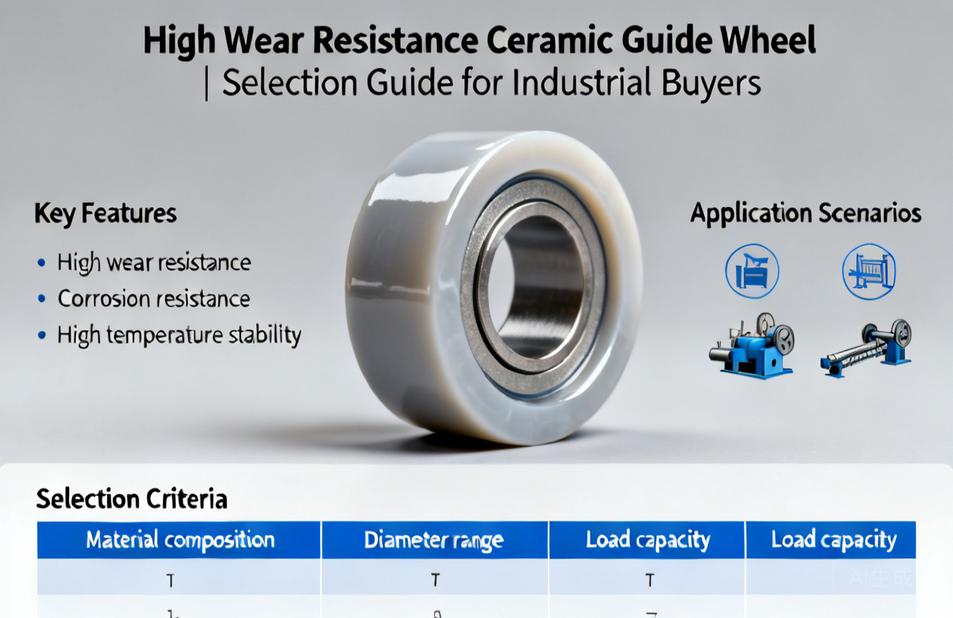
A high wear resistance ceramic guide wheel is a rotating guidance component made from advanced ceramic materials, designed to control wire, thread, tape, fiber, or strip travel in industrial machinery where metal wheels would wear out too quickly. Instead of being a simple pulley, it functions as a precision contact point that must resist abrasion, heat, chemical exposure, and high-speed friction. Buyers searching for a ceramic guide wheel supplier usually want to reduce downtime, protect expensive wire or fiber, and extend maintenance intervals in hostile production environments.
What Makes Ceramic Guide Wheels Different
The core difference is the material. Unlike steel or aluminum wheels, ceramic guide wheels are produced from oxide or non-oxide ceramic grades that combine high hardness with low friction. When a wire, cable, or thread runs at speed, the contact surface experiences continuous micro-abrasion. Over time, metal grooves deform, create burrs, and damage the product. A ceramic guide wheel resists this wear mechanism because its surface is much harder and smoother than conventional metals.
In practical terms, a high wear resistance ceramic guide wheel keeps its groove geometry for longer. That means the wire path remains stable, tension stays consistent, and the product surface is less likely to be scratched or marked. For manufacturers running textile lines, wire drawing machines, or coil winding equipment, this stability directly affects product quality and machine uptime.
Materials and Construction
Most industrial ceramic guide wheels are made from alumina, zirconia, or silicon-based ceramics. Alumina offers good hardness and electrical insulation at a competitive cost, making it common in general wire guiding. Zirconia provides higher toughness and is often chosen where impact or vibration is present. Silicon carbide and silicon nitride grades are used in more demanding applications that require thermal shock resistance or very high stiffness.
Construction details matter as much as the material. A quality wheel typically includes a polished contact groove, a concentric bore, and optional metal or plastic inserts for mounting. Some designs use a ceramic ring pressed onto a metal hub, while others are fully ceramic. The groove profile can be U-shaped, V-shaped, or flat depending on the product being guided. Surface finish is controlled to reduce friction and prevent particle buildup.
Key Performance Features Buyers Should Evaluate
Wear Resistance
The primary reason to specify ceramic is wear life. In high-speed wire or thread applications, ceramic outlasts hardened steel and hard chrome plated wheels under continuous sliding contact. However, wear resistance is not a single number; it depends on ceramic grade, surface finish, load, speed, and the abrasive nature of the material being guided.
Low Friction and Smooth Running
Low friction reduces heat generation and energy loss. For thin wires, optical fibers, and polymer threads, a smooth ceramic surface helps maintain consistent tension and prevents sticking or slipping. This is especially important in precision winding and pay-off operations.
Chemical and Thermal Stability
Ceramic guide wheels perform well where lubricants, solvents, or elevated temperatures are present. They resist many industrial chemicals and do not rust like steel. This makes them suitable for wet processes, coating lines, and high-temperature environments where metal wheels may corrode or soften.
Electrical Insulation
Many ceramic materials are electrically insulating. This is useful in wire processing equipment where stray current or electrical contact must be avoided. An insulating guide wheel can simplify machine design and improve operator safety.
Typical Industrial Applications
Ceramic guide wheels appear in a wide range of production equipment. In the textile industry, they guide yarn, thread, and filament at high speed without creating fuzz or breaks. In wire and cable manufacturing, they control conductor path through drawing, annealing, and stranding lines. In electronics, they guide fine wire during coil winding and transformer production.
Other applications include optical fiber processing, 3D printing filament handling, packaging film guiding, and medical device manufacturing. In each case, the goal is the same: maintain a stable path, minimize product damage, and reduce maintenance frequency. A high wear resistance ceramic guide wheel is often specified when the cost of downtime or product defects is greater than the initial component cost.
How to Choose the Right Ceramic Guide Wheel
Choosing a guide wheel starts with the material being guided. Wire diameter, thread type, tape width, and surface sensitivity determine the ideal groove profile and surface finish. Next, consider operating speed and tension. Higher speeds generally require better dynamic balance and lower friction. Load and impact conditions help decide between alumina, zirconia, or silicon carbide grades.
Environmental factors also matter. If the wheel will be exposed to chemicals, moisture, or high temperatures, confirm that the ceramic grade and any mounting hardware are compatible. Finally, check dimensional requirements: outer diameter, bore size, groove dimensions, and mounting style must match the existing machine or new equipment design. Buyers should request drawings or samples when retrofitting ceramic wheels into an existing line.
Customization and OEM Options
Many industrial buyers need more than a catalog part. A ceramic guide wheel manufacturer can often produce custom groove profiles, non-standard diameters, specific bore tolerances, and special mounting features. OEM production is common in this category, where the wheel is designed to fit a particular machine model or process.
Custom options may include different ceramic materials, surface treatments, metal hubs, bearing inserts, and laser marking for identification. When discussing customization with a supplier, provide detailed application information: wire or thread type, speed, load, temperature, chemical exposure, and available space. Clear requirements help the factory recommend a suitable design and avoid costly trial and error.
Buying Considerations for Overseas Procurement
Purchasing ceramic guide wheels from an overseas supplier requires attention to specification control and consistency. Buyers should confirm material grade, dimensional tolerances, surface finish, and inspection methods. It is also useful to understand the supplier’s production capability, quality control process, and experience with similar applications.
Packaging matters because ceramics can chip if handled roughly during transport. Ask how the wheels are protected for export. For repeat orders, request that the supplier maintain a sample or drawing record to ensure batch-to-batch consistency. A reliable ceramic guide wheel supplier will be able to discuss application details, not just quote a price.
How to Evaluate a Supplier or Factory
When comparing potential suppliers, look for technical communication. A good factory can explain why a certain ceramic grade is recommended, how the groove profile affects performance, and what tolerances are achievable. They should be able to provide drawings, material data, and inspection reports without excessive delay.
Visit or review the production process if possible. Key steps include powder preparation, forming, sintering, precision machining, and surface finishing. A supplier with in-house machining capability can better control concentricity and groove accuracy. If you need OEM or custom guide wheels, confirm that the factory has experience with custom tooling and small to medium batch production.
Frequently Asked Questions
What is the difference between a ceramic guide wheel and a metal guide wheel?
Ceramic guide wheels are harder and more wear resistant than most metals, and they resist corrosion and heat. Metal wheels may be cheaper initially but can wear faster, create burrs, and require more frequent replacement in high-speed or abrasive applications.
Can ceramic guide wheels be customized for my machine?
Yes. Many manufacturers offer custom dimensions, groove profiles, bore sizes, and mounting features. Provide detailed application and machine data so the supplier can recommend a suitable design.
Which ceramic material is best for my application?
The choice depends on load, speed, temperature, and chemical exposure. Alumina is common for general wear resistance, zirconia offers higher toughness, and silicon carbide or silicon nitride may suit extreme conditions. Consult the supplier with your specific operating parameters.
How do I maintain ceramic guide wheels?
Ceramic wheels generally require less maintenance than metal wheels. Inspect for chips, cracks, or groove wear during scheduled maintenance. Clean the surface to remove debris and check mounting hardware for tightness and alignment.
Conclusion
Selecting a high wear resistance ceramic guide wheel is about matching material, groove design, and tolerances to your actual production conditions. Buyers should focus on application details, supplier technical support, and consistency rather than only on unit price. Whether you need a standard part or a custom OEM solution, discussing your wire, thread, or tape guiding requirements with an experienced manufacturer is the most practical first step. Contact a ceramic guide wheel supplier with your specifications and application details to evaluate suitable options.
