

Coating Service Overview
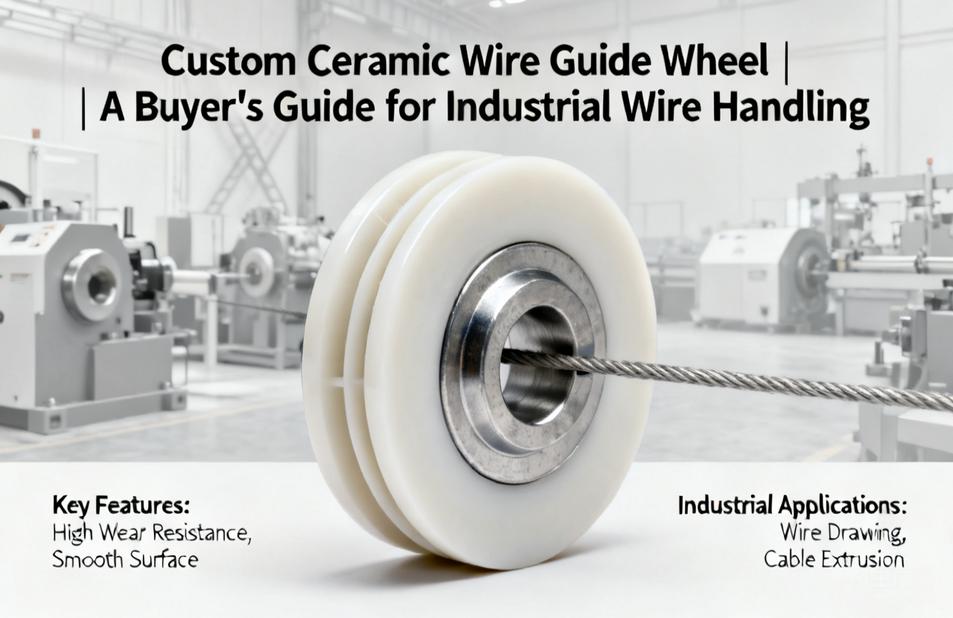
A custom ceramic wire guide wheel is a precision-engineered component used to guide, tension, and route wire, cable, and fiber during winding, drawing, coiling, and pay-off operations. Unlike standard polymer or metal pulleys, a ceramic guide wheel is specified when the wire path demands low friction, wear resistance, and protection of the wire surface. Because every wire handling line has its own geometry, speed, and wire diameter, many OEM machine builders and end users source a custom ceramic wire guide wheel rather than adapting a catalog item. This guide explains how these wheels work, where they are used, what to evaluate before ordering, and how to work with a reliable manufacturer or supplier.
What a Ceramic Wire Guide Wheel Does
The wheel acts as a low-friction contact point along the wire path. As the wire passes over the grooved ceramic surface, the wheel rotates on a bearing or bushing to reduce sliding friction and lateral drag. The ceramic contact surface is chosen because it resists abrasion from hard-drawn wire, coated wire, and abrasive fillers, while helping to avoid scratching or marking the conductor. In a typical arrangement, the wheel is mounted on a shaft or bracket, often with a guide roller or ceramic eyelet nearby, to control wire position before it enters a die, capstan, extruder, or winding head.
How the Wheel Fits into a Wire Path
In drawing and annealing lines, guide wheels help maintain wire alignment between capstans and dies. In coil winding and spooling equipment, they control tension and prevent wire from jumping the groove. In cable and fiber optic production, they protect insulation and cladding from contact damage. Because the wheel rotates rather than dragging, the wire sees lower friction and the contact surface lasts longer than a static guide in many high-speed or abrasive applications.
Key Features Buyers Look For
Purchasing teams and design engineers usually compare guide wheels on a few practical points. The groove profile should match the wire diameter and coating so the wire seats properly without pinching. The ceramic insert should be securely bonded or press-fitted into the wheel body, with a concentric mounting bore to keep rotation smooth. Bearing selection depends on speed, load, and environment, and sealed or shielded bearings are common where dust or coolant is present. The wheel body material and mounting configuration also matter, especially when the wheel must fit an existing bracket with limited space.
- Groove geometry matched to wire diameter and coating
- Ceramic contact surface for wear resistance and low friction
- Balanced wheel body for stable rotation at speed
- Bearing or bushing option suited to load and environment
- Mounting bore, shaft, and bracket interface defined by the machine
Materials and Construction
Ceramic guide wheels typically combine an alumina or zirconia ceramic insert with a metal or engineering plastic wheel body, depending on the load and the machine design. The ceramic is selected for hardness and surface finish, while the body provides structural support and mounting features. The assembly method, whether adhesive bonding, mechanical retention, or press fitting, affects durability and serviceability. Rather than assuming one construction suits every line, buyers should discuss operating speed, wire type, and cleaning methods with the supplier so the wheel is built for the actual duty cycle.
Industrial Applications
Custom ceramic wire guide wheels appear across many wire and cable processes. In wire drawing, they guide wire into and out of dies and capstans. In enameling and annealing equipment, they maintain spacing and reduce contact damage to the conductor. In coil winding, they help control tension and wire lay. In cable assembly and fiber optic handling, they protect insulation and delicate strands. Because each application involves a different wire diameter, line speed, and space envelope, the guide wheel is often specified as an OEM or custom part rather than a general-purpose pulley.
Matching the Wheel to Your Equipment
Before requesting a quote, gather the wire or cable diameter range, the expected line speed, the mounting dimensions, and the available space around the wire path. A drawing or photo of the current guide wheel and its bracket helps the supplier confirm bore size, groove radius, wheel thickness, and mounting style. If the wheel replaces an existing part, note any wear pattern or wire marking issue so the new design can address it. This information lets the manufacturer propose a wheel that fits the machine without trial-and-error installation.
Customization Options and OEM Supply
Customization usually covers dimensions, groove profile, ceramic type, wheel body material, bearing configuration, and mounting details. OEM buyers may need private labeling, specific packaging, or a wheel designed around a new machine platform. Some suppliers also support prototype runs before production, which helps confirm fit and performance on the line. When discussing a custom ceramic wire guide wheel, describe the application clearly and ask which parameters the factory can adjust and which are fixed by the existing machine interface. This keeps the design practical and avoids unnecessary special features.
How to Choose a Supplier
Supplier selection should focus on technical communication and process control rather than broad claims. A capable manufacturer should ask about wire type, speed, load, and environment before recommending a design. Look for a factory that can explain its ceramic insert preparation, bonding or retention method, and inspection steps for concentricity and groove finish. Ask how the supplier handles drawing review, samples, and changes after the first article. For OEM programs, confirm whether the supplier can support repeat orders with consistent dimensions and documentation. Reliable suppliers are usually willing to review your application details and point out where a standard design may be sufficient.
Buying Considerations
Price should be evaluated together with expected service life, replacement frequency, and the cost of wire damage or downtime. A wheel that is inexpensive but wears quickly or marks the wire can cost more over a production year. Confirm the ordering unit, whether wheels are sold individually or in sets, and how the supplier packages them for shipment. Also clarify the drawing revision and inspection criteria so the received parts match the approved sample. These details are more useful than a simple unit price comparison.
Frequently Asked Questions
Can a ceramic guide wheel be made to match an existing mounting bracket?
Yes. Provide the bore diameter, wheel thickness, groove profile, and a drawing or sample of the current part. The manufacturer can then confirm whether the design can be matched or whether a small interface change is needed.
What information is needed for a custom wire guide wheel quote?
Share the wire or cable diameter, line speed, load conditions, mounting dimensions, and operating environment. A photo or drawing of the existing setup helps the supplier propose a suitable ceramic type, body material, and bearing configuration.
Are ceramic guide wheels suitable for both metal wire and coated cable?
They are commonly used with both, but the groove profile and ceramic surface finish should be selected for the specific wire or coating. Coated and delicate cables may need a smoother contact surface and a different groove radius than bare hard-drawn wire.
How do I evaluate a supplier for OEM guide wheel production?
Review their technical questions, drawing control, sample process, and ability to maintain consistent dimensions across repeat orders. Ask for the inspection criteria used for groove finish and concentricity, and confirm how design changes are documented.
Conclusion
Selecting a custom ceramic wire guide wheel starts with a clear understanding of the wire path, the machine interface, and the operating conditions. Focus on groove geometry, ceramic and body construction, bearing choice, and mounting fit, then compare suppliers on technical support and process consistency. If you are reviewing a new application or replacing a wheel that wears or marks the wire, contact the supplier with your wire diameter, speed, and mounting details to discuss specifications, OEM supply, or a custom design.
