

Coating Service Overview
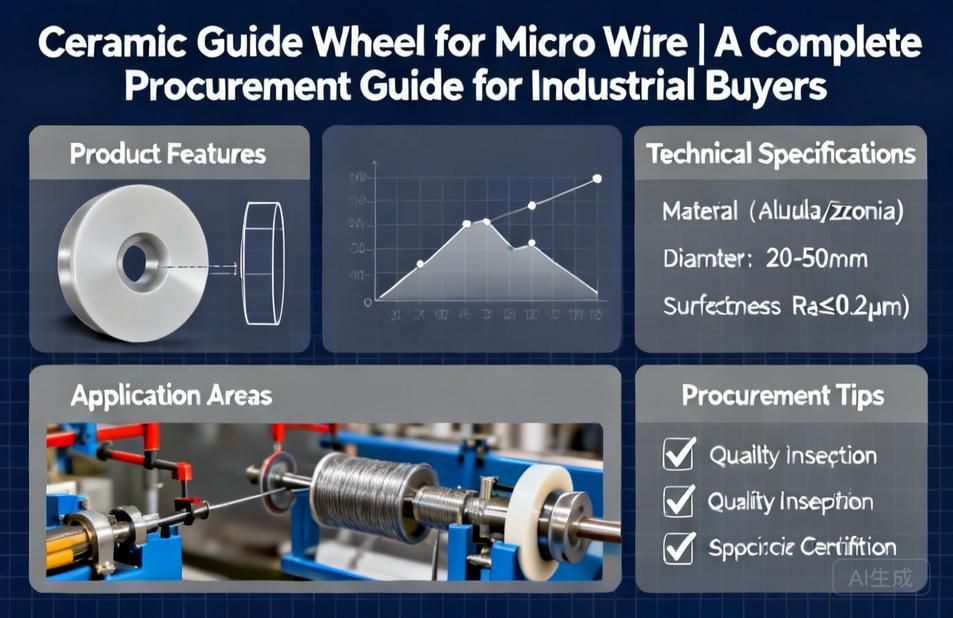
A ceramic guide wheel for micro wire is a precision wire-guiding component used to control the path, tension, and alignment of very fine wire during winding, drawing, annealing, or coating processes. In micro wire applications, where wire diameters can be extremely small and surface quality is critical, the guide wheel must reduce friction, resist wear, and avoid damaging the wire surface. This guide is written for overseas buyers who need to understand how ceramic guide wheels work, where they are used, and how to select a reliable manufacturer or supplier for standard or custom products.
What Is a Ceramic Guide Wheel for Micro Wire?
A ceramic guide wheel for micro wire consists of a ceramic outer ring or groove, usually mounted on a metal bearing, shaft, or bushing. The ceramic surface contacts the wire and guides it along a defined path. Unlike metal guide wheels, ceramic materials offer high hardness and low friction, which helps protect delicate wire surfaces and reduces the risk of scratching, flattening, or contamination. These wheels are commonly found in wire winding machines, coil winding equipment, wire drawing lines, textile machinery, and precision cable handling systems.
The term micro wire usually refers to fine wires used in electronics, sensors, medical devices, heating elements, and specialty cables. Because these wires are thin and sensitive to mechanical stress, the guide wheel geometry, surface finish, and material selection directly affect product quality and process stability.
Key Features Buyers Should Look For
When evaluating a ceramic guide wheel for micro wire, procurement teams should focus on features that affect wire quality, machine uptime, and total cost of ownership.
- Low friction surface: Reduces tension variation and wire slippage.
- High wear resistance: Maintains groove shape over long production runs.
- Smooth groove finish: Prevents micro-scratches on fine wire surfaces.
- Chemical stability: Suitable for processes involving lubricants, coatings, or cleaning agents.
- Precise dimensional tolerance: Ensures consistent wire path and alignment.
- Balanced rotation: Minimizes vibration and wire flutter at high speeds.
These features are especially important when the guide wheel is used in continuous processes where even minor surface defects can lead to wire breakage or rejected finished products.
Materials and Construction
Most ceramic guide wheels use technical ceramics such as alumina, zirconia, or silicon nitride. Alumina offers good wear resistance and cost efficiency. Zirconia provides higher toughness and is often chosen for applications where impact resistance is needed. Silicon nitride is used in demanding high-speed or high-temperature environments. The ceramic ring is typically assembled with a metal bearing, stainless steel shaft, or plastic housing, depending on the machine interface and load requirements.
Buyers should confirm the ceramic grade, surface roughness, groove profile, and bearing type with the supplier. For micro wire, the groove radius and surface finish are particularly important because they determine how gently the wire is guided. A custom manufacturer can produce specific groove shapes, edge radii, and mounting configurations to match existing equipment.
Typical Industrial Applications
Ceramic guide wheels for micro wire are used across many industries where fine wire handling is required.
- Electronics manufacturing: Coil winding, transformer production, and micro cable assembly.
- Medical device production: Guide wires, sensor wires, and precision catheter components.
- Wire and cable industry: Drawing, annealing, tinning, and coating lines.
- Textile machinery: Yarn and filament guiding where ceramic surfaces reduce friction.
- Automotive and aerospace: Fine wire harnesses, heating elements, and specialty sensors.
- Renewable energy: Winding processes for small motors and electromagnetic components.
In each application, the guide wheel must match the wire diameter, line speed, tension range, and environmental conditions. A supplier with experience in these industries can recommend suitable ceramic grades and geometries.
How to Choose the Right Ceramic Guide Wheel
Choosing the correct guide wheel starts with the wire and the machine, not with the wheel itself. Buyers should collect the following information before contacting a supplier:
- Wire material and diameter range
- Line speed and operating tension
- Groove profile required (V-groove, U-groove, flat, or custom)
- Wheel dimensions and mounting method
- Bearing type and rotational requirements
- Environmental factors such as temperature, lubricants, and cleaning methods
With these details, a manufacturer can propose a ceramic guide wheel that fits the application. In many cases, standard catalog wheels can be adapted, while other projects require a fully custom design. It is also important to consider wear life and replacement frequency, because a guide wheel that is too hard or too rough may damage the wire, while a wheel that is too soft may wear quickly and change the wire path.
Customization and OEM Options
Many overseas buyers require custom or OEM ceramic guide wheels to match specific machinery or product lines. Customization can include:
- Special groove profiles and surface finishes
- Non-standard outer diameters, widths, and bore sizes
- Different ceramic materials for wear, temperature, or chemical resistance
- Integrated shafts, bearings, or mounting brackets
- Private labeling and packaging for OEM programs
A reliable factory should be able to review drawings, samples, or machine specifications and provide a technical proposal. For OEM projects, buyers should discuss tolerances, inspection criteria, and packaging requirements early in the process. It is also useful to request material certificates or dimensional reports if these are required for internal quality systems, but buyers should only rely on documents the supplier can actually provide.
Buying Considerations for Overseas Procurement
When sourcing ceramic guide wheels for micro wire, price should not be the only factor. Buyers should evaluate the supplier’s technical support, production consistency, and ability to handle small or mixed orders. Key questions include:
- Can the supplier recommend the right ceramic grade for the wire and process?
- Are groove dimensions and surface finish controlled within stated tolerances?
- Is the bearing or mounting system suitable for the required speed and load?
- Can the factory support custom designs and OEM branding?
- What is the inspection process before shipment?
- How are products packed to prevent damage during transport?
For micro wire applications, even small deviations in groove shape or surface roughness can affect production yield. Therefore, working with a manufacturer that understands fine wire handling is more valuable than selecting a low-cost supplier without technical support.
Supplier Selection: What to Verify
A qualified ceramic guide wheel supplier should be able to explain material properties, manufacturing methods, and quality control steps. Buyers can ask for product drawings, material specifications, and sample evaluations. If the supplier also produces ceramic eyelets, pulleys, rollers, or other wire contact parts, they are likely to have relevant experience in wire handling. Communication speed, engineering response, and willingness to support small trial orders are also good indicators of a suitable partner.
For buyers in Europe, North America, or other regions, it is helpful to discuss shipping methods, packaging standards, and after-sales support before placing a bulk order. A transparent supplier will clarify what can be customized and what standard options are available, without making unverifiable claims.
Frequently Asked Questions
What is the difference between a ceramic guide wheel and a metal guide wheel for micro wire?
Ceramic guide wheels generally offer lower friction, higher wear resistance, and better surface protection for fine wire. Metal guide wheels may be suitable for heavier wire or lower-precision applications, but they can scratch or deform micro wire more easily.
Can ceramic guide wheels be customized for my machine?
Yes. Many manufacturers offer custom groove profiles, dimensions, ceramic materials, and mounting configurations. Buyers should provide wire diameter, line speed, tension, and machine interface details so the supplier can propose a suitable design.
How do I choose the right ceramic material for my application?
The choice depends on wire sensitivity, operating temperature, chemical exposure, and impact risk. Alumina is common for general use, zirconia offers higher toughness, and silicon nitride is used in more demanding conditions. A supplier with application experience can help match the material to the process.
What information should I provide when requesting a quote?
Provide wire material and diameter, groove profile, wheel dimensions, mounting method, bearing requirements, operating speed, tension range, and any environmental factors. Drawings or samples are helpful for custom or OEM projects.
Conclusion
Selecting the right ceramic guide wheel for micro wire is a technical decision that affects wire quality, machine efficiency, and production cost. Buyers should focus on material selection, groove geometry, surface finish, and the supplier’s ability to support custom or OEM requirements. Rather than comparing price alone, evaluate whether the manufacturer understands fine wire handling and can provide consistent, dimensionally controlled products. If you are sourcing ceramic guide wheels for a specific micro wire application, contact a qualified supplier with your wire and machine details to discuss standard options, customization, or OEM cooperation.
