

Coating Service Overview
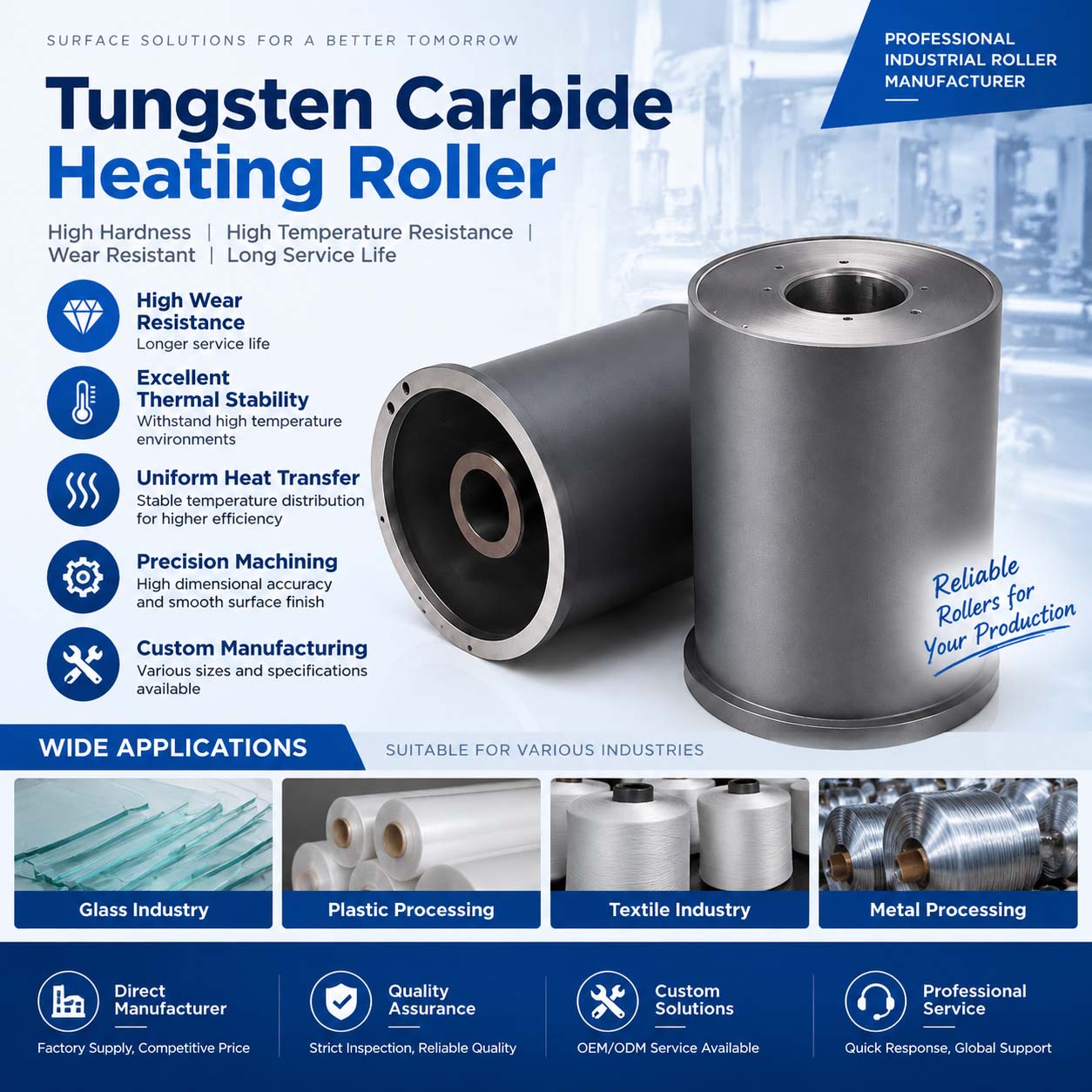
In the production of enamel wire, cable conductors, and metal wires, heating rollers play an important role in heating, pulling, and tension control.
Whether used in enamel wire ovens, wire drawing lines, annealing systems, or sizing processes, the temperature uniformity and surface condition of heating rollers directly affect coating curing, surface quality, and mechanical performance.
Proper selection and maintenance of heating rollers can reduce problems such as wire breakage, uneven coating, and production instability, improving overall line efficiency.
Applications of Heating Rollers
Heating Rollers in Enamel Wire Machines
Enamel wire production uses repeated coating and baking processes to form an insulating film on the conductor surface.
Heating rollers are usually installed near:
- Oven outlets
- Coating sections
- Drying and curing areas
They help maintain wire temperature and improve enamel flow and curing performance.
The roller temperature must match:
- Enamel material type
- Line speed
- Curing requirements
to prevent:
- Bubble formation
- Poor curing
- Uneven coating thickness
Heating Rollers in Wire Drawing Equipment
During copper, aluminum, and stainless steel wire drawing, heating rollers are commonly used in:
- Annealing sections
- Continuous heat treatment systems
By heating the wire online, they help:
- Remove work hardening
- Restore material flexibility
- Improve drawing stability
Roller diameter, length, and heating power should be selected according to wire diameter and production speed.
Heating Rollers in Winding and Pay-Off Systems
In winding and pay-off equipment, heating rollers are mainly used for:
- Tension control
- Wire preheating
- Stress reduction
Preheating before precision winding can reduce internal stress and improve coil forming quality.
Structure and Heating Methods
A typical heating roller consists of:
- Roller body
- Heating elements
- Bearings
- Temperature sensors
- Control system
The roller body is usually made of steel and can be treated with:
- Hard chrome plating
- Ceramic coating
- Tungsten carbide coating
to improve wear resistance and corrosion protection.
Electric Heating
Electric heating rollers use internal heating elements to transfer heat through air or thermal oil.
Advantages:
- Simple structure
- Lower cost
- Easy maintenance
Limitations:
- Slightly lower temperature uniformity compared with induction heating
Electromagnetic Induction Heating
Induction heating rollers generate heat directly inside the roller through electromagnetic induction.
Advantages:
- Fast heating speed
- Excellent temperature uniformity
- High energy efficiency
- Precise temperature control
They are ideal for:
- High-speed enamel wire machines
- Precision annealing processes
- Temperature-sensitive applications
Temperature control is usually achieved through thermocouples or resistance sensors with closed-loop controllers. Control accuracy can reach approximately ±1°C.
Heating Roller Selection Guide
When selecting a heating roller, consider:
Working Temperature
Choose the heating method and temperature range according to:
- Enamel curing temperature
- Metal annealing temperature
- Process requirements
Line Speed and Roller Size
Higher line speeds require:
- Larger roller diameter
- Longer contact time
- Higher heating capacity
The roller length should match the wire width or number of wires being processed.
Surface Treatment
For high-wear applications such as stainless steel wire processing:
Recommended:
- Ceramic coating
- Tungsten carbide coating
For corrosion-resistant applications:
- Ceramic coating treatment
can provide better protection.
Heating Method
- High-speed enamel production and precision annealing:
Induction heating rollers are recommended - Standard applications requiring cost efficiency:
Electric heating rollers are suitable
Installation Dimensions
Confirm:
- Roller diameter
- Roller length
- Shaft diameter
- Bearing type
Customized designs are available according to equipment requirements.
Maintenance and Troubleshooting
Proper maintenance improves heating roller performance and service life.
Maintenance Tips
- Regularly inspect heating elements and temperature sensors.
- Clean roller surfaces to remove enamel residue and metal particles.
- Use soft cleaning tools to avoid surface scratches.
- Lubricate bearings regularly with high-temperature grease.
- Monitor temperature stability and recalibrate sensors when necessary.
Common Problems and Solutions
Roller Surface Wear
Minor wear can be repaired by polishing.
Severe wear may require:
- Recoating
- Roller restoration
- Replacement
Uneven Temperature
Check:
- Heating element condition
- Thermal medium circulation
- Induction coil performance
- Temperature control system
Bearing Noise
Usually caused by:
- Insufficient lubrication
- Bearing damage
Replace damaged bearings and restore proper lubrication.
Frequently Asked Questions
1. What surface treatments are available for heating rollers?
Common treatments include:
- Hard chrome plating
- Ceramic coating
- Tungsten carbide coating
Chrome plating is suitable for general wear protection. Ceramic coatings provide better corrosion and temperature resistance. Tungsten carbide coatings offer excellent wear resistance for high-speed wire drawing applications.
2. Why choose induction heating rollers over electric heating rollers?
Induction heating rollers provide:
- Faster heating
- More uniform temperature distribution
- Higher efficiency
- Better temperature control
They are suitable for high-precision and high-speed production lines.
3. When should a heating roller be replaced?
Replacement is recommended when:
- Severe surface wear occurs
- Cracks or deformation appear
- Heating elements fail
- Temperature uniformity no longer meets production requirements
4. What materials can use heating rollers?
Heating rollers are widely used for:
- Copper wire
- Aluminum wire
- Stainless steel wire
- Alloy wire
- Cable conductors
Applications include:
- Enamel coating
- Wire drawing annealing
- Preheating before winding
5. How is heating power determined?
Heating power depends on:
- Wire diameter
- Line speed
- Required temperature increase
- Roller size
Manufacturers usually calculate power according to actual process parameters.
6. What should be checked during daily inspection?
Recommended checks:
- Roller surface cleanliness
- Temperature display accuracy
- Bearing noise and vibration
- Heating element connections
- Safety protection systems
