

Coating Service Overview
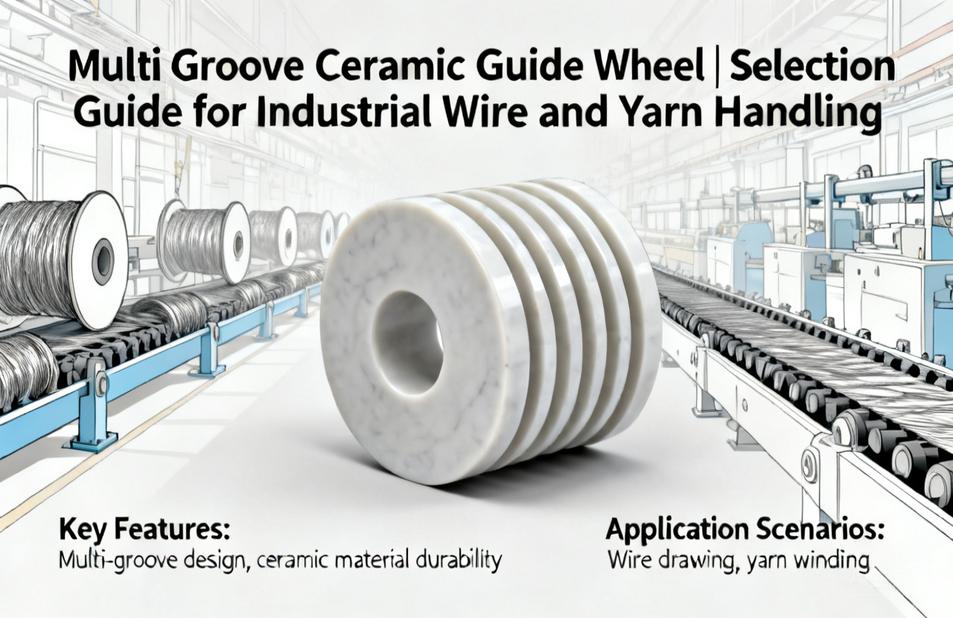
A multi groove ceramic guide wheel is a precision-engineered component used to guide, tension, and redirect wire, cable, yarn, thread, or fiber in industrial machinery. Unlike single-groove pulleys, these wheels feature two or more parallel grooves, allowing a single wheel to manage multiple strands simultaneously, saving space and reducing alignment complexity. Machine builders, maintenance engineers, and sourcing managers often search for reliable suppliers who can provide custom groove profiles and ceramic materials that withstand continuous abrasion. This guide explains what these wheels are, how they work, and how to select the right specification for your application.
What Is a Multi Groove Ceramic Guide Wheel?
A multi groove ceramic guide wheel consists of a ceramic disc with precision-machined grooves around its circumference, mounted on a bearing or bushing assembly. The ceramic material—typically alumina (Al2O3) or zirconia (ZrO2)—provides exceptional wear resistance, low friction, and resistance to many chemicals and high temperatures. The multiple grooves allow one wheel to guide several wires or yarns at once, maintaining consistent spacing and tension. These wheels are common in wire drawing machines, textile machinery, cable manufacturing, and optical fiber production. Compared to metal pulleys, ceramic guide wheels reduce risk of wire contamination and extend service life in high-speed operations.
Key Features and Benefits of Ceramic Multi Groove Wheels
Industrial buyers look for features that reduce downtime and improve product quality. Important characteristics include:
- Wear resistance: Ceramic outlasts steel or plastic in abrasive wire and yarn applications, leading to fewer replacements.
- Low friction: Smooth ceramic surfaces minimize tension variations and energy loss, which is critical for fine wire and high-speed yarn.
- Chemical inertness: Ceramic resists oils, solvents, and many acids, making it suitable for challenging environments.
- Electrical insulation: For applications involving live wires, ceramic provides non-conductive guidance.
- Multi-strand capability: Multiple grooves allow one wheel to handle several lines, reducing machine footprint and alignment errors.
- Temperature resistance: Ceramic maintains strength at elevated temperatures where plastics may deform.
Materials and Construction
The performance of a multi groove ceramic guide wheel depends on the ceramic grade, groove geometry, surface finish, and bearing selection. Alumina 99% is a common choice for general wire guidance due to its hardness and cost-effectiveness. Zirconia offers higher toughness and is preferred where shock loads or thermal cycling occur. Groove profiles can be V-shaped, U-shaped, or radiused, depending on the wire or yarn diameter and the required contact area. Surface finish is typically polished to reduce friction and prevent damage to delicate materials. The wheel is usually mounted on a precision ball bearing, a ceramic bearing, or a stainless steel shaft with a bushing. For high-speed applications, dynamic balance and low runout are essential. When specifying, engineers should consider the load, speed, environment, and the number of strands to be guided.
Typical Industrial Applications
Multi groove ceramic guide wheels are found in a wide range of industries:
- Wire and cable manufacturing: guiding copper, aluminum, or alloy wire during drawing, annealing, and stranding.
- Textile machinery: managing yarn, thread, or filament in spinning, twisting, and winding processes.
- Optical fiber production: guiding fragile glass fibers without surface damage.
- Electronics: handling fine wire in coil winding and component assembly.
- Medical devices: guiding suture threads or catheter wires in cleanroom environments.
- 3D printing and additive manufacturing: feeding filament smoothly in material extrusion systems.
Each application places different demands on groove count, ceramic material, and bearing type. For example, textile machinery may require many grooves and low friction, while wire drawing may need high wear resistance and heat dissipation.
How to Choose the Right Multi Groove Ceramic Guide Wheel
Selecting the correct wheel involves several technical and commercial factors. Start by defining the wire or yarn diameter and material, as these determine groove size and profile. Next, consider line speed, tension, and the number of strands to be guided simultaneously. The wheel’s bearing must handle the radial and axial loads without excessive play. Environmental conditions such as temperature, humidity, and chemical exposure influence ceramic grade and bearing sealing. Mounting interface—shaft diameter, keyway, or threaded stud—must match your equipment. Finally, evaluate total cost of ownership: a higher-priced ceramic wheel that lasts significantly longer may reduce downtime and replacement labor. Requesting samples for trial runs is a practical way to validate performance before full-scale adoption.
Customization and OEM Options
Many industrial suppliers offer custom multi groove ceramic guide wheels to match specific machinery. Customization can include groove count, groove profile, outer diameter, bore size, ceramic material, surface finish, and bearing type. OEM services may involve private labeling, custom packaging, or design collaboration. When working with a manufacturer or factory, provide detailed drawings or samples, and clarify tolerances, inspection criteria, and documentation requirements. A capable supplier will review your application and recommend the most suitable ceramic grade and groove geometry rather than offering a one-size-fits-all solution.
Supplier Selection and Buying Considerations
Choosing a reliable supplier is critical for consistent quality and on-time delivery. Look for a manufacturer with experience in ceramic precision components and industrial guide wheels. Evaluate their quality control processes, in-house machining capabilities, and ability to provide technical support. Ask for material certificates and dimensional reports, but avoid relying solely on certifications without verifying actual process controls. Consider their minimum order quantity, lead time flexibility, and willingness to handle small trial orders. A supplier that understands your industry and asks detailed questions about your application is often a better long-term partner than one that only quotes a price. Whenever possible, request references from similar industrial applications, but be aware that specific client names may be confidential. Review samples under actual operating conditions to confirm wear resistance and guidance accuracy.
Frequently Asked Questions
How many grooves can a multi groove ceramic guide wheel have?
The number of grooves depends on the application and wheel diameter. Common configurations range from two to ten or more grooves. Custom suppliers can produce wheels with specific groove counts to match your machine layout and strand count.
Can ceramic guide wheels be used with metal wire?
Yes, ceramic guide wheels are widely used with metal wire because the hard, smooth surface resists wear and reduces friction. However, the ceramic grade and groove finish should be selected based on wire diameter, speed, and tension to avoid wire damage or excessive wheel wear.
What is the difference between alumina and zirconia guide wheels?
Alumina (Al2O3) offers high hardness and good wear resistance at a lower cost, making it suitable for many general-purpose applications. Zirconia (ZrO2) has higher toughness and better resistance to shock and thermal cycling, which can be beneficial in demanding environments. The choice depends on your specific operating conditions.
Can I order custom multi groove ceramic guide wheels in small quantities?
Many suppliers accommodate small trial orders or prototype runs, though minimum order quantities vary. It is best to discuss your project scope with the supplier, as they may offer flexible terms for testing and validation.
Conclusion
Selecting the right multi groove ceramic guide wheel requires a clear understanding of your wire or yarn handling requirements, operating environment, and equipment interface. Focus on ceramic material, groove design, bearing quality, and the supplier’s ability to provide customization and technical support. A well-matched guide wheel can improve product quality, reduce downtime, and lower long-term costs. If you are evaluating options for a new machine build or a retrofit, contact a qualified manufacturer or supplier to discuss your specifications, request samples, and explore OEM or custom solutions tailored to your industrial application.
