

Coating Service Overview
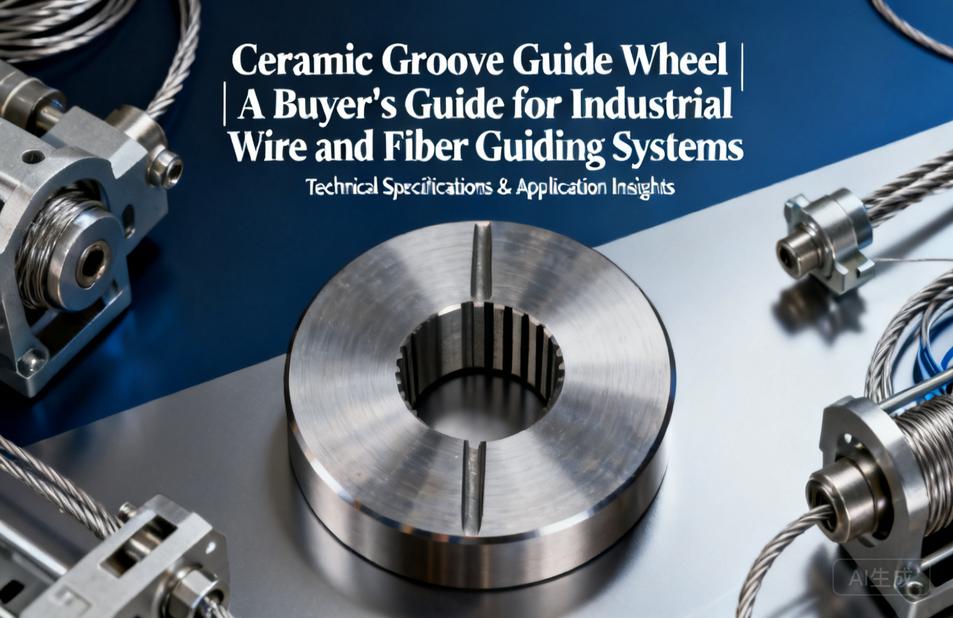
A ceramic groove guide wheel is a precision guiding component used to route, tension, and protect wire, cable, fiber, thread, and tape in industrial machinery. Instead of metal or plastic, the wheel body or its contact surface is made from technical ceramic, and a machined groove on the outer diameter keeps the moving material centered during high-speed operation. Buyers typically specify these wheels for wire drawing machines, coil winding equipment, textile machinery, optical fiber processing lines, and automated cable handling systems where wear resistance, low friction, and material purity matter more than low initial cost.
What a Ceramic Groove Guide Wheel Does
The groove is the working feature. It can be V-shaped, U-shaped, or radiused depending on the profile of the wire or fiber running through it. As the material passes over the wheel, the groove limits lateral movement, reduces contact stress, and helps maintain a stable path from one station to the next. Ceramic is chosen because it resists abrasion far better than most metals in continuous sliding contact, and it does not build up the metallic debris that can damage delicate conductors or optical fibers.
Guide wheels are often paired with ceramic eyelets, ceramic pulleys, and ceramic guide rollers in the same line. In many systems the wheel is a passive idler on a bearing or shaft, while in tension control assemblies it may be mounted on a load cell or dancer arm. The exact role determines the bore size, groove geometry, and mounting style the buyer needs to specify.
Key Features Buyers Look For
Groove geometry and surface finish
The groove radius or angle should match the material being guided. A groove that is too narrow pinches the wire; one that is too wide allows the wire to wander. Surface finish matters as well, because a polished ceramic contact surface reduces friction and limits microscopic damage to the product being processed.
Low friction and wear resistance
Technical ceramics such as alumina and zirconia offer high hardness and good chemical stability. This translates into longer service life in abrasive environments and less frequent replacement, which matters in continuous production lines where downtime is expensive.
Electrical insulation and non-magnetic behavior
Many ceramics are electrically insulating and non-magnetic, a useful property in magnet wire, sensor cable, and fiber optic applications where stray conductivity or magnetic interference is undesirable.
Thermal and chemical stability
Ceramic guide wheels can tolerate elevated temperatures and many process chemicals better than polymer alternatives. The specific grade, purity, and temperature capability depend on the ceramic selected and should be confirmed with the manufacturer rather than assumed.
Materials and Construction
The most common materials for ceramic groove guide wheels include alumina (Al2O3), zirconia (ZrO2), and silicon nitride. Alumina is widely used for general wear applications; zirconia offers higher toughness and is often selected where impact or bending loads are present; silicon nitride is chosen for certain high-temperature or thermal shock conditions. Some designs use a ceramic insert or ceramic-coated metal body, while others are fully ceramic.
The wheel body may include a metal hub, a bearing seat, or a simple through-bore. Mounting can be by shaft, screw, or bearing assembly. Because ceramic is brittle compared with steel, the mounting interface and edge geometry should be designed to avoid point loads and chipping. A reliable manufacturer will discuss load direction, speed, and alignment before recommending a construction.
Typical Industrial Applications
- Wire drawing and wire enameling lines
- Cable and wire harness manufacturing
- Optical fiber drawing and cabling
- Textile yarn and thread guiding
- Coil winding and transformer production
- Film, tape, and ribbon handling
- Automated winding and spooling equipment
In these applications the guide wheel is usually one part of a larger guiding system. Matching the wheel to the machine means considering line speed, wire diameter, tension range, ambient temperature, and the presence of lubricants or coatings. A wheel that performs well on a slow textile line may not be suitable for a high-speed fiber line, even if the dimensions are similar.
How to Choose the Right Guide Wheel
Start with the material being guided: its diameter, surface hardness, and sensitivity to contact marks. Then define the groove profile and the wheel diameter that will produce an acceptable bend radius. Check the bore, shaft, or bearing configuration against the mounting point on the machine. Confirm the expected load, speed, and operating temperature with the equipment builder or the production team.
Buyers should also consider how the wheel will be maintained. Ceramic parts can last a long time, but they can chip if handled roughly during installation or cleaning. A wheel with a protective metal hub or a replaceable ceramic insert may reduce total cost of ownership in some setups.
Customization and OEM Options
Many suppliers offer custom ceramic groove guide wheels with specified outer diameter, groove profile, bore size, width, and ceramic grade. OEM production is common for machine builders that need a wheel matched to a specific guide assembly. When requesting a custom part, provide drawings or samples, the material being processed, operating speed and tension, and any space constraints. A factory with in-house ceramic machining and grinding can usually hold tighter tolerances on the groove than a trading company that outsources production.
Buying Considerations and Supplier Selection
Price alone is a poor basis for selecting a ceramic guide wheel supplier. Ask about the ceramic grade and its consistency, the groove tolerance, and how the supplier controls surface finish. Request dimensional reports or inspection data where available. For OEM and custom projects, confirm whether the supplier can produce repeat orders to the same specification and whether they can support drawing review before production.
It also helps to work with a manufacturer or supplier that understands the end application, not just the part number. A supplier who asks about wire diameter, line speed, and tension is more likely to recommend a workable groove profile than one who only quotes dimensions. For imported orders, clarify packaging, labeling, and documentation requirements early so that the parts arrive ready for installation.
Frequently Asked Questions
What is the difference between a ceramic guide wheel and a metal guide wheel?
Ceramic guide wheels generally offer higher wear resistance, lower friction, and better electrical insulation than metal wheels. They are also less likely to gall or transfer metal to the wire or fiber. The trade-off is that ceramic is more brittle, so mounting and handling need more care.
Can ceramic groove guide wheels be customized for my machine?
Yes. Many manufacturers offer custom groove profiles, diameters, bore sizes, and ceramic grades. Provide a drawing or sample along with the material being guided, operating speed, tension, and temperature so the supplier can propose a suitable design.
Which ceramic material is best for wire guiding?
Alumina, zirconia, and silicon nitride are all used. Alumina is common for general wear resistance, zirconia is often chosen where toughness is needed, and silicon nitride may be used in certain high-temperature applications. The right choice depends on the specific operating conditions.
How do I evaluate a ceramic guide wheel supplier?
Look for a supplier that can explain ceramic grade selection, groove tolerance, and surface finish control. Ask for dimensional inspection data, confirm OEM and custom capabilities, and check whether they can support repeat production to the same specification.
Conclusion
Choosing a ceramic groove guide wheel comes down to matching groove profile, material grade, and mounting configuration to the wire, fiber, or tape being processed. Buyers should focus on application details, tolerance control, and the supplier’s ability to support custom and OEM requirements rather than on price alone. If you are specifying a guide wheel for a new line or replacing a worn component, contact a manufacturer or supplier with your drawing, material details, and operating conditions to discuss standard options or a custom solution.
