

Coating Service Overview
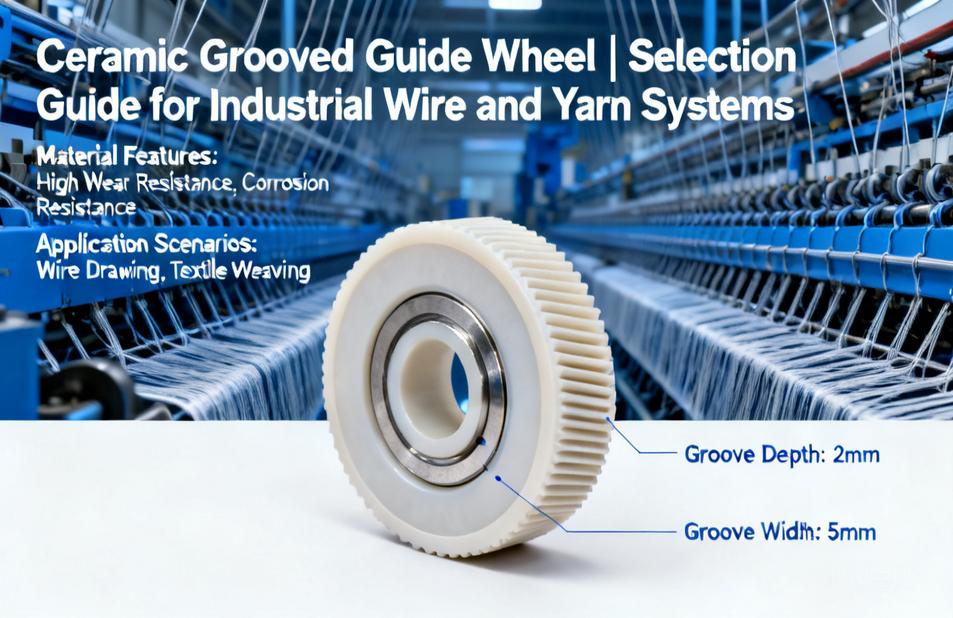
A ceramic grooved guide wheel is a precision guiding component used to route, tension, and stabilize wire, yarn, thread, fiber, tape, or cable as it moves through industrial machinery. Its grooved profile keeps the running material centered and reduces lateral drift, while the ceramic working surface helps resist wear and abrasion in continuous production environments. Buyers commonly specify this component for wire drawing lines, textile spinning and winding equipment, cable manufacturing, optical fiber processing, and other systems where friction, alignment, and material protection directly affect product quality and machine uptime.
Product Overview and Working Principle
Unlike a flat idler pulley, a grooved guide wheel provides a shaped channel that matches or accommodates the running material. The ceramic groove acts as a contact surface and a tracking guide. As the material passes over or through the wheel, the groove limits sideways movement and helps maintain a stable path. In many designs the wheel is mounted on a bearing, shaft, or bracket so it can rotate freely or remain fixed as a static guide. The ceramic surface is typically chosen because it combines hardness, low friction, and resistance to many forms of mechanical and chemical degradation. This makes ceramic grooved guide wheels suitable for high-speed lines, fine denier yarns, thin wires, and processes where metal contact could damage the product or create contamination.
Key Features Buyers Look For
When evaluating a ceramic grooved guide wheel manufacturer or supplier, purchasing teams usually compare several functional characteristics:
- Groove geometry, including radius, angle, depth, and surface finish
- Ceramic material grade and surface quality
- Bearing type, fit, and sealing arrangement
- Wheel diameter, width, and mounting configuration
- Dynamic balance and concentricity
- Chemical and temperature resistance of the ceramic and supporting components
- Compatibility with the specific wire, yarn, or fiber being processed
These variables affect not only guiding accuracy but also the service life of the wheel and the quality of the finished product. A groove that is too sharp can mark sensitive materials, while a groove that is too shallow may fail to control the strand at higher speeds.
Materials and Construction
Most ceramic grooved guide wheels combine a ceramic contact surface with a metal hub, bearing, or mounting core. The ceramic is often an alumina-based or zirconia-based technical ceramic, selected for wear resistance and surface integrity. Zirconia grades may be chosen where higher toughness is beneficial, while alumina grades are often used where hardness and electrical insulation are important. The supporting body may be stainless steel, aluminum, or another machined metal, depending on load, corrosion exposure, and weight requirements. Bearing selection is equally important. Some wheels use precision ball bearings for smooth rotation; others use plain bores, ceramic bearings, or custom shaft arrangements. A qualified supplier should be able to explain how the ceramic is joined or assembled to the hub and how that construction performs under the intended speed and load.
Industrial Applications
The ceramic grooved guide wheel appears in a broad range of industrial applications, including:
- Wire drawing and wire winding machinery
- Textile spinning, twisting, and false-twist systems
- Cable and conductor manufacturing
- Optical fiber production and handling
- Enameled wire and magnet wire lines
- Rope, tape, and narrow web guiding
- Coil winding and filament winding equipment
- Precision tension control systems
In these settings, the guide wheel may be used at the entry or exit of a process, between tension rollers, or at a change-of-direction point. The common requirement is reliable tracking without introducing excessive friction or surface damage. This is especially important for fine wires, glass fiber, carbon fiber, and other materials where even minor abrasion can reduce strength or create defects.
How to Choose the Right Guide Wheel
Choosing a ceramic grooved guide wheel starts with the material being processed. Wire diameter, yarn denier, fiber tow size, tape width, and surface sensitivity all influence the groove profile and ceramic finish. The next step is to review the machine interface: shaft diameter, mounting method, available space, and the wheel’s role as either a rotating pulley or a stationary guide. Speed and tension are also critical. Higher line speeds generally demand better dynamic balance, lower friction, and a bearing arrangement that can handle continuous rotation without excessive heat or vibration. Environmental factors such as humidity, chemicals, dust, and temperature should be matched to the ceramic and hub materials. Finally, buyers should confirm the allowable runout and alignment tolerance, because even a small amount of wobble can cause the material to ride up the groove wall or drift out of position.
Customization and OEM Options
Many industrial guide wheel applications cannot use a catalog standard. A custom ceramic grooved guide wheel may be required when the groove shape, wheel diameter, bore size, mounting flange, or bearing configuration must match an existing machine or a new design. OEM and custom production can include specific groove radii, multiple grooves, stepped profiles, chamfered edges, special hub materials, and alternative bearing fits. Buyers should provide drawings, sample parts, or detailed application data so the supplier can evaluate feasibility. A practical custom process usually includes reviewing the running material, confirming the mounting envelope, selecting the ceramic grade and surface finish, and agreeing on inspection criteria before production.
Buying Considerations for Importers
Price alone is a poor basis for comparing ceramic grooved guide wheel suppliers. Purchasing teams should also evaluate dimensional consistency, surface quality, bearing life, packing protection, and the supplier’s ability to document material and inspection results. Ceramic parts can chip if handled or packed poorly, so protective packaging matters. It is also useful to request samples or small trial batches before committing to volume orders. Confirm whether the factory can hold tolerances over repeat orders, how they control groove concentricity, and whether they offer technical support when the wheel is integrated into a new machine. For overseas buyers, clear communication about drawings, units, and acceptance criteria helps prevent costly mismatch.
Supplier Selection
A reliable ceramic grooved guide wheel supplier should demonstrate experience with both ceramic machining and industrial guide applications. Ask how they select ceramic grades, how they inspect groove profiles, and how they match bearings to the wheel. A manufacturer with in-house ceramic processing and assembly capabilities can often respond faster to custom requirements and maintain better consistency. If the application involves OEM equipment, discuss whether the supplier can support private labeling, custom packaging, or drawing-based production. It is also reasonable to ask for references from similar industries, while understanding that specific customer details may remain confidential.
Frequently Asked Questions
What is a ceramic grooved guide wheel used for?
It is used to guide and stabilize wire, yarn, fiber, tape, or cable in industrial machinery. The ceramic groove helps control the material path and reduces wear compared with some metal guide surfaces.
How do I choose the right groove profile?
The groove should match the material diameter, shape, and sensitivity. A supplier will usually need the running material size, line speed, tension, and a drawing or sample of the current guide component.
Can ceramic grooved guide wheels be customized or OEM manufactured?
Yes. Many suppliers offer custom groove geometry, wheel dimensions, bore sizes, bearing arrangements, and mounting features for OEM equipment. Providing drawings and application details is the best starting point.
What should I check before placing a bulk order?
Review sample quality, dimensional inspection, surface finish, bearing fit, packing protection, and the supplier’s ability to repeat the same specification in future batches.
Conclusion
Selecting a ceramic grooved guide wheel is mainly a matter of matching the groove, ceramic surface, bearing, and mounting design to the material and machine conditions. Buyers should focus on tracking accuracy, wear resistance, and repeatable quality rather than only on unit price. For custom or OEM projects, early technical discussion with a qualified manufacturer can reduce redesign risk and improve long-term performance. If you have a specific wire, yarn, fiber, or cable guiding application, sharing your drawing and operating conditions with a ceramic guide wheel supplier is a practical next step.
