

Coating Service Overview
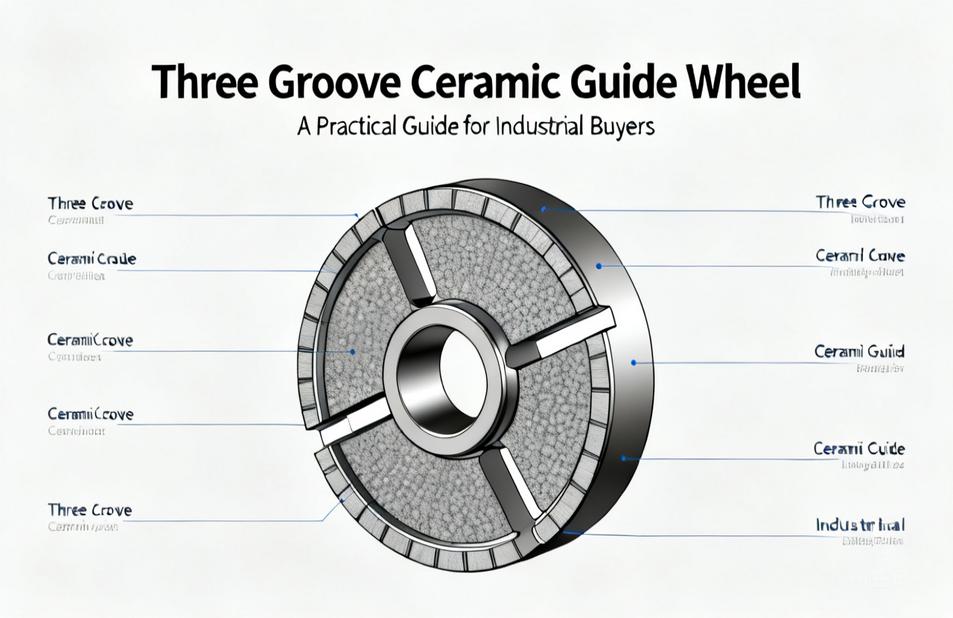
A three groove ceramic guide wheel is a precision wire guiding component used to route, separate, and stabilize multiple strands of wire, cable, or fiber in winding, stranding, and pay-off equipment. Unlike a standard single groove pulley, this wheel features three distinct V-shaped or U-shaped channels machined into its outer circumference, allowing it to manage several lines simultaneously while keeping them aligned and isolated from one another. For manufacturers in wire drawing, cable making, textile processing, and fiber optics, this component is often the difference between stable line tension and constant production interruptions.
If you are sourcing these wheels for an OEM machine, a retrofit, or a replacement program, the information below covers what the product does, how it is built, where it is used, and what to review before choosing a supplier.
What Is a Three Groove Ceramic Guide Wheel?
The term describes a guide wheel whose ceramic working surface contains three separate grooves. Each groove acts as an independent track, so multiple wires, threads, or cables can run in parallel without crossing or rubbing against each other. Ceramic wheels are chosen in these positions because the contact surface resists wear far better than many metal alternatives, and a smooth ceramic surface helps reduce friction and the risk of surface damage to the moving material.
Typical configurations include V-grooves for centering round wire, U-grooves for softer or flat materials, and mixed profiles where one line needs different guidance from the others. The wheel usually mounts on a bearing or bushing, and the ceramic ring is fixed to a metal hub or carrier.
Key Features Buyers Usually Look For
When comparing three groove ceramic guide wheels, procurement teams and equipment engineers tend to focus on a consistent set of characteristics.
- Groove geometry: Groove angle, depth, radius, and spacing determine how well the wheel guides a specific wire diameter and how much lateral movement is tolerated.
- Surface finish: A polished ceramic surface reduces friction and helps prevent scratching on enameled wire, optical fiber, and fine cables.
- Wear resistance: Ceramic materials are commonly selected for high-speed or continuous-duty positions where metal grooves would wear or groove out.
- Rotational performance: Bearing type, clearance, and lubrication affect smooth rotation, noise, and maintenance intervals.
- Dimensional stability: Consistent outer diameter, groove position, and bore tolerances matter when the wheel is part of a multi-wheel guiding system.
Materials and Construction
Most ceramic guide wheels use a ceramic ring pressed or bonded onto a metal hub. The ceramic portion is often made from high-purity alumina or zirconia-based ceramic, selected for hardness, chemical stability, and low friction. The hub may be aluminum, stainless steel, or another machinable metal, depending on the required strength, weight, and corrosion resistance.
The bearing system is equally important. Some wheels use shielded or sealed ball bearings for dusty environments, while others use plain bushings for lower-speed applications. The way the ceramic ring is joined to the hub also affects durability, especially under vibration and repeated thermal cycling.
Industrial Applications
Three groove ceramic guide wheels appear in many wire and fiber handling processes. Common industrial applications include:
- Wire drawing and annealing lines, where multiple wires run side by side
- Cable stranding and bunching equipment
- Enameling machines for magnet wire and fine conductor wire
- Optical fiber production and cable assembly
- Textile yarn guiding and synthetic thread processing
- Welding wire feed systems and wire forming machinery
- Coil winding equipment for motors, transformers, and inductors
In each case, the wheel helps maintain line separation, reduce tension variation, and protect the surface of the material being processed.
How to Choose the Right Three Groove Ceramic Guide Wheel
Match the Groove Profile to the Material
Start with the wire or fiber diameter, surface sensitivity, and required tracking accuracy. A V-groove centers round wire effectively, while a U-groove or radiused groove may be better for delicate insulation or flat conductors. If the three lines differ in size, confirm whether the wheel can be supplied with different groove profiles on the same ring.
Confirm Load and Speed Requirements
Line speed, wire tension, and the total load on the wheel determine the appropriate bearing type and hub design. High-speed lines generally benefit from precision bearings and balanced wheels, while lower-speed or intermittent operations may use simpler bearing arrangements.
Check Mounting and Interface Dimensions
Bore diameter, hub width, mounting method, and overall outer diameter must match the existing shaft or bracket. For retrofit projects, providing a drawing or sample is often the most reliable way to avoid fitment problems.
Review Environmental Conditions
Temperature, humidity, dust, and chemical exposure influence both the ceramic grade and the bearing sealing. In clean rooms or fiber optic lines, contamination control is a priority; in wire drawing areas, dust and coolant resistance may matter more.
Customization and OEM Options
Many buyers need more than a catalog item. A capable manufacturer or supplier can often provide custom groove angles, non-standard diameters, specific bore sizes, alternative hub materials, and branded or private-label packaging. OEM production is common in this category because guide wheels are frequently designed around a specific machine or process.
When requesting a custom or OEM three groove ceramic guide wheel, prepare the following information: wire diameter and material, number of lines, groove profile sketch, required outer diameter and bore, bearing preference, operating speed, and environmental conditions. Clear inputs reduce back-and-forth and help the factory quote accurately.
Buying Considerations for Importers and Distributors
Price alone is a poor selection criterion for precision guide components. Buyers should compare groove consistency, surface finish, bearing quality, and dimensional tolerance. It also helps to understand the supplier’s production process, quality control methods, and ability to handle repeat orders with the same specifications.
For distributors, packaging, labeling, and documentation requirements can be as important as the product itself. For end users, replacement consistency matters because a wheel that varies from batch to batch can disrupt tension settings and cause scrap.
How to Select a Reliable Supplier
Look for a supplier or factory with experience in ceramic guide components and wire handling equipment. Ask how they control groove dimensions, how they inspect surface finish, and what information they need to recommend a suitable wheel. A supplier who asks about your application rather than only quoting a part number is usually better positioned to support long-term production.
It is also reasonable to request samples for evaluation, discuss OEM or custom development, and confirm how the supplier handles specification changes over time. These steps are standard practice in industrial sourcing and help reduce risk before mass production.
Frequently Asked Questions
What is the difference between a three groove ceramic guide wheel and a single groove pulley?
A single groove pulley guides one line, while a three groove ceramic guide wheel manages three separate lines on one rotating component. This saves mounting space and helps keep multiple wires or fibers separated without additional hardware.
Can three groove ceramic guide wheels be customized for my machine?
Yes. Many manufacturers offer custom groove profiles, dimensions, hub materials, and bearing options. Providing a drawing, sample, or detailed application data is the best way to get an accurate custom quote.
Which ceramic material is best for guide wheels?
The right choice depends on the application. Alumina-based ceramics are common for general wear resistance, while zirconia-based ceramics may be selected where higher toughness or different friction characteristics are needed. The final decision should be based on the wire material, speed, and environment.
How do I evaluate a supplier for OEM guide wheels?
Review their experience with similar components, ask about dimensional control and inspection, request samples, and discuss how they handle custom specifications and repeat orders. A supplier with a structured engineering and quality process is generally a safer choice for OEM projects.
Conclusion
Choosing a three groove ceramic guide wheel comes down to matching groove geometry, material, bearing performance, and mounting dimensions to your actual wire handling process. Whether you need a standard replacement part, a custom profile, or an OEM wheel for a new machine design, the most useful next step is to share your application details with a qualified manufacturer or supplier. They can help confirm the right specification, discuss customization options, and support your production with consistent quality over time.
