

Coating Service Overview
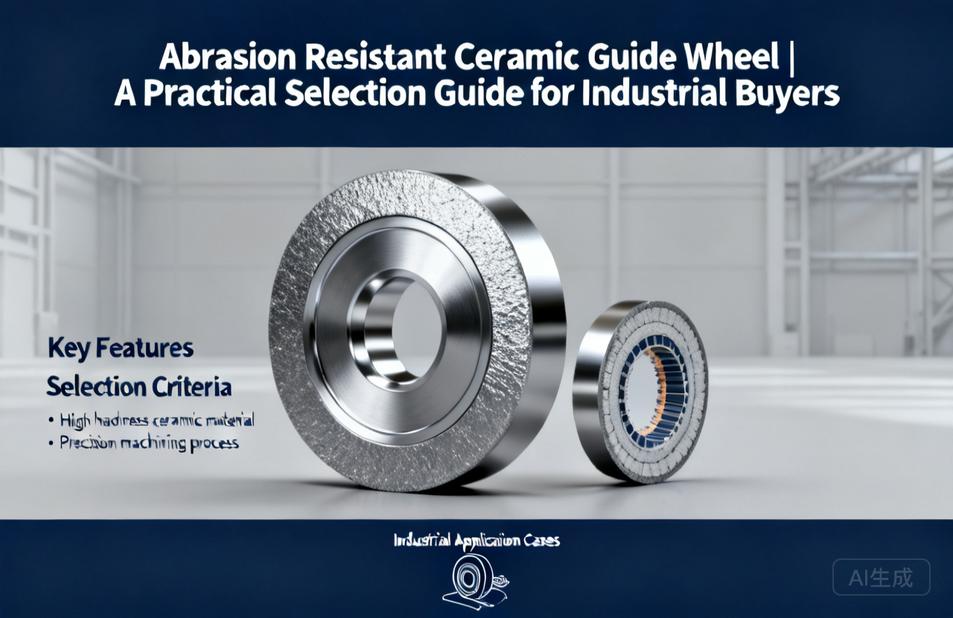
An abrasion resistant ceramic guide wheel is a precision component used to guide, support, or tension wire, thread, tape, film, and other moving materials in industrial machinery. Unlike metal guide wheels that wear quickly under continuous friction, ceramic guide wheels are made from hard, wear-resistant ceramic materials that maintain a smooth surface over long production cycles. They are commonly found in wire drawing, textile manufacturing, wire winding, cable production, coating lines, and automated material handling systems where friction and abrasive contact would otherwise shorten component life. For overseas buyers sourcing guide wheels for OEM equipment or replacement parts, understanding material options, groove profiles, and supplier capabilities is essential to matching the right wheel to the application.
What Makes Ceramic Guide Wheels Different from Metal or Plastic Alternatives
The core value of a ceramic guide wheel comes from the material itself. Industrial ceramics such as alumina (Al2O3) and zirconia (ZrO2) offer high hardness, low friction, and strong resistance to abrasive wear. When wire or thread runs continuously over a guide surface, metal wheels can develop grooves, burrs, or surface scratches that damage the product being processed. Ceramic surfaces stay smoother for longer, which helps protect the material being guided and reduces downtime for replacement. Ceramic also resists many chemicals and does not corrode like steel in humid or chemically active environments.
Common Ceramic Materials Used in Guide Wheels
Alumina ceramic is widely used for general wire guiding and textile applications because of its hardness and cost-effectiveness. Zirconia ceramic offers higher toughness and is often selected where impact resistance is important. Silicon nitride and silicon carbide are also used in specific high-wear or high-temperature applications. The choice of material depends on the abrasive nature of the moving material, the operating speed, the load, and the environment.
How the Wheel Construction Affects Performance
A typical ceramic guide wheel consists of a ceramic ring or disc mounted on a metal hub or bearing assembly. The ceramic surface contacts the moving material, while the hub provides mounting and rotation. Some designs use a full ceramic body, while others combine a ceramic outer ring with a steel or aluminum core. The groove profile, surface finish, and concentricity all influence how smoothly the material travels and how evenly the wheel wears.
Key Features Buyers Should Evaluate
- Wear resistance: The primary reason for choosing ceramic over metal or plastic.
- Surface finish: A polished, low-friction surface reduces material damage and noise.
- Groove geometry: V-groove, U-groove, flat, and custom profiles match different wire or tape shapes.
- Bearing type: Sealed bearings, open bearings, or bushing designs affect speed limits and maintenance.
- Chemical and temperature resistance: Important in coating, plating, and high-temperature processes.
- Dimensional accuracy: Tolerances on bore, outer diameter, and runout affect vibration and guide accuracy.
Industrial Applications for Abrasion Resistant Ceramic Guide Wheels
Ceramic guide wheels appear in many production environments where continuous material movement causes wear. In wire and cable manufacturing, they guide copper, aluminum, and steel wire through drawing, annealing, and winding stages. In textile machinery, they guide yarn and thread at high speed without creating fuzz or breaks. In film and tape production, they help maintain tension and alignment without scratching the surface. Other applications include 3D printing filament guides, optical fiber production, rope and cord manufacturing, and automated packaging lines.
Matching the Wheel to the Machine
Before selecting a guide wheel, buyers should confirm the mounting method, shaft diameter, wheel diameter, groove dimensions, and maximum line speed. The wheel must fit the existing bracket or bearing housing without modification, or the supplier must be able to produce a custom fit. Load capacity and rotation speed also matter: a wheel that spins too freely or too stiffly can affect tension control. In many cases, the original equipment manufacturer (OEM) drawing or sample is the most reliable reference for matching a replacement wheel.
How to Choose the Right Ceramic Guide Wheel
Choosing a guide wheel involves more than picking a material. Start by identifying the material being guided, its diameter, and its abrasiveness. Then consider the operating speed, the load on the wheel, and the environment. For high-speed wire drawing, a low-friction alumina or zirconia wheel with a precision bearing is often suitable. For wet or chemical environments, choose a ceramic grade with appropriate corrosion resistance. For applications with impact or shock, zirconia may be preferred over alumina. Buyers should also review the groove profile: a V-groove centers the material, while a U-groove provides more contact area for flat or round products. When in doubt, request a sample or drawing review from the supplier before placing a bulk order.
Customization and OEM Options
Many ceramic guide wheel manufacturers and suppliers offer OEM and custom production. Customization can include non-standard outer diameters, bore sizes, groove profiles, ceramic grades, and hub materials. Some buyers need private labeling or specific packaging for their own product lines. Others require wheels that fit existing equipment without changing brackets. A capable factory can produce wheels based on drawings, samples, or application details. When discussing customization, provide as much technical information as possible: material to be guided, speed, load, temperature, chemical exposure, and mounting dimensions. This helps the supplier recommend a suitable design rather than guessing.
Buying Considerations for Overseas Procurement
When sourcing abrasion resistant ceramic guide wheels from an overseas supplier, evaluate consistency as much as price. Ceramic components can vary in density, surface finish, and dimensional accuracy between batches, so ask about quality control procedures and inspection standards. Request dimensional reports or sample inspection data if available. Consider the supplier’s experience with your specific industry, because an experienced manufacturer will understand common failure modes and can suggest improvements. Packaging is also important: ceramic wheels are hard but can chip if poorly protected during shipping. Confirm that the supplier uses appropriate cushioning and cartons for export. Finally, clarify whether the supplier can support repeat orders with consistent specifications, which is critical for production lines that cannot tolerate variation.
Supplier Selection: What to Look For
A reliable ceramic guide wheel supplier should be able to answer technical questions, provide drawings or samples, and communicate clearly about tolerances and materials. Look for a manufacturer or factory with in-house ceramic processing and precision machining capabilities, because this reduces dependence on multiple subcontractors and improves consistency. Ask about their experience with OEM projects and custom profiles. If possible, request references from buyers in similar industries, though many suppliers will not share customer names publicly. Evaluate response time, willingness to review drawings, and ability to handle small trial orders before mass production. A supplier that engages technically is usually a better long-term partner than one that only quotes a price.
Frequently Asked Questions
What is the difference between alumina and zirconia ceramic guide wheels?
Alumina ceramic is harder and more wear-resistant, while zirconia ceramic is tougher and better at resisting impact and cracking. Alumina is often used for general wire and textile guiding, while zirconia is chosen for applications with shock loads or higher mechanical stress. The right choice depends on the specific application and environment.
Can ceramic guide wheels be customized for my equipment?
Yes. Many manufacturers offer custom sizes, groove profiles, bore dimensions, and hub designs. To get an accurate custom wheel, provide a drawing or sample, along with details about the material being guided, operating speed, load, and mounting method. OEM production is common in this product category.
How do I know if a ceramic guide wheel will fit my machine?
Check the mounting shaft diameter, wheel outer diameter, groove dimensions, and bearing or bushing type. If you have the original part number or a sample, share it with the supplier. They can compare dimensions and recommend a matching or improved replacement.
What should I include in an inquiry to a ceramic guide wheel supplier?
Include the material being guided, its diameter, line speed, load, temperature, chemical exposure, and available space. Attach drawings or photos if possible. Also state whether you need a standard part, a custom design, or OEM production, and mention your expected order quantity and delivery requirements.
Conclusion
Selecting an abrasion resistant ceramic guide wheel comes down to matching material, geometry, and supplier capability to your specific application. Buyers should focus on wear resistance, surface finish, dimensional accuracy, and compatibility with existing equipment. Custom and OEM options are widely available, so do not hesitate to request a tailored solution when standard sizes do not fit. Working with an experienced manufacturer or supplier who understands your industry will help you reduce downtime, protect your product, and maintain consistent production quality. If you are evaluating guide wheels for a new line or replacing worn components, contact a ceramic guide wheel supplier with your specifications and application details to discuss standard, custom, or OEM options.
