

Coating Service Overview
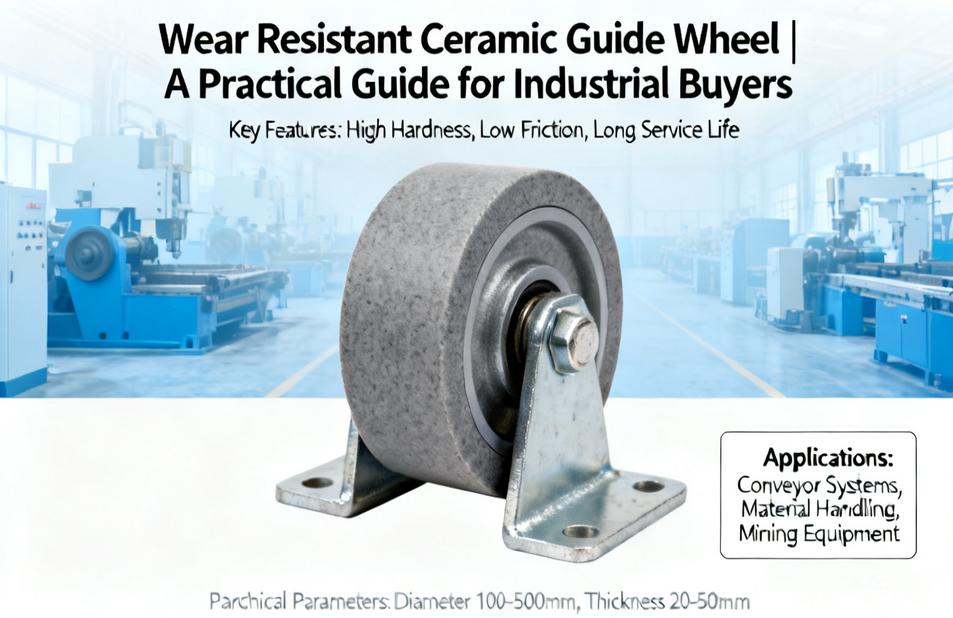
A wear resistant ceramic guide wheel is a rotating component used to guide, support, or position wire, thread, tape, film, cable, and other continuous materials in industrial machinery. Instead of a steel or plastic roller, the contact surface is made from an advanced ceramic material that resists abrasion, heat, and chemical attack. These wheels are common in wire drawing, textile processing, wire winding, coating lines, and automated material handling systems where friction and constant contact would quickly damage conventional rollers. For overseas buyers, understanding how ceramic guide wheels work, where they are used, and what to check before ordering helps avoid premature wear, machine downtime, and unnecessary replacement cost.
What Is a Wear Resistant Ceramic Guide Wheel?
A wear resistant ceramic guide wheel combines a ceramic contact ring with a metal or composite hub and bearing assembly. The ceramic ring is the working surface that touches the moving material. Because ceramics such as alumina (Al2O3) and zirconia (ZrO2) are extremely hard, the wheel keeps its shape and surface finish much longer than metal or plastic alternatives in high-friction positions. The wheel usually rotates on a precision bearing, so the material passes over a smooth, low-drag surface instead of sliding against a fixed part. This reduces tension fluctuation, surface scratching, and heat buildup in the process line.
Buyers often search for this product using terms such as ceramic guide roller, ceramic wire guide wheel, alumina ceramic pulley, zirconia ceramic roller, and wear resistant ceramic roller. All of these describe similar components, though dimensions, mounting styles, and material grades can differ between suppliers.
Key Features Buyers Look For
When evaluating a ceramic guide wheel, the most important features are hardness, surface finish, dimensional accuracy, and bearing quality. A hard ceramic surface resists grooving and flattening, which keeps the guide path stable over a long service life. A smooth surface reduces friction and prevents marks on delicate materials such as enameled wire, optical fiber, and thin film. Tight dimensional tolerance ensures the wheel fits the shaft or bracket correctly and runs without vibration. The bearing or bushing determines rotational smoothness and speed capability, so it should match the line speed and load of the application.
- High hardness for abrasion resistance
- Low friction coefficient to protect the moving material
- Good chemical resistance for wet or coated processes
- Thermal stability for elevated-temperature lines
- Available in different bore sizes, outer diameters, and groove profiles
Materials and Construction
Most wear resistant ceramic guide wheels use either alumina or zirconia ceramic. Alumina offers a good balance of hardness, electrical insulation, and cost, making it suitable for many wire and textile applications. Zirconia has higher toughness and is often chosen where impact resistance matters, such as in some wire drawing and cable handling positions. The ceramic ring is typically bonded, press-fitted, or mechanically locked into a metal hub. Hub materials may include stainless steel, aluminum, or engineering plastic, depending on weight, corrosion resistance, and mounting requirements. The bearing can be a sealed ball bearing, a plain ceramic bushing, or a custom shaft design for specialized equipment.
Because ceramic is brittle compared with metal, the design must protect the ceramic edge from direct impact. Chamfered edges, recessed mounting, and proper support from the hub all help extend service life. Buyers should discuss the mounting method and expected side loads with the supplier before confirming a design.
Industrial Applications
Wear resistant ceramic guide wheels appear in many production environments. In wire and cable manufacturing, they guide copper, aluminum, and alloy wire through drawing, annealing, plating, and winding equipment. In the textile industry, they guide yarn and thread where low friction and smooth contact protect fiber quality. In film and tape converting, ceramic rollers help maintain web tension without scratching the surface. Other uses include optical fiber production, enameled wire winding, battery electrode processing, and automated wire feeding systems.
Each application places different demands on the wheel. High-speed wire lines need low rotational resistance and good dynamic balance. Wet chemical lines need corrosion-resistant materials. Thin film and optical products need an extremely fine surface finish. Sharing the exact working conditions with a manufacturer or supplier helps them recommend the right ceramic grade, bearing type, and groove profile.
How to Choose the Right Ceramic Guide Wheel
Choosing the correct wheel starts with the material being guided and the machine interface. Buyers should confirm the outer diameter, bore size, width, groove shape, and mounting style required by the equipment. Next, consider the line speed, load, and ambient temperature. These factors influence bearing selection and ceramic grade. Then review the chemical environment: if the wheel contacts lubricants, solvents, or plating solutions, the hub and bearing materials must be compatible.
It is also important to match the wheel to the existing guide system rather than forcing a standard part into a non-standard position. A supplier with experience in industrial applications can often suggest a slight modification to improve tracking and reduce wear. For replacement projects, providing a sample or drawing of the original wheel is the most reliable way to get a matching part.
Customization and OEM Options
Many ceramic guide wheel manufacturers offer OEM and custom production. Customization can include specific outer and inner diameters, groove profiles, flat or U-shaped contact surfaces, special hub materials, and integrated shafts or mounting flanges. Buyers may also request different ceramic grades, surface roughness levels, and bearing types. For equipment builders, private-label packaging and drawing-based production are common requests. When discussing a custom project, it is helpful to provide technical drawings, application details, and annual usage estimates so the factory can evaluate tooling and production feasibility.
Buying Considerations and Supplier Selection
Price alone is not a reliable indicator of value for ceramic guide wheels. A lower-cost wheel with poor dimensional control or a low-quality bearing can cause material damage and unplanned downtime that costs far more than the part itself. Buyers should evaluate the supplier’s production process, quality control methods, and ability to communicate technical details. A reliable manufacturer or supplier should be able to explain material selection, tolerance ranges, and inspection procedures without vague claims.
For international buyers, it also helps to confirm packaging, labeling, and documentation requirements early. If the wheel is part of a critical production line, requesting a sample for evaluation before mass production is a practical step. Working with a factory that supports both standard and custom orders gives buyers more flexibility as their equipment and product lines evolve.
Frequently Asked Questions
What is the difference between an alumina and a zirconia ceramic guide wheel?
Alumina ceramic is hard, electrically insulating, and cost-effective for many wire and textile applications. Zirconia ceramic offers higher toughness and is often selected where impact or bending loads are a concern. The best choice depends on the material being guided, the load, and the working environment.
Can I order a custom size or groove profile?
Yes. Many manufacturers accept custom and OEM orders based on drawings or samples. Custom options usually include outer diameter, bore size, width, groove shape, hub material, and bearing type. Providing clear drawings and application details helps shorten the evaluation process.
How do I know if a ceramic guide wheel is suitable for my machine?
Check the mounting dimensions, line speed, load, temperature, and chemical exposure of your equipment. Share these details with the supplier so they can recommend a suitable ceramic grade and bearing configuration. When possible, compare the new wheel with the original part or sample.
What should I look for in a ceramic guide wheel supplier?
Look for a supplier that can discuss material properties, tolerances, and application requirements in technical terms. A factory with OEM experience, consistent quality control, and the ability to support custom production is generally a better long-term partner than a trader offering little technical support.
Conclusion
Selecting the right wear resistant ceramic guide wheel comes down to matching the ceramic material, wheel geometry, and bearing design to the actual working conditions of the production line. Buyers should focus on dimensional accuracy, surface finish, and supplier technical support rather than price alone. If you are reviewing a replacement part, upgrading a guide system, or developing new equipment, contacting a manufacturer or supplier with your specifications, application details, and OEM or custom requirements is the most efficient way to get a practical recommendation.
