

Coating Service Overview
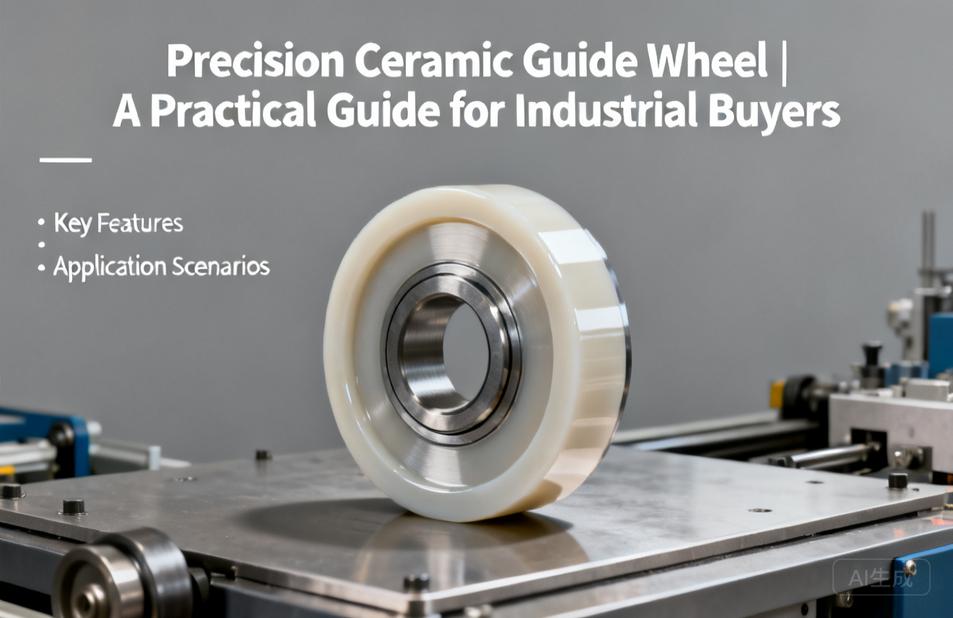
A precision ceramic guide wheel is a rotating component used to guide, position, or support wire, thread, tape, film, and other flexible materials in industrial machinery. Unlike metal guide wheels, ceramic guide wheels are made from advanced ceramic materials that offer wear resistance, low friction, and electrical insulation. They are commonly found in wire drawing machines, textile machinery, winding equipment, cable manufacturing lines, and automated material handling systems. For buyers sourcing these components, understanding material options, dimensional tolerances, mounting configurations, and supplier capabilities is essential for achieving consistent performance and reducing downtime.
What Is a Precision Ceramic Guide Wheel?
A precision ceramic guide wheel is a ceramic-based pulley or roller with a grooved or flat contact surface. Its primary function is to control the path of a moving material without causing damage or excessive tension. The word precision refers to the dimensional accuracy and surface finish of the wheel, which directly affect tracking accuracy and material wear. Ceramic guide wheels are often used where metal wheels would create contamination, conduct electricity, or wear too quickly. Typical ceramic materials include alumina (Al2O3), zirconia (ZrO2), and silicon nitride (Si3N4). Each material offers different combinations of hardness, toughness, and chemical resistance, so the choice depends on the specific application environment.
Key Features and Benefits
Industrial buyers choose ceramic guide wheels for several practical reasons. First, ceramics are extremely hard, which means they resist abrasion from wire, yarn, and abrasive tapes far better than many metals. Second, the low friction coefficient of polished ceramic reduces drag on the moving material, helping to maintain consistent tension. Third, ceramics are electrically insulating, making them suitable for applications where static discharge or electrical contact must be avoided. Fourth, ceramic surfaces are chemically inert and corrosion resistant, which is important in wet or chemical processing environments. Finally, ceramic guide wheels can be manufactured with very tight tolerances and smooth surface finishes, reducing the risk of marking or scratching sensitive materials.
Materials and Construction
The performance of a precision ceramic guide wheel depends heavily on the ceramic material and the manufacturing process. Alumina ceramic is widely used for general-purpose guide wheels because of its good wear resistance and cost-effectiveness. Zirconia ceramic offers higher toughness and is often selected for applications involving impact or high-speed rotation. Silicon nitride provides excellent thermal shock resistance and is used in demanding high-temperature or high-speed environments. The wheel may be produced as a solid ceramic piece or as a ceramic ring mounted on a metal hub. The bore, outer diameter, groove profile, and surface finish are critical dimensions. Buyers should specify these dimensions clearly and confirm the tolerances required for their equipment. In some cases, a metal or plastic insert is used to allow mounting on a shaft or bearing assembly.
Typical Industrial Applications
Precision ceramic guide wheels are used across many industries. In wire and cable manufacturing, they guide conductor wire through drawing, annealing, and stranding processes. In textile machinery, they guide yarn and thread without causing fraying or tension variations. In film and tape production, they help maintain web alignment and prevent scratches. In electronics manufacturing, ceramic guide wheels are used in winding and coil-forming equipment where electrical insulation is required. They also appear in 3D printing filament guides, optical fiber processing, and automated packaging lines. Because the requirements vary by application, buyers should evaluate the operating speed, material being guided, ambient temperature, and presence of chemicals or moisture.
How to Choose the Right Precision Ceramic Guide Wheel
Selecting the correct guide wheel involves several technical and commercial considerations. Start by defining the material to be guided and its characteristics, such as diameter, stiffness, and surface sensitivity. Then determine the required wheel dimensions, including outer diameter, bore size, groove shape, and width. Consider the operating speed and load, as these affect the choice between solid ceramic and ceramic-on-hub designs. Evaluate the environment for temperature, humidity, and chemical exposure to select a suitable ceramic grade. Check the required tolerance and surface finish, especially if the material is delicate or if tracking accuracy is critical. Finally, confirm the mounting method and whether a bearing, bushing, or shaft mount is needed. A reputable manufacturer or supplier can provide technical guidance and may offer samples for evaluation.
Customization and OEM Options
Many industrial buyers require custom ceramic guide wheels to match specific machinery or process requirements. Customization can include non-standard dimensions, special groove profiles, chamfers, and surface treatments. OEM production is common in this category, where the guide wheel is manufactured to the buyer’s drawings or samples. When working with a custom ceramic guide wheel factory, provide detailed drawings or 3D models, specify the ceramic material, tolerance class, surface finish, and any marking or packaging requirements. It is also important to discuss the expected production volume, as tooling and setup costs can affect unit pricing. A reliable supplier will clarify what can be customized and what standard options are available.
Buying Considerations for Importers
When sourcing precision ceramic guide wheels from overseas suppliers, consider quality consistency, communication, and logistics. Ask for dimensional inspection reports and material certificates if available. Clarify the packaging method to prevent damage during shipping, since ceramics can be brittle. Confirm the Incoterms and lead time before placing an order. Evaluate the supplier’s experience with your industry and their ability to provide technical support. It is also wise to request a sample or trial order before committing to mass production. While price is important, the total cost of ownership includes downtime, replacement frequency, and material waste, so a slightly higher unit price may be justified by better performance.
Supplier Selection Checklist
Choosing the right supplier is as important as choosing the right product. Look for a manufacturer or supplier with proven experience in ceramic components and industrial guide wheels. Check whether they have in-house machining and inspection capabilities, as this affects quality control. Ask about their approach to OEM and custom orders, and whether they can provide technical recommendations. Review their response time and willingness to share relevant documentation. If possible, request references from similar industrial applications. A transparent supplier will be open about capabilities, limitations, and lead times. Avoid suppliers who make unrealistic claims or cannot explain their manufacturing process.
Frequently Asked Questions
What is the difference between a ceramic guide wheel and a metal guide wheel?
Ceramic guide wheels are harder, more wear-resistant, and electrically insulating, while metal guide wheels are generally tougher and less brittle. The choice depends on the material being guided, the operating environment, and whether electrical insulation is needed.
Can precision ceramic guide wheels be customized for my machine?
Yes, many manufacturers offer custom dimensions, groove profiles, and mounting configurations. Providing detailed drawings or samples helps ensure the final product fits your equipment correctly.
How do I determine the right ceramic material for my application?
Consider factors such as load, speed, temperature, chemical exposure, and impact risk. Alumina is common for general use, zirconia offers higher toughness, and silicon nitride is suitable for high-temperature or high-speed applications.
What information should I provide to a supplier when requesting a quote?
Provide the wheel dimensions, bore size, groove profile, tolerance requirements, surface finish, ceramic material preference, quantity, and any special packaging or marking needs. If available, include a drawing or sample.
Conclusion
Precision ceramic guide wheels are critical components in many industrial processes, and selecting the right one requires attention to material, dimensions, application conditions, and supplier capabilities. Buyers should define their technical requirements clearly and work with a manufacturer or supplier who can support customization, OEM production, and consistent quality. If you are evaluating options for your equipment, contacting a supplier with your specifications and application details is a practical next step to receive suitable recommendations.
