

Coating Service Overview
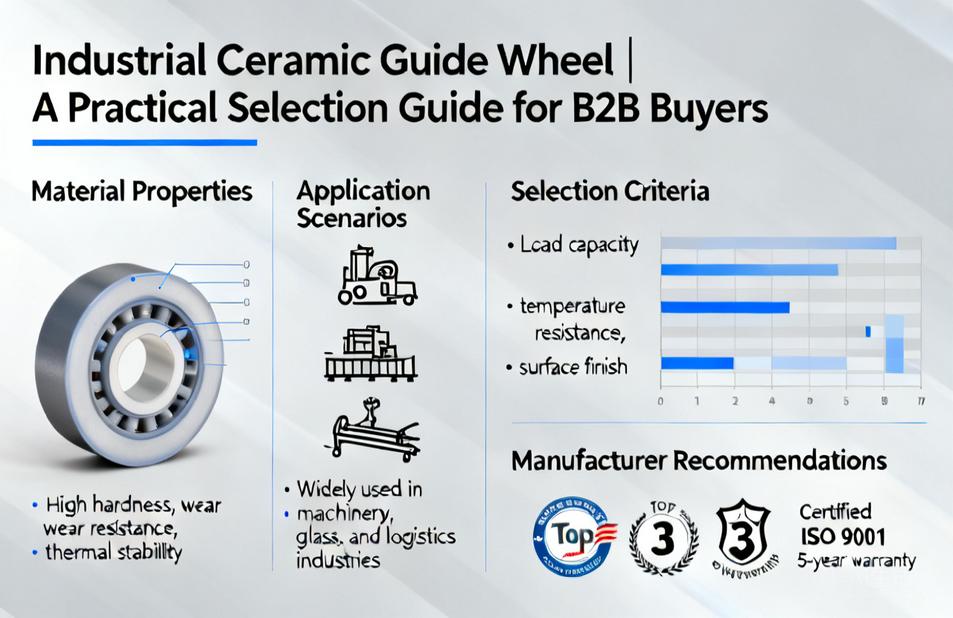
An industrial ceramic guide wheel is a precision rotating component used to guide, support, or tension wire, thread, film, tape, and similar flexible materials in industrial machinery. Instead of metal or plastic, the contact surface is made from engineered ceramic, which allows the wheel to resist abrasion, heat, and chemical exposure in continuous production environments. Buyers often search for this part when they need to reduce wear, avoid contamination, or improve tension stability in wire drawing, textile, packaging, and coating equipment. This article explains how these wheels work, where they are used, and what to check before placing an order with a manufacturer or supplier.
What an Industrial Ceramic Guide Wheel Does
A guide wheel is not usually a load-bearing part. Its main job is to control the path of a moving material and keep it aligned with the next process stage. When the material runs at high speed or carries abrasive particles, a metal wheel can wear quickly, create sparks, or transfer heat into the product. A ceramic guide wheel addresses these issues by providing a hard, smooth, and chemically stable contact surface. In many machines, the wheel is mounted on a bearing or a fixed shaft, and the ceramic ring rotates with the passing material or stays stationary, depending on the design.
Key Features Buyers Look For
Purchasing teams and machine builders typically evaluate ceramic guide wheels against several practical criteria. The right combination depends on the material being guided, the line speed, the environment, and the maintenance schedule.
- Wear resistance: Ceramic surfaces maintain their shape longer than many metals when running against wire, glass fiber, or abrasive tape.
- Low friction: A smooth ceramic contact surface can reduce drag and help maintain consistent tension.
- Chemical stability: Ceramic is suitable for processes where lubricants, solvents, or cleaning agents are present.
- Heat resistance: Ceramic parts can operate in high-temperature zones where some polymer wheels would soften.
- Electrical insulation: In some wire and cable processes, a non-conductive wheel can be an advantage.
- Surface finish: The groove profile and surface roughness affect how the material tracks and whether it is marked or damaged.
Materials and Construction
Most industrial ceramic guide wheels use alumina (Al2O3) or zirconia (ZrO2) ceramics. Alumina is often chosen for general wear resistance and cost control, while zirconia can offer higher toughness in applications where impact or bending loads are expected. The ceramic ring is usually bonded, pressed, or mechanically fixed into a metal hub or mounted directly on a shaft. Some designs include a precision bearing inside the hub, while others are simple idler wheels. The groove shape can be flat, U-shaped, V-shaped, or custom-profiled to match the material. Because ceramic is brittle compared with steel, the mounting design and edge support are important to prevent cracking during installation or operation.
Typical Industrial Applications
Ceramic guide wheels appear in many production lines where material handling accuracy matters. Common industrial applications include:
- Wire drawing and cable manufacturing, where the wheel guides wire without scratching or wearing out.
- Textile machinery, including yarn guides and fiber tensioning positions.
- Packaging equipment, guiding film, foil, and label webs.
- Coating and laminating lines, where chemical resistance and smooth tracking are useful.
- Glass fiber and carbon fiber production, where abrasive filaments can damage metal guides.
- Electronic component winding and coil processing equipment.
Because these wheels are often part of a larger tension or guide system, buyers should consider the whole material path, not just the wheel itself. A wheel that works well in one position may not be suitable in another if the wrap angle, speed, or side load is different.
How to Choose the Right Ceramic Guide Wheel
Selection should start with the material being guided and the machine conditions. The following questions help narrow down the correct specification.
1. What material is being guided?
The hardness, diameter, and surface sensitivity of the wire, thread, or film determine the required groove profile and surface finish. Soft materials may need a polished surface to avoid marking, while abrasive materials may require a harder ceramic grade.
2. What is the line speed and load?
Higher speeds increase friction and heat. The bearing type, hub design, and wheel balance become more important. If the wheel also carries tension or side load, the mounting and shaft arrangement must be reviewed with the supplier.
3. What is the operating environment?
Temperature, humidity, lubricants, and cleaning chemicals all affect the choice between alumina, zirconia, and other ceramic materials. In dusty or dirty environments, seal or shield options for the bearing may be needed.
4. How is the wheel mounted?
Check the shaft diameter, mounting width, and fixing method. Some wheels are designed for a press fit, others use a set screw, retaining ring, or custom hub. Providing a drawing or sample to the manufacturer is the most reliable way to match the existing setup.
Customization and OEM Options
Many industrial ceramic guide wheel suppliers offer OEM and custom production. Customization can include the outer diameter, bore size, groove profile, ceramic material, surface finish, hub material, and bearing configuration. For machine builders and maintenance teams, a custom wheel can solve a specific tracking or wear problem that a standard part cannot address. When requesting a custom quote, prepare a clear drawing with tolerances, the material being guided, the operating speed, and the environmental conditions. This reduces back-and-forth and helps the factory recommend a practical design.
Buying Considerations for Overseas Buyers
Price should not be the only factor when comparing quotations. A low-cost wheel that wears quickly or cracks during installation can create downtime that costs far more than the part itself. Buyers should ask about the ceramic grade, dimensional tolerance, surface inspection, and packaging method. For export orders, confirm the drawing revision, quantity per box, and labeling requirements. If the wheels will be used in a critical position, request a sample or small trial order before committing to a large volume. It is also useful to ask how the supplier handles dimensional checks and whether they can provide inspection reports based on the agreed drawing.
How to Evaluate a Ceramic Guide Wheel Supplier
A reliable supplier should understand both ceramics and the machinery where the wheel is used. Good signs include the ability to discuss groove profiles, bearing options, and mounting methods in technical terms. A manufacturer with in-house pressing, sintering, and machining can control more of the production process, which often helps with consistency. If the supplier only trades standard parts, they may struggle with custom requirements. During communication, pay attention to response time, drawing feedback, and willingness to clarify details. These factors are often more telling than a catalog alone.
Frequently Asked Questions
Can ceramic guide wheels replace metal wheels directly?
In many cases they can, but the mounting and load capacity should be checked first. Ceramic is harder and more wear-resistant, but it is also more brittle. The hub design and support around the ceramic ring may need adjustment to avoid point loads or impact damage.
Are ceramic guide wheels suitable for high-speed lines?
They can be used in high-speed applications, but the bearing type, wheel balance, and surface finish become critical. The supplier should know the line speed and material so they can recommend a suitable design.
What information is needed for a custom ceramic guide wheel quote?
Provide a drawing or sample with dimensions, the material being guided, operating speed, load direction, temperature, and chemical exposure. Photos of the current setup and the problem being solved also help the factory propose the right solution.
How do I choose between alumina and zirconia ceramic?
Alumina is often selected for general wear resistance and cost control. Zirconia may be preferred when higher toughness or impact resistance is needed. The final choice depends on the application conditions and should be discussed with the manufacturer.
Conclusion
Choosing an industrial ceramic guide wheel is mainly about matching the wheel to the material, speed, environment, and mounting method. Buyers should focus on ceramic grade, groove profile, surface finish, and hub design rather than price alone. For custom or OEM projects, a clear drawing and open technical discussion with the supplier will lead to a better result. If you are reviewing a guide wheel application, contact a ceramic guide wheel manufacturer or supplier with your specifications, and ask for their recommendation on material, dimensions, and customization options.
