

Coating Service Overview
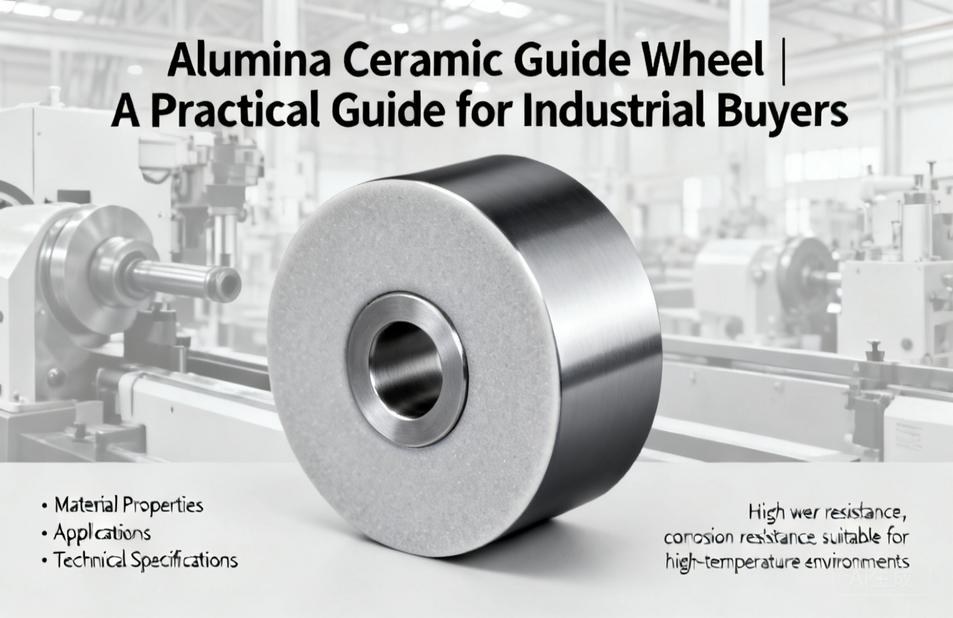
An alumina ceramic guide wheel is a precision wear component used to guide, tension, or position wire, thread, tape, film, and other flexible materials in industrial machinery. Instead of a metal pulley that may groove, corrode, or contaminate the product, the alumina ceramic guide wheel uses a hard, dense ceramic that resists abrasion and keeps the material path stable over long production runs. Buyers in textile, wire drawing, cable manufacturing, coating, and packaging operations often look for this component when they need longer service life and less maintenance downtime.
Because guide wheels are consumable parts, the purchase decision is rarely about one unit. It is about repeatability, fit, surface finish, and having a supplier who can deliver consistent parts over time. This guide explains how an alumina ceramic guide wheel works, what to check before ordering, and how to work with a manufacturer or supplier on OEM and custom requirements.
What Is an Alumina Ceramic Guide Wheel?
An alumina ceramic guide wheel is a rotating or fixed wheel made from aluminum oxide (Al2O3) ceramic. It is commonly used as a guide element where a moving strand or web contacts the wheel surface. The ceramic surface provides a smooth, hard contact point that helps reduce friction and protects the material being processed.
Typical configurations include grooved wheels, flat-faced wheels, flanged wheels, and wheels with a central bore for a bearing, shaft, or bushing. Depending on the machine design, the wheel may rotate freely, be mounted on a precision bearing, or remain fixed while the material slides across it. In many industrial lines, these wheels are used in pairs or arrays to control tension and align the material before it enters a die, coating head, or winding station.
Why Alumina Ceramic Is Used for Guide Wheels
Aluminum oxide ceramic is chosen for guide wheels because of its combination of hardness, chemical stability, and electrical insulation. Compared with many metals, it offers better resistance to abrasive wear when the contact material is rough or when the line runs at high speed. It also does not rust, which is important in humid or wet environments.
Alumina ceramic is an electrical insulator, so it can be used in equipment where stray current or grounding issues matter. It is also non-magnetic, which helps in sensitive wire and cable processes. These properties make alumina ceramic guide wheels a common choice in applications where metal guide wheels would wear too quickly or introduce contamination.
Key Features Buyers Look For
When evaluating an alumina ceramic guide wheel, purchasing teams and process engineers typically focus on features that affect performance and repeatability. Common points include:
- Surface finish: A smooth, polished surface helps prevent scratching or marking of the wire, thread, or film.
- Dimensional consistency: Bore diameter, outer diameter, groove profile, and width must match the machine holder and material size.
- Edge quality: Chamfered or radiused edges help avoid cutting or snagging the material.
- Wear resistance: Alumina ceramic resists grooving better than many metal alternatives in abrasive contact.
- Corrosion resistance: Suitable for humid or mildly chemical environments where rust is a concern.
- Insulation properties: Useful in electrified or static-sensitive processes.
These features should be confirmed against the drawing or sample, not assumed from a generic description.
Typical Industrial Applications
Alumina ceramic guide wheels appear in many industrial applications where a moving strand or web must be controlled. Examples include:
- Wire drawing and cable stranding lines
- Textile spinning, twisting, and winding machinery
- Optical fiber and wire coating equipment
- Film and tape slitting or converting lines
- Packaging machinery for thread, cord, and narrow web
- Enameling and magnet wire production
- Welding wire feed and guidance systems
In each application, the guide wheel is a small but critical contact point. If it wears unevenly, the material path changes and can cause defects, breaks, or downtime. That is why buyers often standardize on a specific ceramic guide wheel design and source it from a consistent manufacturer.
How to Choose the Right Alumina Ceramic Guide Wheel
Choosing the correct guide wheel starts with the material being guided and the machine interface. The following factors help narrow the selection.
Material and Cross-Section
Consider the diameter, shape, and surface condition of the wire, thread, tape, or film. A fine wire may require a small, polished groove, while a flat tape may run better on a wide, flat ceramic face. Abrasive materials may call for a harder, more wear-resistant ceramic grade, while delicate materials may need a very smooth finish to avoid marking.
Groove Profile and Dimensions
The groove shape, depth, radius, and angle must match the material. A groove that is too deep can trap debris; one that is too shallow may not guide properly. The outer diameter, bore size, and overall width must fit the existing shaft, bearing, or mounting bracket.
Mounting and Rotation
Determine whether the wheel will rotate on a bearing, turn on a shaft, or remain fixed. This affects the bore tolerance, the need for a bearing seat, and the surface finish on the bore. Some designs use a ceramic wheel with a metal insert or bushing; others are all-ceramic.
Operating Environment
Temperature, humidity, chemicals, and cleaning methods can influence the choice. Alumina ceramic is stable in many environments, but the mounting hardware and bearing materials must also be compatible.
Customization and OEM Options
Many industrial buyers need a guide wheel that matches an existing machine or a specific material. A capable manufacturer can produce custom alumina ceramic guide wheels based on a drawing, sample, or detailed specification. Common customization options include:
- Custom outer diameter, inner bore, and width
- Custom groove profile, radius, and surface finish
- Flat, flanged, or stepped wheel designs
- Ceramic wheels with metal hubs, bushings, or bearing assemblies
- Laser marking or controlled packaging for OEM programs
When requesting a custom or OEM quote, provide the material to be guided, the machine model or drawing, the mounting method, and any surface finish requirements. Clear input reduces the risk of a part that fits but does not perform.
Buying Considerations for Overseas Purchasers
Price is only one part of the total cost. A guide wheel that wears quickly or varies from lot to lot can create scrap, downtime, and rework. Buyers should ask about dimensional tolerances, surface roughness, and how the supplier controls consistency between production runs. It is also useful to request a sample or first article for evaluation before placing a volume order.
Packaging matters as well. Ceramic parts can chip if they are not protected during transport. A supplier who understands industrial shipping will use appropriate cushioning and labeling to protect the wheel edges and bores.
Supplier Selection: What to Evaluate
When sourcing from a manufacturer, supplier, or factory overseas, look for technical communication, not just a catalog. A good partner can review your drawing, ask about the application, and suggest practical modifications. They should be able to explain how the wheel is formed, machined, and inspected without making vague claims.
Ask for the production process, quality control steps, and lead time for both samples and repeat orders. If the supplier offers OEM or custom manufacturing, confirm how they handle drawings, tolerances, and approval samples. A supplier who is comfortable discussing these details is usually better prepared for long-term industrial supply.
Frequently Asked Questions
What is an alumina ceramic guide wheel used for?
It is used to guide and position wire, thread, tape, film, or other flexible materials in industrial machinery. It provides a wear-resistant contact surface that helps maintain a stable material path.
Can alumina ceramic guide wheels be customized?
Yes. Many manufacturers offer custom dimensions, groove profiles, surface finishes, and mounting features. Custom or OEM production usually requires a drawing, sample, or detailed specification from the buyer.
How do I choose between a ceramic and a metal guide wheel?
Consider the material being guided, the risk of wear or contamination, and the operating environment. Ceramic is often preferred where abrasion, corrosion, or electrical insulation is a concern, while metal may be suitable for less demanding contact.
What information should I provide for a quotation?
Provide the wheel dimensions, groove profile, bore size, mounting method, material to be guided, quantity, and any surface finish or tolerance requirements. A drawing or sample is helpful for accurate quoting.
Conclusion
Selecting the right alumina ceramic guide wheel comes down to matching the wheel to the material, the machine interface, and the operating environment. Focus on dimensional accuracy, surface finish, and supplier consistency rather than price alone. If you need a standard part, a custom design, or an OEM program, contact a qualified manufacturer or supplier with your specifications and application details so they can recommend a suitable configuration.
