

Coating Service Overview
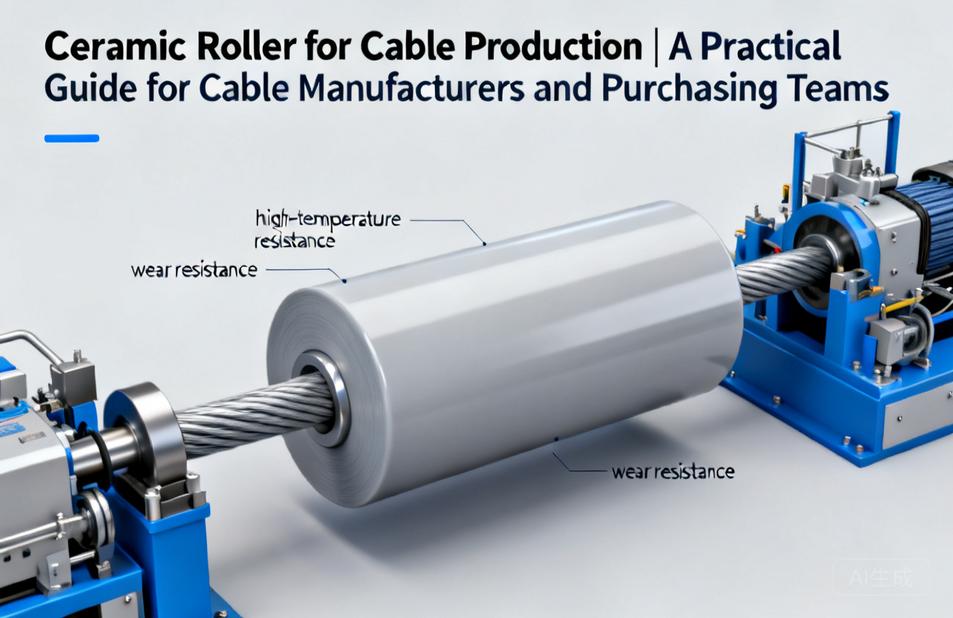
A ceramic roller for cable production is a specially engineered guide component used on wire drawing, stranding, bunching, extrusion, taping, and rewinding lines to guide conductors, strands, and finished cables with minimal friction and wear. In cable manufacturing, these rollers are typically installed in pay-off and take-up stands, wire guides, dancer systems, and tension control units. Because ceramic rollers resist abrasion and maintain a smooth contact surface, they help protect soft copper, aluminum, tinned conductors, and insulation from scratching, flattening, or unnecessary tension spikes during high-speed operation.
Why Cable Producers Use Ceramic Rollers Instead of Steel or Plastic Guides
Cable and wire products are sensitive to surface damage. A sharp edge or worn groove on a metal guide can damage the conductor surface, cause copper dust, or leave marks that affect downstream insulation and testing. Ceramic rollers are chosen because the ceramic contact area is hard, smooth, and chemically stable. The low friction coefficient helps reduce drag on the wire, which can lower motor load and improve tension consistency. At the same time, ceramic materials resist the abrasive wear caused by continuous wire contact, so the guide geometry stays stable over a longer service period compared with many soft or metallic alternatives.
For cable factories running multiple shifts, the roller surface quality directly affects line efficiency. A damaged guide means frequent rethreading, reduced line speed, and more scrap. A properly selected ceramic guide roller supports stable wire travel and reduces the risk of micro-scratches that can become visible defects after extrusion or jacketing.
Product Overview: How a Ceramic Roller Works on a Cable Line
A typical ceramic roller assembly consists of a ceramic ring, a metal hub or insert, a bearing or bushing, and a mounting shaft or bracket. The ceramic ring provides the wire contact surface, while the hub and bearing allow the roller to rotate freely as the cable passes. Some designs use a fixed ceramic guide with a polished groove instead of a rotating roller, depending on the machine layout and the tension level.
In actual production, the roller may be used in several positions:
- Pay-off and take-up units, where the roller guides the conductor from the spool to the capstan.
- Stranding and bunching machines, where multiple wires are combined and need consistent alignment.
- Extrusion lines, where the conductor enters the crosshead and the roller helps maintain a straight path.
- Taping and shielding stations, where the roller supports the cable without crushing the newly applied layer.
- Rewinding and coiling equipment, where the roller controls the cable path before final packaging.
The exact roller profile, groove shape, and mounting method depend on the wire diameter, line speed, tension range, and machine brand. A cable equipment manufacturer or an experienced ceramic roller supplier can help match the roller to the existing hardware.
Materials and Construction Considerations
Ceramic rollers for cable production are usually made from alumina-based technical ceramics, although other ceramic compositions may be used when specific wear or electrical insulation properties are required. The ceramic surface is typically polished to reduce friction and avoid marking the conductor. The metal hub can be stainless steel, carbon steel with plating, or aluminum, depending on the load and the working environment.
Key construction details that purchasing teams should review include:
- Groove geometry and radius, which must match the cable or wire diameter to avoid pinching or side-wall contact.
- Surface finish, because a smoother contact surface reduces the chance of surface damage on soft conductors.
- Bearing type and sealing, especially in dusty or humid plant environments where contamination can shorten bearing life.
- Concentricity and balance, which matter more as line speed increases.
- Mounting dimensions, including shaft diameter, thread, and bracket interface, to ensure drop-in compatibility.
It is not enough to specify only the outer diameter. A roller that is dimensionally close but has the wrong groove profile or bearing clearance can cause vibration, wire wandering, or premature failure.
Industrial Applications Beyond Standard Cable Lines
Although the primary use is cable and wire production, these ceramic guide rollers also appear in related industrial applications. They are used in wire drawing machines, coil winding equipment, optical fiber processing, rope and cord manufacturing, and some textile machinery where low friction and wear resistance are important. In cable factories, they are often found alongside ceramic eyelets, ceramic pulleys, ceramic guide wheels, and ceramic thread guides. This family of ceramic guide components supports a complete wire path solution, from the pay-off spool to the final take-up reel.
How to Choose the Right Ceramic Roller for Your Cable Equipment
Choosing a ceramic roller is mainly a matching exercise. The goal is to find a roller that fits the machine, suits the cable being produced, and performs reliably at the intended line speed. Buyers should collect the following information before contacting a manufacturer or supplier:
- Cable or wire diameter range, including minimum and maximum values.
- Machine position and the function of the roller in the wire path.
- Line speed and tension range, if available.
- Existing roller drawing, sample, or part number.
- Mounting method and available space around the guide position.
- Environmental conditions such as dust, humidity, and temperature.
With these details, a ceramic roller factory can recommend a suitable ceramic material, groove profile, bearing arrangement, and mounting interface. If the application involves a new machine design or a special conductor, custom development may be necessary.
Customization and OEM Options
Many cable equipment builders and cable producers require non-standard rollers. Common customization requests include special outer diameters, custom groove profiles, specific shaft lengths, alternate bearing types, and private labeling for OEM machine programs. A capable ceramic roller manufacturer can produce custom rollers based on drawings, samples, or application requirements. For OEM projects, the supplier should be able to work with engineering teams during the design stage and provide consistent production batches that match the approved specification.
When requesting a custom ceramic roller, it is helpful to provide a detailed drawing or a physical sample. This reduces the risk of misalignment with the existing machine and helps the supplier confirm the correct ceramic grade, tolerance, and surface finish.
Buying Considerations for Overseas Purchasing Teams
Price is only one part of the total cost. A low-cost roller that wears quickly or damages the conductor can lead to scrap, downtime, and rework that far exceeds the initial savings. Purchasing teams should evaluate the supplier based on material consistency, dimensional accuracy, surface quality, bearing reliability, and the ability to support repeat orders. It is also useful to ask how the supplier controls ceramic density, firing, and finishing, because these process steps affect wear life and surface smoothness.
For importers, packaging and labeling matter as well. Ceramic rollers should be protected against impact during shipping, and each batch should be identifiable by part number or drawing revision. Clear communication on specifications, inspection criteria, and packing requirements helps avoid disputes and keeps production running smoothly.
How to Select a Reliable Ceramic Roller Supplier
A reliable supplier should understand cable production, not just ceramic machining. The best partners can discuss wire tension, groove design, bearing selection, and machine integration. They should be able to provide technical feedback on drawings, suggest improvements, and maintain consistent quality across repeat orders. When evaluating a potential manufacturer, ask about their experience with cable and wire industry components, their in-house process capabilities, and their approach to custom and OEM work. A supplier that communicates clearly during the inquiry stage is more likely to support you well after the order is placed.
Frequently Asked Questions
What is a ceramic roller used for in cable production?
A ceramic roller guides wire, strands, or finished cable through different stages of production, such as pay-off, stranding, extrusion, taping, and rewinding. It provides a smooth, low-friction contact surface that helps prevent conductor damage and supports stable tension.
Can ceramic rollers be customized for specific cable machines?
Yes. Many manufacturers offer custom and OEM ceramic rollers based on drawings, samples, or application details. Customization can include groove profile, dimensions, bearing type, mounting interface, and branding requirements.
How do I choose the right ceramic roller for my line?
Start with the cable diameter range, machine position, line speed, tension, and mounting dimensions. If possible, provide an existing drawing or sample. The supplier can then recommend a suitable ceramic material, groove shape, and bearing configuration.
What should I check when comparing ceramic roller suppliers?
Look at material consistency, dimensional accuracy, surface finish, bearing quality, experience with cable industry components, and the ability to handle repeat or OEM orders. Technical communication and batch consistency are often more important than the lowest initial price.
Conclusion
Selecting the right ceramic roller for cable production comes down to matching the roller to the machine, the cable, and the operating conditions. Buyers should focus on groove geometry, surface quality, bearing reliability, mounting compatibility, and supplier consistency. For special applications, custom and OEM options allow cable equipment builders and cable producers to get a roller that fits their exact process. If you are reviewing ceramic guide solutions for a cable line, contact a qualified manufacturer or supplier with your specifications, drawings, or samples to discuss the most suitable configuration.
