

Coating Service Overview
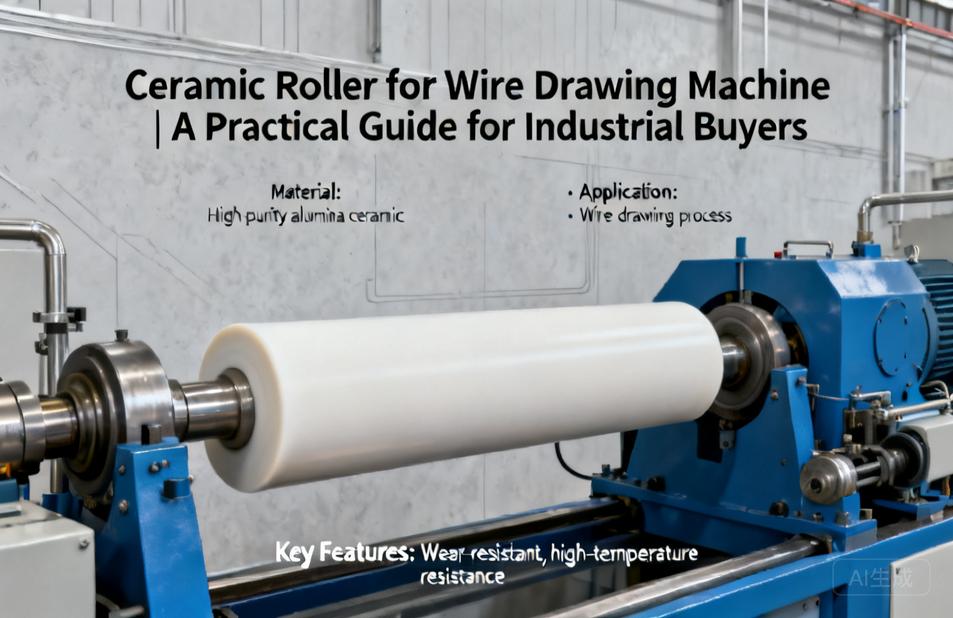
A ceramic roller for wire drawing machine is a wear-resistant guiding component used in multi-wire drawing lines to control wire path, reduce friction, and protect the wire surface before and after the drawing dies. Unlike steel or hard chrome rollers, ceramic guide rollers are valued for their low friction, high hardness, and resistance to abrasion in continuous production environments. For wire and cable manufacturers, fastener producers, and metal processing factories, choosing the right ceramic roller is a practical decision that affects wire quality, machine uptime, and maintenance costs.
This guide explains what these rollers do, where they are used, and how purchasing teams, maintenance engineers, and procurement managers can evaluate specifications, customization options, and supplier capability.
What Is a Ceramic Roller for a Wire Drawing Machine?
A ceramic roller is a rotating guide or pulley component installed at the payoff, intermediate, or take-up sections of a wire drawing machine. Its main job is to guide the wire without scratching it, keep tension consistent, and minimize friction against the moving wire. In high-speed multi-wire drawing lines, several ceramic rollers may be arranged in sequence to control the wire path through the machine.
The roller body is typically made from technical ceramic materials, while the shaft, bearing seat, or mounting structure may use metal components. This combination allows the roller to maintain a smooth contact surface while withstanding the mechanical load of continuous wire movement.
How Ceramic Rollers Work in Wire Drawing Lines
Wire drawing reduces the diameter of metal wire by pulling it through a series of dies. Between dies and at entry or exit points, the wire must be guided accurately. Ceramic rollers support this process by providing a low-friction contact surface that helps prevent surface damage, reduce heat buildup, and keep the wire aligned.
Because ceramic materials are hard and abrasion-resistant, they can tolerate the constant rubbing of wire better than many metal surfaces. This makes them particularly useful in lines running copper, aluminum, steel, and alloy wire. The roller does not change the wire diameter itself; instead, it supports stable wire travel through the machine.
Key Features Buyers Usually Evaluate
When sourcing ceramic rollers for wire drawing machines, buyers often compare the following features:
- Low friction: Reduces drag on the wire and helps maintain consistent line speed.
- Abrasion resistance: Supports long service intervals in continuous drawing operations.
- Smooth contact surface: Helps avoid scratches, marks, and surface defects on the wire.
- Chemical stability: Useful when lubricants, coolants, or cleaning agents are present.
- Dimensional consistency: Important for stable rotation and proper wire alignment.
- Balanced assembly: Helps reduce vibration at higher line speeds.
These features matter because wire drawing machines often run at high speed for long periods. A roller that is poorly matched to the application can cause wire damage, frequent replacement, or unplanned downtime.
Materials and Construction
Most ceramic rollers use alumina-based or zirconia-based ceramic materials, depending on the required wear resistance, surface finish, and mechanical strength. The ceramic ring or body is normally combined with a precision shaft, bearing, or bracket. Some designs use a full ceramic body, while others use a ceramic insert on a metal core.
The choice of bearing type, shaft material, and mounting interface depends on the machine model and operating conditions. In many cases, the roller assembly is designed to match the original equipment dimensions so it can be installed without modifying the machine frame.
Typical Industrial Applications
Ceramic rollers are used in a wide range of wire and cable production environments, including:
- Copper wire drawing lines
- Aluminum and alloy wire drawing
- Steel wire and tire bead wire production
- Cable stranding and bunching equipment
- Enameling and coating lines
- Welding wire manufacturing
- Metal mesh and fastener production
In each application, the roller helps maintain wire position and surface quality. Because these industries often run continuous processes, roller reliability is closely linked to production efficiency and product consistency.
How to Choose the Right Ceramic Roller
Selecting a ceramic roller for a wire drawing machine should be based on the actual machine setup and the wire being processed. Buyers can start with the following points:
1. Match the Machine and Mounting Dimensions
Check the roller outer diameter, groove profile, bore size, shaft length, and mounting method. If the roller is intended as a replacement part, compare it with the original drawing or sample. A dimensional mismatch can cause vibration, poor wire tracking, or installation problems.
2. Consider the Wire Material and Diameter
Different wire materials place different demands on the roller surface. Copper and aluminum wire may require a smooth finish to avoid surface marking, while steel wire may require higher wear resistance. The wire diameter and line speed also influence the groove shape and bearing selection.
3. Review the Operating Environment
Temperature, lubricant type, dust, and humidity can affect roller life. In some plants, ceramic rollers are chosen specifically because they resist corrosion and do not react with common drawing lubricants.
4. Check Rotation and Balancing Requirements
For high-speed lines, roller balance and bearing quality are important. A roller that does not rotate freely can cause wire tension fluctuation and increase wear on both the wire and the equipment.
Customization Options for OEM and Replacement Projects
Many ceramic roller suppliers offer custom dimensions, groove profiles, shaft configurations, and bearing arrangements. For OEM projects, a manufacturer may produce rollers according to customer drawings, samples, or machine specifications. Custom options can include specific outer diameters, widths, chamfers, surface finishes, and mounting brackets.
When requesting a custom ceramic roller, buyers should provide clear technical information such as wire material, wire diameter range, line speed, machine model, installation position, and any available drawings or photos. This helps the factory propose a suitable design and avoid repeated sampling.
Buying Considerations for Importers and Procurement Teams
Price alone is rarely the best indicator of suitability. A practical evaluation should also consider dimensional accuracy, surface quality, packing method, and batch consistency. For replacement parts, buyers often need a supplier who can match existing machine components reliably.
It is also useful to clarify the expected order quantity, whether the item is a standard part or a custom part, and whether technical support is available for selection. Small trial orders can help verify fit and performance before larger purchases.
How to Select a Reliable Ceramic Roller Supplier
When evaluating a ceramic roller manufacturer or supplier, look for experience in wire industry components, clear communication about specifications, and the ability to support OEM or custom requirements. A reliable factory should be able to review drawings, ask relevant technical questions, and provide consistent production based on agreed dimensions.
Buyers may also ask about packing standards, labeling, and shipment preparation. For international procurement, clear documentation and responsive communication are important throughout the inquiry, sampling, and order process.
Frequently Asked Questions
What is the main advantage of a ceramic roller over a metal roller?
Ceramic rollers generally offer lower friction and higher abrasion resistance, which can help reduce wire surface damage and extend replacement intervals in continuous drawing operations.
Can ceramic rollers be customized for a specific wire drawing machine?
Yes. Many suppliers and factories provide custom sizes, groove profiles, shafts, and mounting designs based on customer drawings, samples, or machine specifications.
How do I know which ceramic roller fits my machine?
Check the mounting dimensions, roller diameter, groove shape, bore size, and installation position. Providing machine model information and photos to the supplier can help confirm the correct match.
Are ceramic rollers suitable for both copper and steel wire?
They can be used in different wire drawing applications, but the material grade, surface finish, and groove design should be selected according to the wire material, diameter, and line speed.
Conclusion
Choosing a ceramic roller for a wire drawing machine is mainly about matching the roller to the machine, the wire, and the production environment. Buyers should focus on dimensions, material, bearing quality, surface finish, and supplier support rather than relying on a single specification or price point. For OEM or custom projects, clear technical communication and sample verification can reduce installation risk.
If you are reviewing ceramic guide rollers for a new line, replacement program, or custom application, contact the supplier with your machine details and wire specifications. A practical discussion of dimensions, operating conditions, and customization needs will help you identify a suitable roller solution for your wire drawing process.
