

Coating Service Overview
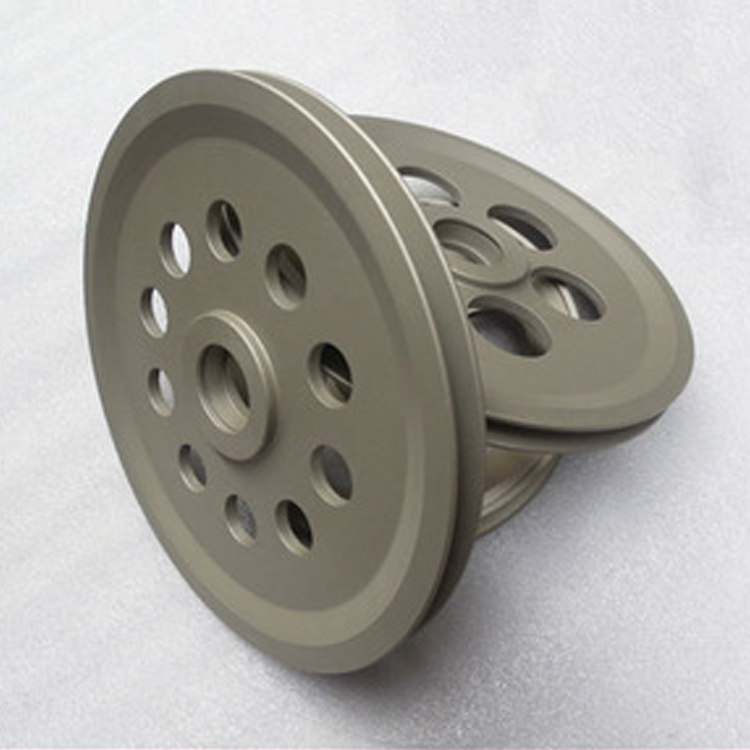
What Is a Tungsten Carbide Coating Supplier?
A tungsten carbide coating supplier provides wear-resistant coatings — most commonly applied by HVOF (High Velocity Oxy-Fuel) thermal spray — to industrial components that must resist abrasion, erosion, and friction in demanding production environments. In wire and cable manufacturing, these coatings are frequently applied to guide wheels, tower pulleys, and other wire-contact parts to extend service life and maintain dimensional accuracy.
If you are sourcing a tungsten carbide coating supplier, the key question is not simply “who offers the lowest price” but “who can consistently deliver the coating thickness, bond strength, surface finish, and substrate compatibility your application requires.” This guide explains how to evaluate suppliers, what to specify, and where coated components fit in wire drawing and cable production.
Why Tungsten Carbide Coatings Matter in Wire and Cable Production
In wire drawing, stranding, bunching, and cabling, the wire runs at high speed under continuous tension. Guide wheels and tower pulleys are exposed to constant friction, mechanical pressure, and friction-generated heat. Over time, uncoated or poorly coated surfaces can develop grooves, wear marks, or dimensional drift — which in turn affects wire surface quality, diameter consistency, and maintenance frequency.
Tungsten carbide is valued for its extreme hardness and wear resistance. When applied as a coating via HVOF, it can help a component maintain its original profile longer than conventional steel surfaces. This is why tungsten carbide coatings are often specified for:
- Wire drawing machine tower pulleys and tower wheels
- Ceramic guide wheels and guide rollers used in cable lines
- Wire contact components in copper, aluminum, and steel wire drawing
- Parts subject to abrasive wear in high-speed production
How to Evaluate a Tungsten Carbide Coating Supplier
When comparing suppliers, focus on the factors that determine whether the coating will perform in your specific line conditions.
1. Coating Process and Application Method
Ask which thermal spray process the supplier uses. HVOF is a common method for tungsten carbide coatings because it produces a dense, well-bonded coating. Suppliers should be able to explain their process and how it suits your substrate and wear conditions.
2. Substrate Compatibility
The base material of your guide wheel or pulley matters. Coatings must be matched to the substrate to achieve proper adhesion and performance. Provide the supplier with the component material, dimensions, and operating conditions.
3. Coating Thickness and Surface Finish
Specify the required coating thickness and surface roughness. For wire-contact parts, a smooth, consistent finish helps protect wire surface quality. If the finish is too rough or uneven, it can mark the wire or cause inconsistent tension.
4. Dimensional Accuracy After Coating
Coating adds material to the component. The supplier must be able to control the final dimensions — especially for grooved pulleys and tower wheels where groove profile and pitch diameter affect wire positioning and speed control.
5. Quality Control and Inspection
Ask how the supplier inspects coating thickness, bond integrity, and final dimensions. A reliable supplier should have documented inspection steps, not just verbal assurances.
6. Experience With Wire and Cable Applications
Wire drawing and cable production have specific demands: continuous high-speed contact, tension control, and wire surface protection. A supplier familiar with these applications is better positioned to recommend the right coating and finishing approach.
Coated Components vs. Alternative Materials
Buyers often compare tungsten carbide coatings with other options such as ceramic guide wheels or hard oxide finishes. Each has a place:
- Tungsten carbide coatings (HVOF): Suited to metal components that need wear resistance while maintaining structural strength — for example, tower pulleys in wire drawing machines.
- Ceramic guide wheels: Often used where a smooth, low-friction contact surface is needed to protect soft conductors and insulation, such as in copper and aluminum wire drawing, bunching, and cabling.
- Hard oxide finishes: An anodizing-based surface treatment for aluminum pulleys, with surface hardness typically HV400 and above and film thickness in the 60–200 μm range, depending on specification.
The right choice depends on your wire material, line speed, tension, and the specific failure mode you are trying to solve.
What to Include in a Supplier Inquiry
To get an accurate quote and recommendation, prepare the following information:
- Component type (e.g., tower pulley, guide wheel, guide roller)
- Base material and current dimensions
- Drawing showing groove profile, bore, and critical tolerances
- Wire material and diameter range
- Line speed and tension conditions
- Required coating thickness and surface finish, if known
- Quantity and delivery expectations
If you do not have all specifications, a supplier with application experience can help you define them.
Common Mistakes When Sourcing Tungsten Carbide Coatings
- Focusing only on price: A lower-cost coating that wears prematurely can increase downtime and replacement costs.
- Ignoring substrate matching: Coatings applied to unsuitable base materials may not bond or perform as expected.
- Overlooking post-coating dimensions: Groove profile and diameter accuracy are critical for wire positioning.
- Not specifying surface finish: Rough finishes can damage wire surface or cause inconsistent tension.
- Choosing a supplier without application experience: Wire and cable production has specific demands that general coating shops may not fully understand.
About Our Capabilities
We are a manufacturer of ceramic guide wheels, tungsten carbide tower pulleys, and HVOF-coated components for the wire and cable industry. Our product range includes ceramic guide wheels for wire drawing, bunching, stranding, and cabling; tungsten carbide tower wheels and tower pulleys for wire drawing machines; and hard oxide coated aluminum pulleys. We support OEM customization based on customer drawings. For buyers evaluating a tungsten carbide coating supplier, we can review your component specifications and application conditions to recommend a suitable coating and finishing approach.
Frequently Asked Questions
What is the difference between a tungsten carbide coating and a ceramic guide wheel?
A tungsten carbide coating is applied to a metal component (such as a tower pulley) to improve wear resistance while retaining the base metal’s strength. A ceramic guide wheel uses a ceramic contact surface, often chosen for smooth, low-friction guidance that protects soft conductors and insulation. The best choice depends on your wire material, line speed, and the failure mode you need to address.
Can tungsten carbide coatings be applied to existing pulleys?
In many cases, yes — but it depends on the substrate material, component condition, and dimensional requirements. Coating adds material, so the supplier must be able to control final dimensions, especially groove profile and pitch diameter. Provide drawings and current dimensions for evaluation.
What information do I need to request a quote for a coated tower pulley?
Prepare the component type, base material, drawing with critical dimensions, wire material and diameter range, line speed and tension conditions, required coating thickness and surface finish (if known), and quantity. If specifications are incomplete, an experienced supplier can help define them.
How do I judge coating quality?
Ask about the coating process, substrate matching, thickness control, surface finish, and dimensional inspection after coating. A reliable supplier should have documented quality control steps and be able to explain how the coating suits your application.
Do you provide samples?
Sample availability depends on the component and customization requirements. Contact us with your specifications to discuss sample and production options.
