

Coating Service Overview
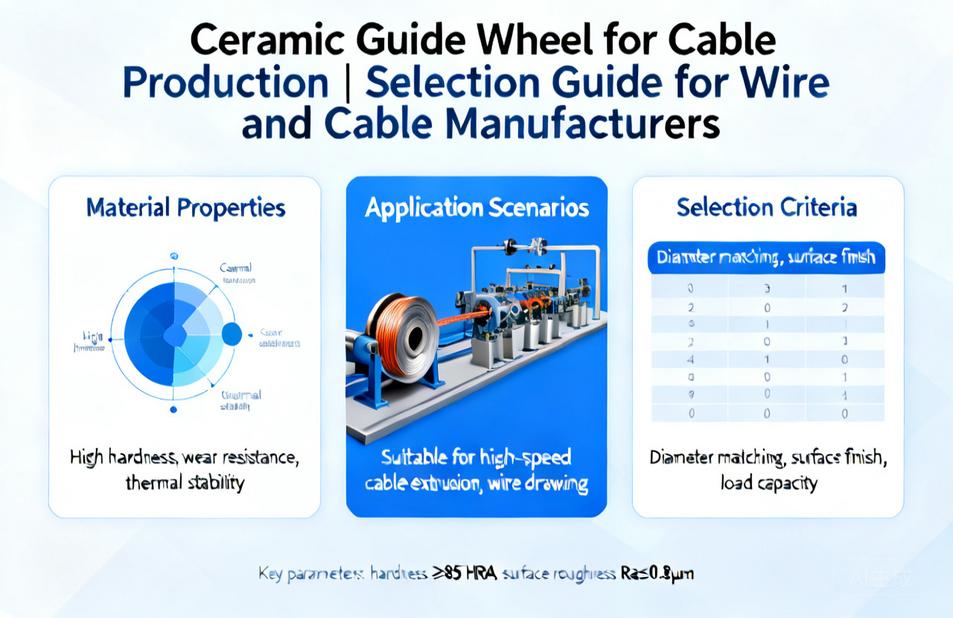
In wire and cable manufacturing, even a small contact component can influence line efficiency, surface quality, and maintenance cost. A ceramic guide wheel for cable production is a rotating or static guide element made from technical ceramic materials, used to route, support, and tension conductors, strands, and finished cables without damaging the product surface. Unlike metal guide rollers, ceramic guide wheels are chosen for their wear resistance, low friction, and electrical insulation properties in drawing, stranding, bunching, extrusion, and rewinding lines. For overseas buyers sourcing wire and cable machinery components, understanding how these wheels work, where they are used, and how to specify them is the first step toward stable production.
What Is a Ceramic Guide Wheel for Cable Production?
A ceramic guide wheel is a precision guide component installed at wire paths, pay-off and take-up stations, tension units, and capstan positions in cable manufacturing equipment. It contacts the moving wire or cable and guides it along a defined route. The wheel body may be made entirely of ceramic, or it may combine a ceramic contact surface with a metal, plastic, or composite hub. Ceramic guide wheels are common in copper and aluminum wire drawing, annealing, stranding, taping, and extrusion lines. They are also used in optical cable and specialty cable processes where surface damage must be minimized.
How Ceramic Guide Wheels Work in Cable Lines
The wheel rotates on a bearing, shaft, or pin, allowing the cable to pass with minimal resistance. The ceramic surface provides a smooth contact zone and reduces the risk of scratching, flattening, or marking soft conductors. In many configurations, the guide wheel also controls wire position and maintains tension consistency between upstream and downstream equipment. Because technical ceramics are electrical insulators, these wheels are suitable for applications near heating elements, high-frequency equipment, or areas where electrical isolation is required. Correct alignment, low runout, and a matched groove profile are essential for smooth cable travel.
Key Features Buyers Look For
Purchasers of guide wheels for cable machinery typically evaluate the following characteristics:
- Low friction to reduce drag and wire tension variation
- High wear resistance for long service intervals
- Smooth surface finish to protect conductor and insulation surfaces
- Electrical insulation for safety and process isolation
- Corrosion resistance in humid or chemically exposed plants
- Stable dimensions at elevated operating temperatures
- Light weight to reduce inertia in high-speed lines
These features matter because cable production is a continuous process. A guide wheel that wears quickly or damages the conductor can cause downtime, scrap, and inconsistent product quality.
Materials and Construction
Most ceramic guide wheels use alumina, zirconia, or silicon-based ceramics. Alumina ceramics offer good wear resistance and electrical insulation at a relatively economical cost. Zirconia ceramics provide higher toughness and are often selected for high-impact or high-load guide positions. The wheel may be manufactured as a solid ceramic part or as a ceramic ring pressed or bonded onto a metal hub. Groove profiles include V-groove, U-groove, flat, and custom radius designs. Bearing selection, shaft tolerance, and dynamic balance are also part of the construction. Buyers should request material grade, surface roughness, groove geometry, and permissible speed from the supplier before ordering.
Industrial Applications
Ceramic guide wheels are used in a wide range of cable and wire processes, including:
- Wire drawing and annealing lines
- Stranding and bunching machines
- Cable extrusion and cooling lines
- Taping, shielding, and wrapping equipment
- Pay-off and take-up systems
- Rewinding and spooling machines
- Optical fiber and specialty cable production
- Enameling and coating lines
In each application, the guide wheel must match the cable diameter, line speed, tension range, and environmental conditions. A wheel selected for fine wire may not be suitable for a large-diameter power cable, and vice versa.
How to Choose the Right Guide Wheel
Choosing a ceramic guide wheel for cable production requires matching the component to the machine and product. Key selection factors include:
Cable and Wire Specifications
Confirm the conductor or cable diameter range, surface sensitivity, and whether the product is round, flat, or stranded. The groove profile should support the cable without pinching or excessive contact pressure.
Machine Interface
Check shaft diameter, mounting method, wheel width, outer diameter, and available space. The replacement wheel should fit the existing bracket or spindle without modification, unless the equipment can be adapted.
Speed and Load
Higher line speeds require wheels with good dynamic balance, low runout, and suitable bearings. The wheel must handle radial and axial loads without vibration or premature wear.
Environment
Consider temperature, humidity, lubrication, dust, and chemical exposure. Ceramic materials are generally stable, but hub and bearing materials must also suit the operating environment.
Maintenance Strategy
Evaluate inspection intervals, replacement accessibility, and whether the plant prefers sealed bearings, open bearings, or bushing-type mounting. Standardizing wheel sizes across multiple lines can reduce spare parts inventory.
Customization and OEM Options
Many cable machinery builders and cable manufacturers require custom guide wheels rather than catalog items. A ceramic guide wheel manufacturer or supplier can often provide OEM and custom production based on drawings, samples, or application data. Customization may include outer diameter, bore size, groove profile, groove depth, surface finish, ceramic material, hub material, bearing type, and mounting configuration. When requesting a custom quote, provide the cable type and diameter, line speed, tension, ambient conditions, mounting dimensions, and quantity. Clear technical communication reduces the risk of mismatch and rework.
Buying Considerations for Overseas Purchasers
When sourcing ceramic guide wheels from an overseas factory, buyers should compare technical capability rather than price alone. Important points include dimensional tolerance, surface quality, material consistency, dynamic balance, and packaging suitable for international shipping. Ask for inspection reports or sample evaluation before mass orders. For repeat business, confirm whether the supplier can maintain batch-to-batch consistency and support replacement parts over time. It is also useful to discuss lead time, minimum order quantity, and technical support for installation or troubleshooting.
Supplier Selection
A reliable ceramic guide wheel supplier should understand cable production processes, not just ceramic machining. Look for a factory with experience in industrial ceramic parts, precision grinding, and assembly. The supplier should be able to review your application, recommend a suitable material and groove design, and provide drawings for approval. If you need OEM production, confirm that the supplier can work from your drawings or samples and keep your specifications confidential. Visiting the factory or requesting process documentation can help verify capability, but final selection should be based on sample performance in your actual cable line.
Frequently Asked Questions
What is the difference between a ceramic guide wheel and a metal guide roller?
Ceramic guide wheels generally offer lower friction, higher wear resistance, and electrical insulation compared with metal rollers. They are often chosen for soft conductors and high-speed lines where surface protection and long service life are important.
Can ceramic guide wheels be customized for my cable machine?
Yes. Many suppliers offer custom and OEM production based on drawings, samples, or application details. Customization can cover dimensions, groove profile, ceramic material, hub design, and bearing arrangement.
How do I select the correct groove profile for my cable?
The groove should match the cable diameter and shape while providing stable guidance. Fine wire often uses a small V or U groove, while larger cables may need a wider radius. The supplier can recommend a profile based on your line data.
What information should I provide when requesting a quote?
Provide cable type and diameter, line speed, tension range, mounting dimensions, operating temperature, quantity, and whether you need OEM or custom production. Photos or drawings of the existing part are also helpful.
Conclusion
Selecting the right ceramic guide wheel for cable production is a practical decision that affects product quality, line uptime, and maintenance cost. Focus on material suitability, groove geometry, dimensional accuracy, and compatibility with your machine and cable type. For custom or OEM requirements, work with a supplier who can review your application and provide clear technical feedback. If you are sourcing guide wheels for wire drawing, stranding, extrusion, or rewinding equipment, contact the supplier with your specifications and application details to discuss suitable options.
