

Coating Service Overview
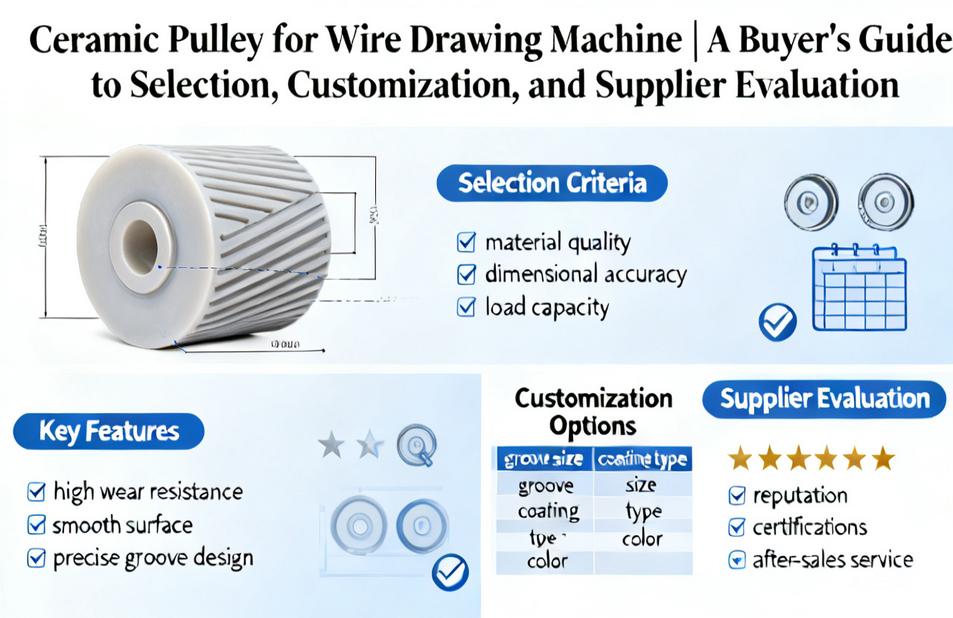
A ceramic pulley for wire drawing machine is a specialized guide wheel used to control wire tension, change wire direction, and reduce friction during the drawing process. In wire drawing operations, the wire passes over multiple pulleys, and any surface wear, groove misalignment, or material incompatibility can affect wire quality and machine uptime. Ceramic pulleys are often chosen because the ceramic surface offers wear resistance and a smooth contact area, which helps protect the wire surface and maintain consistent wire routing. For overseas buyers sourcing components for wire drawing equipment, understanding how ceramic pulleys work, where they are used, and how to match them to your machine is essential before placing an order.
What Is a Ceramic Pulley for Wire Drawing Machine?
A ceramic pulley for wire drawing machine is typically a grooved wheel with a ceramic insert or a ceramic-coated contact surface. The ceramic material is selected for its hardness and low friction characteristics. The pulley is mounted on a shaft and rotates as the wire runs through the groove. Its main functions include guiding the wire from one capstan to another, maintaining tension, and preventing the wire from scratching or deforming.
Unlike metal pulleys, which may wear quickly when running hard wire or abrasive materials, ceramic pulleys are designed to resist groove wear. This can help maintain wire position and reduce the need for frequent replacement. Depending on the machine design, ceramic pulleys may be used in dry drawing, wet drawing, or multi-wire drawing lines.
Key Features and Construction Details
Ceramic pulleys are not a single generic product. They vary in ceramic type, groove profile, hub design, and mounting method. Common ceramic materials include alumina and zirconia, though the exact grade should be matched to the wire material and drawing conditions. The pulley body may be made of steel, aluminum, or another metal, with the ceramic part pressed, bonded, or mechanically fixed into the groove area.
Important construction details include:
- Groove profile: The groove shape must match the wire diameter and the required contact angle. A poorly matched groove can cause wire slippage or surface damage.
- Ceramic surface finish: A smooth, polished contact surface helps reduce friction and wire scratching.
- Concentricity and balance: For high-speed drawing lines, pulley runout and balance affect vibration and wire tension stability.
- Bearing or bushing type: Some pulleys use sealed bearings, while others use bushings or are designed for shaft mounting. The choice depends on speed, load, and maintenance access.
- Mounting dimensions: Bore size, keyway, flange, and fixing method must match the machine interface.
Because ceramic pulleys are often used in demanding environments, buyers should request dimensional drawings and material specifications before ordering. A reliable ceramic pulley manufacturer or supplier can provide these documents and discuss how the pulley will perform in your specific wire drawing application.
Industrial Applications of Ceramic Pulleys
Ceramic pulleys are used in a range of wire processing and cable manufacturing operations. In wire drawing machines, they guide wire through the drawing dies and capstans. They are also found in annealing lines, tinning lines, bunching machines, and wire winding equipment. Industries that use these pulleys include:
- Copper and aluminum wire drawing
- Steel cord and steel wire production
- Cable and wire harness manufacturing
- Welding wire production
- Enameled wire and specialty wire processing
In some applications, the wire is lubricated or wet, while in others it runs dry. The pulley design and ceramic grade should be selected accordingly. For example, wet drawing may require corrosion-resistant components, while dry drawing may place more emphasis on heat resistance and wear life.
How to Choose the Right Ceramic Pulley
Selecting a ceramic pulley for your wire drawing machine involves more than matching the outer diameter. Buyers should consider the following factors:
Wire Material and Diameter
The wire material affects friction and wear. Copper wire is relatively soft, while steel wire can be abrasive. The wire diameter determines the minimum groove radius and the required pulley size. A pulley that is too small may cause excessive bending stress on the wire.
Machine Speed and Tension
High-speed drawing lines require pulleys with good dynamic balance and low runout. Tension control also depends on the pulley surface and bearing quality. If the pulley does not rotate smoothly, wire tension may fluctuate, leading to inconsistent wire diameter or surface defects.
Environmental Conditions
Temperature, humidity, dust, and lubricant exposure can affect pulley life. In wet or chemically active environments, the hub and bearing materials should be compatible with the process fluids. In high-temperature areas, the ceramic and bonding method must be suitable for the operating temperature.
Mounting and Replacement
Check the shaft diameter, keyway, and fixing method. If the pulley is part of a quick-change system, consider how easily it can be replaced during maintenance. Standardizing pulley sizes across multiple machines can reduce spare parts inventory.
Customization and OEM Options
Many wire drawing machines use non-standard pulley dimensions or specific groove profiles. In these cases, custom ceramic pulleys may be required. A capable factory or OEM supplier can produce pulleys based on drawings, samples, or machine specifications. Customization options may include:
- Specific outer diameter and bore size
- Custom groove profile for a particular wire size
- Choice of ceramic material and surface finish
- Different hub designs for shaft mounting or bearing mounting
- Balancing for high-speed operation
- Marking or packaging according to buyer requirements
When requesting a custom pulley, provide clear drawings, wire specifications, operating speed, and any known wear issues from the existing setup. This helps the supplier recommend a suitable design and avoid trial-and-error.
Buying Considerations for Overseas Purchasers
Price should not be the only factor when sourcing ceramic pulleys. Consider the total cost of ownership, including replacement frequency, machine downtime, and wire quality. A low-cost pulley that wears quickly or causes wire defects may be more expensive in the long run.
Ask the supplier about their production process, quality control, and inspection methods. For ceramic pulleys, key checks may include groove dimension, surface finish, concentricity, and material grade. If the supplier cannot provide basic inspection reports or material certificates, that is a risk signal.
Packaging is also important. Ceramic parts can chip or crack during transport if not properly protected. Confirm that the supplier uses suitable cushioning and packing methods for international shipping.
Supplier Selection and Communication
When evaluating a ceramic pulley manufacturer or supplier, look for experience in wire drawing applications rather than general ceramic parts. A supplier who understands wire drawing machines can help you match the pulley to your equipment and avoid compatibility problems. Ask for relevant product drawings, material options, and customization capabilities. If you are working with a trading company, confirm whether they have direct factory support for technical questions and custom orders.
Clear communication is critical. Provide your machine model, wire material, wire diameter, drawing speed, and mounting dimensions. If possible, share photos or samples of the existing pulley. A professional supplier will ask clarifying questions and provide a drawing for approval before production.
Frequently Asked Questions
What is the difference between a ceramic pulley and a metal pulley for wire drawing?
Ceramic pulleys generally offer better wear resistance and a smoother contact surface, which can help reduce wire scratching and groove wear. Metal pulleys may be suitable for lighter duties or when the wire is very soft, but they can wear faster under abrasive conditions.
Can ceramic pulleys be customized for my wire drawing machine?
Yes. Many manufacturers and OEM suppliers can produce custom ceramic pulleys based on drawings, samples, or machine specifications. Customization may include dimensions, groove profile, ceramic material, and mounting design.
How do I choose the right ceramic pulley size?
The pulley size should be based on wire diameter, machine layout, and required contact angle. A pulley that is too small may cause excessive wire bending. Review the machine manual or consult the supplier with your wire and operating parameters.
What information should I provide when requesting a quote?
Provide the machine model, wire material, wire diameter, drawing speed, mounting dimensions, and any specific wear or performance issues. Drawings or photos of the current pulley are also helpful for accurate quoting.
Conclusion
Choosing the right ceramic pulley for wire drawing machine applications requires attention to wire material, machine speed, groove design, and mounting details. A well-matched pulley can improve wire quality, reduce downtime, and lower long-term maintenance costs. When sourcing from overseas suppliers, evaluate technical support, customization capability, and quality control rather than price alone. If you are looking for a ceramic pulley manufacturer or supplier for standard or custom parts, share your specifications and application details to get a suitable recommendation for your wire drawing operation.
