

Coating Service Overview
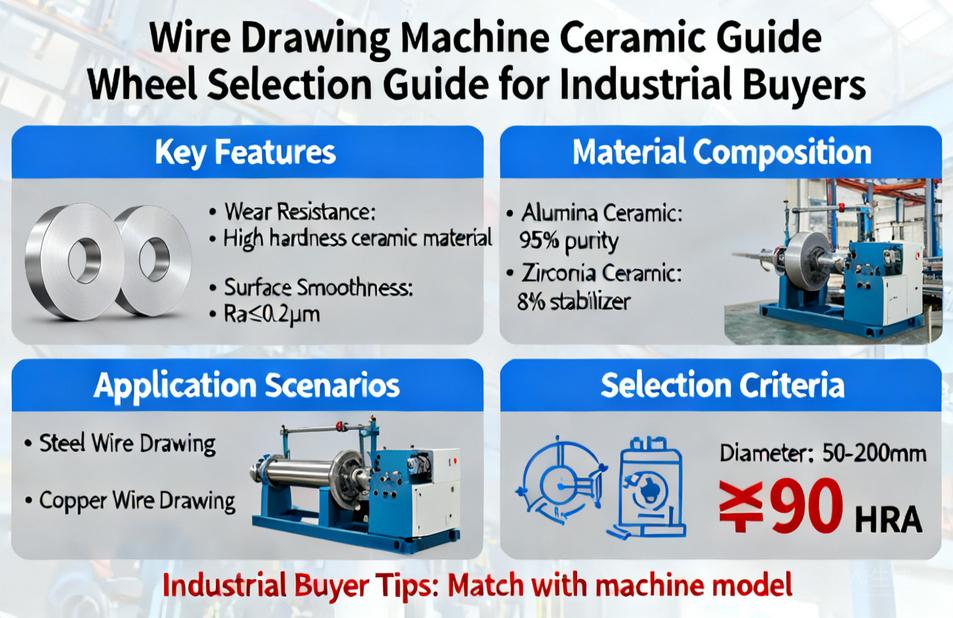
A wire drawing machine ceramic guide wheel is a precision wire-contact component used to guide, position, and stabilize wire as it travels through drawing, annealing, plating, or spooling sections. In a wire drawing line, these wheels help control wire path alignment before and after the die, reducing lateral movement that can affect surface quality and dimensional consistency. For overseas buyers sourcing replacement parts or designing new equipment, understanding the construction, application fit, and customization options of ceramic guide wheels is essential for maintaining reliable production.
Product Overview
A ceramic guide wheel typically consists of a ceramic ring or groove insert mounted on a metal hub or bearing assembly. The ceramic contact surface is chosen for wear resistance and low friction, while the hub provides structural support and mounting compatibility. Depending on the machine design, the wheel may be fixed, free-spinning, or mounted on a precision bearing. Common wire paths include entry guides, intermediate capstans, dancer wheels, and exit guides on drawing machines, coilers, and pay-off stands.
Unlike steel or plastic guides, ceramic guide wheels are often specified where wire surface protection and long service life matter. They are used in ferrous and non-ferrous wire production, including copper, aluminum, steel, stainless steel, and alloy wire. In many plants, the guide wheel is a small but critical part of the wire path, and downtime caused by a worn or damaged guide can interrupt the entire drawing line.
Key Features Buyers Look For
When evaluating ceramic guide wheels, procurement teams and maintenance engineers usually focus on several practical characteristics:
- Wear resistance: The ceramic contact surface should resist grooving and abrasion under continuous wire contact.
- Low friction: Smooth ceramic surfaces help reduce drag and wire tension fluctuations.
- Surface finish: A polished groove or flat contact face helps avoid scratching or marking the wire.
- Chemical stability: Ceramic materials are generally suitable for environments where lubricants, coolants, or cleaning agents are present.
- Dimensional consistency: Groove profile, outer diameter, bore, and width must match the machine mounting and wire size.
- Balanced rotation: For rotating wheels, bearing quality and balance affect vibration and wire stability.
These features are not marketing claims; they are practical selection criteria. A guide wheel that is too hard or too rough may damage the wire, while one that is too soft may wear quickly and change the wire path. The right balance depends on wire material, diameter, speed, and tension.
Materials and Construction
Ceramic guide wheels are commonly made with alumina, zirconia, or silicon-based ceramic materials. Alumina ceramics offer a combination of hardness and cost efficiency for many general wire drawing applications. Zirconia ceramics are often chosen where higher toughness or a different wear profile is needed. Silicon carbide and silicon nitride may be considered for specific high-wear or high-temperature conditions. The exact material should be matched to the wire type, drawing speed, and lubrication environment.
The hub or core is usually made from steel, stainless steel, aluminum, or engineering plastic. Some designs use a full ceramic ring pressed or bonded into a metal carrier; others use a ceramic-coated or ceramic-lined groove. Bearings, when included, may be shielded or sealed to keep out dust and metal particles. Buyers should confirm whether the wheel is supplied as a complete assembly or as a replacement ceramic insert, because mounting method affects installation time and alignment.
Industrial Applications
Ceramic guide wheels appear in many wire processing environments. In wire drawing machines, they guide wire into and out of dies and capstans. In annealing and tinning lines, they help maintain a stable path through furnaces, flux baths, and cooling sections. In cable and wire stranders, they assist with wire positioning and tension control. They are also used in coil winding, spring making, welding wire production, and metal mesh manufacturing.
Because different applications expose the guide wheel to different conditions, a wheel that works well on fine copper wire may not be suitable for large-diameter steel wire. Wire diameter, line speed, lubrication, ambient temperature, and the presence of abrasive particles all influence material and design selection. Industrial buyers should share these details with a supplier before ordering.
How to Choose the Right Guide Wheel
Choosing a ceramic guide wheel is primarily a matching exercise. Start with the machine manufacturer specifications, including the mounting bore, outer diameter, groove profile, and wheel width. Then confirm the wire diameter range and the expected line speed. If the original wheel is available, measure the groove radius or V-angle and note whether the wire sits fully in the groove or rides on a flat surface.
Next, consider the operating environment. High-speed drawing may require a well-balanced, low-friction wheel with a quality bearing. Wet drawing with lubricant may call for a sealed bearing or a corrosion-resistant hub. Applications with fine wire may prioritize a smooth, chip-free ceramic surface, while heavy-duty applications may focus on impact resistance and hub strength. Finally, review the maintenance history: if wheels wear out quickly, the cause may be misalignment, excessive tension, or an unsuitable ceramic grade rather than the wheel itself.
Customization and OEM Options
Many ceramic guide wheel manufacturers and suppliers offer OEM and custom production for equipment builders, replacement part distributors, and maintenance departments. Customization can include outer diameter, bore size, groove profile, ceramic material grade, hub material, bearing type, and surface finish. Some suppliers can produce wheels to match original equipment dimensions or to fit a modified wire path.
For OEM projects, buyers should provide technical drawings, sample parts, or detailed measurements. It is also helpful to specify the wire material, wire diameter range, line speed, and operating temperature. A factory that understands wire drawing equipment can often suggest practical adjustments, such as a slightly different groove radius or a different ceramic grade, without overcomplicating the order. Custom packaging and labeling may also be available for distributors.
Buying Considerations and Supplier Selection
For international buyers, supplier evaluation should go beyond unit price. Request dimensional drawings and material specifications, and ask how the ceramic ring is bonded or mounted to the hub. If the wheel includes a bearing, confirm the bearing type and sealing method. For replacement parts, ask whether the supplier can cross-reference common machine models or work from samples.
A reliable supplier should be able to explain the differences between ceramic materials, recommend a suitable option for your wire type, and provide consistent dimensions from batch to batch. If you are sourcing from a factory, ask about production capacity for repeat orders and whether they support OEM branding. Communication speed, technical feedback, and packing quality are also useful indicators of long-term cooperation potential.
Frequently Asked Questions
What wire materials are suitable for ceramic guide wheels?
Ceramic guide wheels are used with copper, aluminum, steel, stainless steel, and various alloy wires. The best ceramic grade and groove design depend on wire diameter, surface sensitivity, and drawing speed. Fine or soft wires may need a smoother contact surface, while harder wires may require a tougher ceramic.
Can I order custom ceramic guide wheels for my machine?
Yes. Many suppliers and factories offer custom and OEM production based on drawings, samples, or measurements. Provide the mounting dimensions, groove profile, wire diameter range, and operating conditions so the supplier can recommend a suitable design.
How do I know when to replace a ceramic guide wheel?
Inspect the groove for wear, cracks, chips, or a polished track that changes the wire path. Increased wire vibration, surface marks, or tension instability can also indicate wear. Replace the wheel when the contact surface no longer maintains the required wire position.
What information should I provide to a supplier?
Share the machine model if known, wire material, wire diameter range, line speed, mounting dimensions, and any sample or drawing. If you need OEM or custom wheels, mention the expected order quantity and packaging requirements.
Conclusion
Selecting the right wire drawing machine ceramic guide wheel comes down to matching the wheel to the wire, the machine, and the operating environment. Focus on ceramic material, groove profile, hub construction, bearing quality, and dimensional consistency. For buyers seeking a manufacturer, supplier, or factory for standard or custom guide wheels, clear technical communication and sample-based evaluation are the most reliable path. If you have a specific wire drawing application, contact a qualified supplier to discuss your specifications, OEM needs, or customization requirements.
