

Coating Service Overview
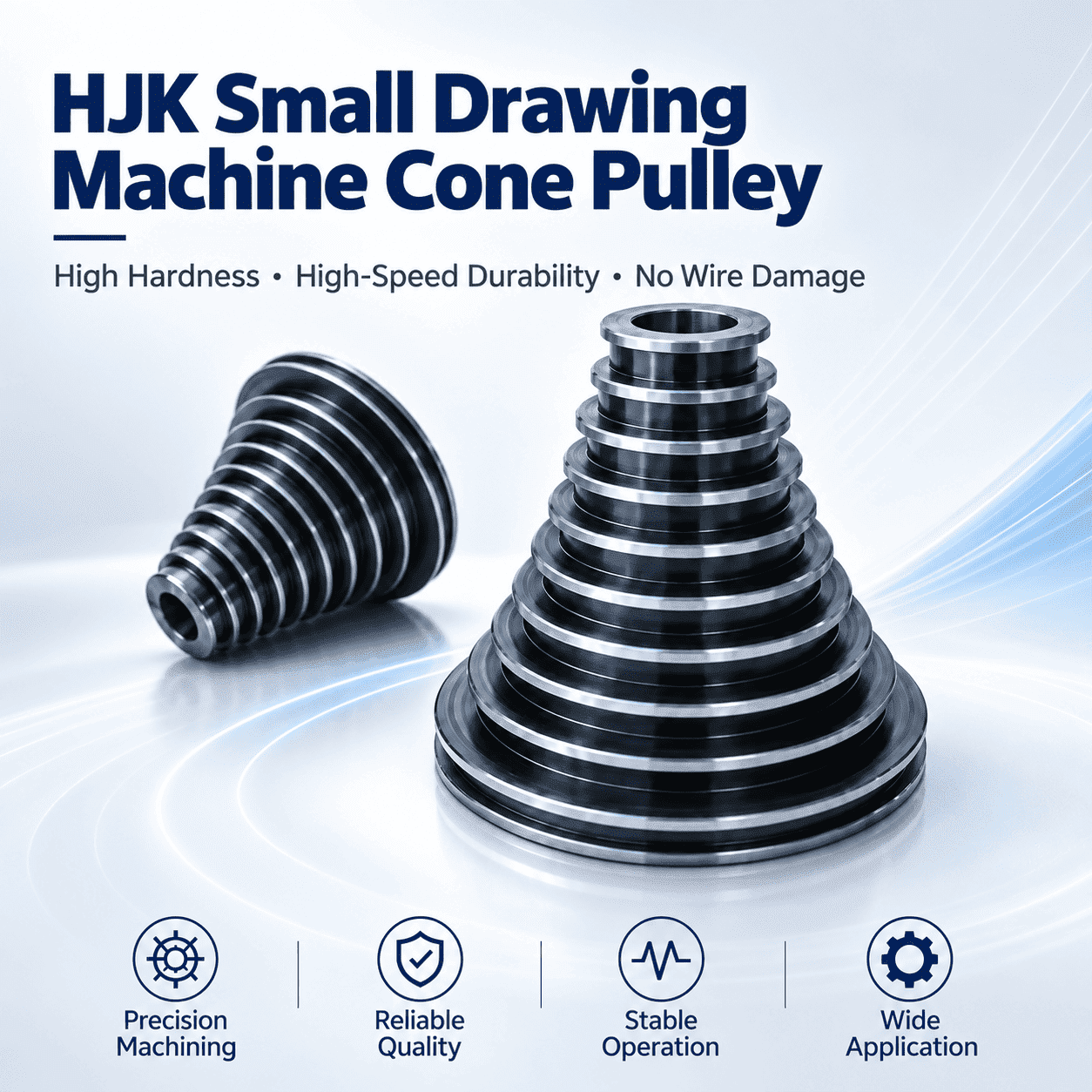
Tungsten Carbide Tower Pulleys: Selection Guide for Wire Drawing Machines
A tungsten carbide tower pulley is a stepped, multi-groove wheel used in wire drawing machines to guide and control wire speed, tension, and drawing passes. Its working surface is made of tungsten carbide — an extremely hard, wear-resistant material — so the pulley keeps its groove profile and dimensional accuracy far longer than conventional steel wheels under continuous high-speed wire contact. In short: if your wire drawing line runs at high speed and you are fighting groove wear, diameter drift, or frequent wheel replacement, a tungsten carbide tower pulley is the component category designed to solve exactly that.
What a Tungsten Carbide Tower Pulley Does
In multi-pass wire drawing, metal wire passes through several drawing stages under continuous tension. Each stage needs precise guidance so the wire moves smoothly and the final diameter stays consistent. The tower pulley — also called a wire drawing machine tower wheel or drawing machine pulley — is the stepped pulley system that performs this job. Each groove corresponds to a different drawing stage, and by changing the wire’s contact position, the pulley helps achieve continuous diameter reduction while keeping production stable.
Typical applications include:
- Copper wire drawing machines
- Aluminum wire drawing machines
- Steel wire drawing equipment
- Cable manufacturing lines
- Fine wire processing systems
Why Tungsten Carbide Is Used for Tower Pulleys
During operation, the pulley surface is exposed to constant high-speed friction, mechanical pressure, repeated surface contact, friction-generated heat, and long production cycles. Traditional steel wheels often develop rapid wear, groove deformation, and reduced accuracy after extended use. Tungsten carbide addresses these failure modes because of its exceptional hardness and wear resistance: the wheel surface can maintain its original profile even after long production runs.
Practical benefits reported for tungsten carbide tower wheels include:
- Longer component lifespan
- Fewer production interruptions
- Lower replacement costs
- More predictable maintenance schedules
- Reduced machine adjustment frequency
- More stable wire tension and surface quality
Other wear-resistant surface options exist in the market — ceramic coating, hardened steel, and special alloys are also used on tower pulleys. The right choice depends on wire material, drawing speed, and the precision your end product requires.
How to Select a Tungsten Carbide Tower Pulley
Selection is not only about material. Use the following logic to narrow down the correct specification:
- Wire material and hardness. Copper and aluminum are relatively soft; steel, stainless steel, and alloy wire are more abrasive. Harder wire places higher demands on surface wear resistance.
- Drawing speed and load. Higher speed and tension accelerate groove wear and heat buildup. This is where carbide’s hardness advantage matters most.
- Number of drawing passes and groove configuration. The stepped pulley must match the machine’s pass schedule so each groove corresponds correctly to a drawing stage.
- Dimensional accuracy requirements. Small deviations in pulley diameter or groove size can cause uneven wire tension and affect final wire quality. Precision machining of the groove profile is therefore critical.
- Surface finish and wire quality targets. A stable, low-friction working surface helps protect wire surface quality.
- Maintenance and replacement economics. Compare initial cost against replacement frequency, downtime, and adjustment labor over the wheel’s service life.
Where Tungsten Carbide Tower Pulleys Fit Best
They are most valuable in demanding, continuous production environments:
- High-speed multi-stage wire drawing lines
- Steel wire, copper wire, stainless steel, and alloy wire processing
- Cable manufacturing where consistent diameter and surface quality are required
- Fine wire systems where dimensional stability is critical
- Operations aiming to reduce maintenance frequency and unplanned downtime
Practical Notes Before You Specify
- Match the pulley to the machine, not just the wire. Groove count, step geometry, and mounting dimensions must fit the drawing machine.
- Confirm the working surface specification. Ask how the carbide working surface is produced and how groove dimensions are controlled.
- Consider the full cost picture. A higher upfront price can be justified by longer life and fewer production interruptions.
- Plan maintenance intervals. Even wear-resistant components benefit from scheduled inspection of groove profile and surface condition.
- Request application-specific recommendations. Wire material, speed, and pass schedule vary widely; a generic specification may not be optimal.
About Customized Tower Pulley Solutions
Suppliers in this category typically develop customized wheel solutions for high-speed wire drawing applications, helping wire producers improve equipment reliability and maintain consistent product quality. When evaluating a supplier, ask about their experience with your specific wire material and drawing conditions, their precision machining capability for groove geometry, and their ability to customize dimensions to your machine.
FAQ
What is a tungsten carbide tower pulley?
It is a stepped, multi-groove pulley used in wire drawing machines, with a tungsten carbide working surface that resists the continuous friction between the wheel and the moving metal wire.
Why choose tungsten carbide instead of steel for a tower pulley?
Tungsten carbide offers exceptional hardness and wear resistance. Compared with conventional metal wheels, it maintains its original shape and surface condition for much longer, reducing machine adjustment frequency, replacement costs, production interruptions, and maintenance work.
Which industries use tungsten carbide tower pulleys?
They are widely used in copper, aluminum, and steel wire drawing, cable manufacturing lines, and fine wire processing systems.
Can tower pulleys be customized?
Yes. Suppliers commonly provide customized wheel solutions for high-speed wire drawing applications, matched to the customer’s machine and production conditions.
What affects the service life of a tower pulley?
Wire material and hardness, drawing speed, tension, groove accuracy, surface finish, and maintenance practice all influence how long a tower pulley performs reliably.
Related Reading
- Tungsten Carbide Tower Wheel Manufacturer | Precision Wear-Resistant Solutions for Wire Drawing Industry
- Tungsten Carbide Tower Wheel Supplier | High Performance Components for Modern Wire Drawing Lines
- Wire Drawing Machine Wheel Manufacturer | Precision Components for High-Efficiency Wire Production
