

Coating Service Overview
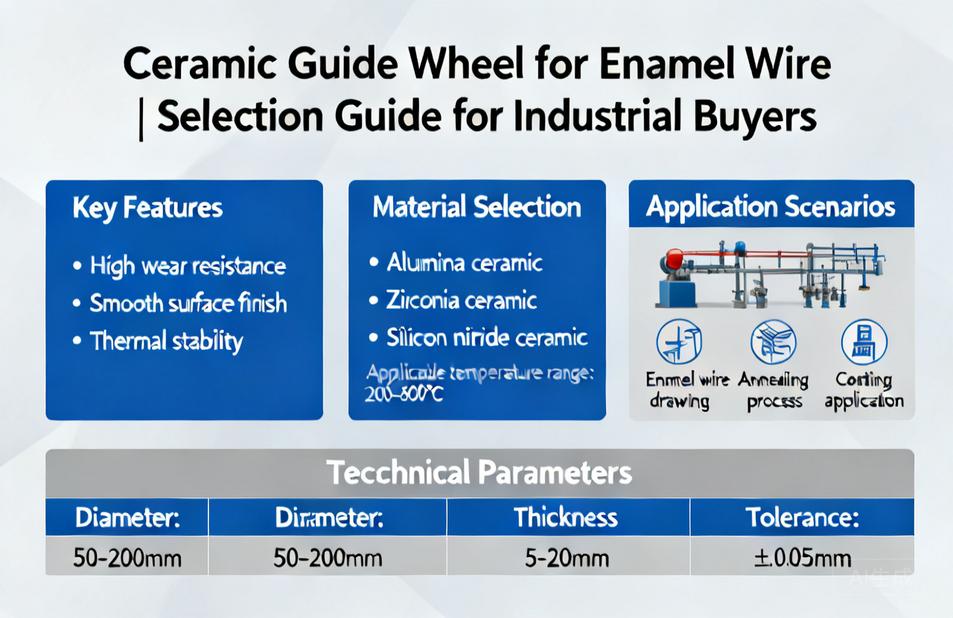
A ceramic guide wheel for enamel wire is a precision wire-guiding component used to control the path, tension, and alignment of enamel-coated copper or aluminum wire during winding, drawing, and coil manufacturing. Unlike metal pulleys that can scratch or deform delicate insulation, ceramic guide wheels provide a smooth, hard, and low-friction surface that protects the enamel coating while maintaining stable wire positioning. For manufacturers of motors, transformers, inductors, and electromagnetic coils, choosing the right guide wheel directly affects winding quality, wire breakage rates, and production efficiency.
Why Ceramic Guide Wheels Are Used for Enamel Wire
Enamel wire, also called magnet wire, carries a thin polymer insulation layer that is critical to electrical performance. Any abrasion, compression, or friction damage can cause insulation failure, short circuits, or voltage breakdown. Ceramic guide wheels are preferred because the ceramic surface is extremely hard and smooth, reducing friction and wear compared with steel, aluminum, or plastic alternatives. The material also resists heat generated during high-speed winding and does not react with wire coatings or lubricants commonly used in coil winding processes.
In addition, ceramic guide wheels maintain their surface finish over long production runs. This dimensional stability helps keep wire tension consistent, which is essential for repeatable coil geometry and reliable electrical properties. For automated winding equipment, the guide wheel is not just a passive part; it is a key contact point that influences wire feed accuracy and overall machine uptime.
Key Features Buyers Look For
When evaluating a ceramic guide wheel for enamel wire, overseas buyers typically examine several functional characteristics. These include surface roughness, edge radius, concentricity, and the condition of the groove or guide profile. A well-made guide wheel should have a polished contact surface free from chips, cracks, or sharp edges that could damage insulation. The bore and mounting dimensions must match the winding machine spindle or bearing arrangement to avoid vibration or runout.
- Low friction coefficient to reduce wire drag and tension fluctuation
- High hardness for wear resistance in continuous production
- Smooth groove or flat profile to protect the enamel coating
- Good dimensional accuracy for stable wire tracking
- Chemical resistance to lubricants, cleaning agents, and ambient moisture
Depending on the winding equipment and wire diameter, buyers may choose different ceramic grades and surface finishes. Alumina ceramics are common for general-purpose guide wheels, while zirconia ceramics can offer higher toughness in applications where impact or edge loading is a concern. The right choice depends on the specific wire size, line speed, and machine configuration.
Materials and Construction
Most ceramic guide wheels are made from advanced technical ceramics such as alumina or zirconia. Alumina offers excellent hardness and wear resistance at a competitive cost, making it suitable for many enamel wire winding applications. Zirconia provides higher fracture toughness and can be beneficial in high-vibration environments or where the guide wheel experiences intermittent mechanical shock. Some designs combine a ceramic ring with a metal or plastic hub to simplify mounting and reduce overall weight.
The manufacturing process typically involves precision forming, sintering, and diamond grinding or polishing. The final surface finish is critical because micro-level roughness can cause cumulative abrasion on enamel wire over millions of meters of production. Buyers should request information about the ceramic grade, surface finish, and dimensional tolerances before placing an order. A reliable manufacturer or supplier can provide technical data and recommend the appropriate specification for the wire type and machine setup.
Industrial Applications
Ceramic guide wheels for enamel wire are used across a range of electrical and electronic manufacturing processes. Common industrial applications include:
- Motor stator and rotor winding
- Transformer coil winding
- Inductor and choke manufacturing
- Relay and solenoid coil production
- Wire harness and cable processing
- Automatic winding machines and wire feeding systems
In each application, the guide wheel helps maintain wire position, reduce tension spikes, and prevent insulation damage. For high-speed automated lines, the guide wheel also contributes to process stability and reduces the frequency of line stops caused by wire breaks or misalignment.
How to Choose the Right Guide Wheel
Selecting a ceramic guide wheel requires matching the component to the wire and the machine. Buyers should consider the following factors:
- Wire diameter and enamel coating thickness
- Winding speed and acceleration
- Wire tension range
- Guide groove shape and radius
- Mounting bore, outer diameter, and width
- Operating temperature and environmental conditions
- Compatibility with existing winding equipment
It is also important to assess the wire path layout. The number of guide wheels, their positions, and the angle of wire contact all influence friction and wear. In some cases, a custom profile or a different ceramic material can improve performance more effectively than a standard catalog item.
Customization and OEM Options
Many winding machine builders and coil manufacturers require custom guide wheels to fit specific equipment or wire types. An experienced factory or OEM supplier can produce custom dimensions, groove profiles, bore sizes, and ceramic materials based on drawings or samples. Customization may also include special surface treatments, edge rounding, or mounting features for quick replacement. When requesting a custom ceramic guide wheel for enamel wire, buyers should provide clear technical drawings, wire specifications, operating speed, and any special requirements related to insulation protection or cleanliness.
Buying Considerations and Supplier Selection
Working with the right supplier is as important as choosing the right product. A qualified ceramic guide wheel manufacturer should be able to discuss material selection, dimensional tolerances, surface finish, and application requirements in technical terms. Buyers should look for suppliers with experience in the wire and cable industry, winding equipment, or precision ceramic components. It is also helpful to confirm whether the supplier offers OEM and custom manufacturing services, consistent quality control, and responsive technical support.
When comparing suppliers, ask for product specifications, dimensional drawings, and information about the ceramic grade and manufacturing process. Avoid relying solely on price, because a low-cost guide wheel with poor surface finish or inconsistent dimensions can cause wire damage and production downtime that far outweighs the initial savings. Instead, evaluate the supplier’s technical capability, production consistency, and ability to support long-term cooperation.
Frequently Asked Questions
What wire sizes can ceramic guide wheels handle?
Ceramic guide wheels are available in different groove sizes and profiles to accommodate a wide range of enamel wire diameters. The appropriate choice depends on the wire diameter, coating thickness, and winding tension. Buyers should provide these details to the supplier for a precise recommendation.
Can ceramic guide wheels be used on high-speed winding machines?
Yes, ceramic guide wheels are commonly used in high-speed winding because their low friction and wear resistance help maintain stable wire tension and reduce the risk of insulation damage. The specific grade and surface finish should be selected based on the machine speed and wire type.
Do ceramic guide wheels require lubrication?
In most enamel wire applications, ceramic guide wheels operate without lubrication. The smooth ceramic surface provides low friction, and adding lubricant may attract dust or affect wire cleanliness. However, some processes may use specific lubricants, and the guide wheel material should be compatible with those chemicals.
Can I order custom ceramic guide wheels for my equipment?
Many ceramic guide wheel manufacturers offer custom and OEM production based on drawings or samples. Customization can include dimensions, groove profiles, bore sizes, and material selection. Providing detailed technical requirements helps ensure the final product matches the winding equipment and wire specifications.
Conclusion
Choosing the right ceramic guide wheel for enamel wire is a practical decision that affects winding quality, wire insulation integrity, and production efficiency. Buyers should focus on ceramic material, surface finish, dimensional accuracy, and compatibility with their winding equipment. Custom and OEM options are available for specialized applications, and working with a capable manufacturer or supplier can help ensure consistent performance and long-term supply. If you have specific wire sizes, machine requirements, or custom guide wheel needs, contacting a qualified supplier for technical consultation is a practical next step.
