

Coating Service Overview
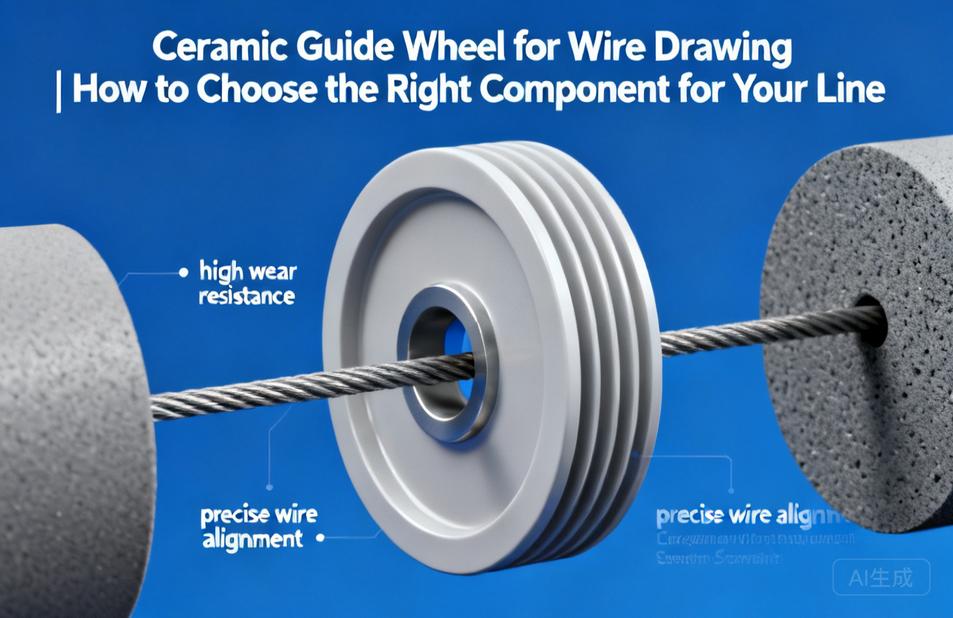
A ceramic guide wheel for wire drawing is a precision wire-contact component used to guide, tension, and redirect wire as it passes through drawing, annealing, plating, and winding stages. In a wire drawing line, these wheels help control wire path alignment, reduce friction at contact points, and protect both the wire surface and the surrounding equipment. Because wire quality and line efficiency depend heavily on consistent wire guidance, the selection of ceramic guide wheels is a practical concern for manufacturers, machine builders, and maintenance teams in the wire and cable industry.
What a Ceramic Guide Wheel Does in Wire Drawing
Wire drawing reduces the diameter of metal wire by pulling it through a series of dies. Between and after these dies, the wire must be kept under control. A ceramic guide wheel acts as a low-friction contact point that helps maintain wire path stability and prevents the wire from rubbing against harder metal surfaces.
In many wire drawing and related processes, guide wheels are used at pay-off, intermediate, and take-up sections of the line. They may be used for copper, aluminum, steel, and alloy wires, as well as for wire in enameling, tinning, and cable stranding operations. The ceramic surface is often chosen because it can resist wear and reduce the risk of scratching or marking the wire surface.
Key Features Buyers Look For
When purchasing ceramic guide wheels for wire drawing, overseas buyers typically evaluate several practical features. These include the wheel groove profile, surface finish, dimensional accuracy, and the ability to maintain smooth wire contact over time. A well-made guide wheel should support consistent wire tension and reduce vibration in the wire path.
Other common considerations include the type of bearing or mounting system, the wheel diameter and width, and how easily the wheel can be replaced during maintenance. Because wire drawing lines run continuously in many plants, quick replacement and stable performance can matter as much as the initial purchase cost.
Materials and Construction
Ceramic guide wheels are commonly made with ceramic materials such as alumina or zirconia, depending on the application. These materials are selected for their wear resistance and their ability to maintain a smooth contact surface. The wheel body may include a metal hub or insert, and the ceramic ring may be bonded or assembled into the wheel structure.
Some designs use a full ceramic ring that contacts the wire directly. Others use a ceramic-coated or ceramic-lined groove. The right construction depends on the wire material, wire diameter, line speed, and the level of mechanical stress at the guide point. Buyers should confirm material compatibility with their wire type and process conditions before ordering.
Applications Across Wire and Cable Production
Ceramic guide wheels are used in a range of industrial applications beyond basic wire drawing. These include:
- Copper and aluminum wire drawing lines
- Steel wire and alloy wire processing
- Enameling and coating lines
- Cable stranding and bunching equipment
- Wire winding and spooling systems
- Welding wire production
In each case, the guide wheel helps keep the wire aligned and reduces contact damage. For high-speed lines, the wheel must handle continuous rotation and maintain a smooth groove. For fine wire, surface quality is especially important because small defects can affect downstream electrical or mechanical performance.
How to Choose the Right Guide Wheel
Choosing a ceramic guide wheel for wire drawing starts with the wire specification. Wire diameter, material, and surface condition are basic inputs. The next step is to match the wheel groove profile to the wire size so the wire sits properly without pinching or excessive clearance.
Line speed and tension also matter. Higher speeds generally require wheels that can rotate smoothly and resist heat buildup. The mounting method, shaft size, and available space on the machine will determine which wheel dimensions and bearing configuration can be used.
Buyers should also consider the operating environment. Dust, lubricant, and metal particles can affect wheel performance over time. In some plants, ceramic guide wheels are selected because they are easier to clean and maintain compared with other contact materials. It is advisable to review the machine manufacturer’s recommendations and, where possible, test a sample under actual line conditions.
Customization and OEM Options
Many wire drawing operations use standard guide wheels, but some machines and processes require custom dimensions, groove shapes, or mounting features. A ceramic guide wheel supplier with machining and assembly capabilities can often provide custom and OEM solutions based on drawings or samples.
Customization may include special wheel diameters, groove profiles for specific wire sizes, ceramic material selection, and integrated bearing or bushing designs. For OEM projects, suppliers may also support private labeling and application-specific packaging. Buyers should provide clear technical drawings, wire specifications, and operating conditions so the supplier can propose a suitable design.
Buying Considerations for Overseas Buyers
When sourcing ceramic guide wheels for wire drawing, purchase decisions should be based on technical fit rather than price alone. Key points include dimensional consistency, ceramic quality, groove finish, and the supplier’s ability to maintain repeatable production. Buyers should ask for dimensional drawings, material information, and inspection reports where available.
It is also useful to confirm packaging and labeling requirements, especially for export shipments. For ongoing production, buyers may want to discuss lead times, minimum order quantities, and after-sales support. A reliable manufacturer or factory should be able to answer technical questions and suggest improvements for specific wire drawing applications.
Supplier Selection
Choosing a ceramic guide wheel supplier involves more than comparing catalogs. A capable supplier should understand wire drawing processes and be able to recommend the right wheel for a given wire type, diameter, and line speed. Experience with OEM and custom projects is also valuable for buyers who need non-standard components.
Buyers can evaluate suppliers by reviewing their product range, technical communication, and production capabilities. If possible, request samples for trial runs and assess how the guide wheel performs in terms of wire alignment, wear, and surface protection. A supplier that provides clear technical feedback and consistent product quality is usually a better long-term partner than one that competes only on price.
Frequently Asked Questions
What is a ceramic guide wheel used for in wire drawing?
It guides and redirects wire through the drawing line while reducing friction and protecting the wire surface. It is used at pay-off, intermediate, and take-up positions in many wire and cable processes.
How do I select the correct wheel size and groove?
Start with the wire diameter and material, then match the groove profile and wheel dimensions to your machine and line speed. The supplier can help confirm the best fit based on your application details.
Can ceramic guide wheels be customized or supplied as OEM parts?
Yes. Many manufacturers and suppliers offer custom dimensions, groove shapes, and mounting configurations based on drawings or samples. OEM and private-label options may also be available.
What should I check before placing a bulk order?
Review dimensional drawings, ceramic material specifications, groove finish, and sample performance. Confirm packaging, order quantity, and technical support requirements with the supplier before ordering.
Conclusion
Selecting the right ceramic guide wheel for wire drawing depends on wire type, diameter, line speed, and machine configuration. Buyers should focus on dimensional accuracy, groove quality, material suitability, and the supplier’s ability to support custom or OEM requirements. For application-specific needs, contacting a qualified manufacturer or supplier with your technical details is the most practical way to confirm the right guide wheel specification and move forward with a suitable production solution.
