

Coating Service Overview
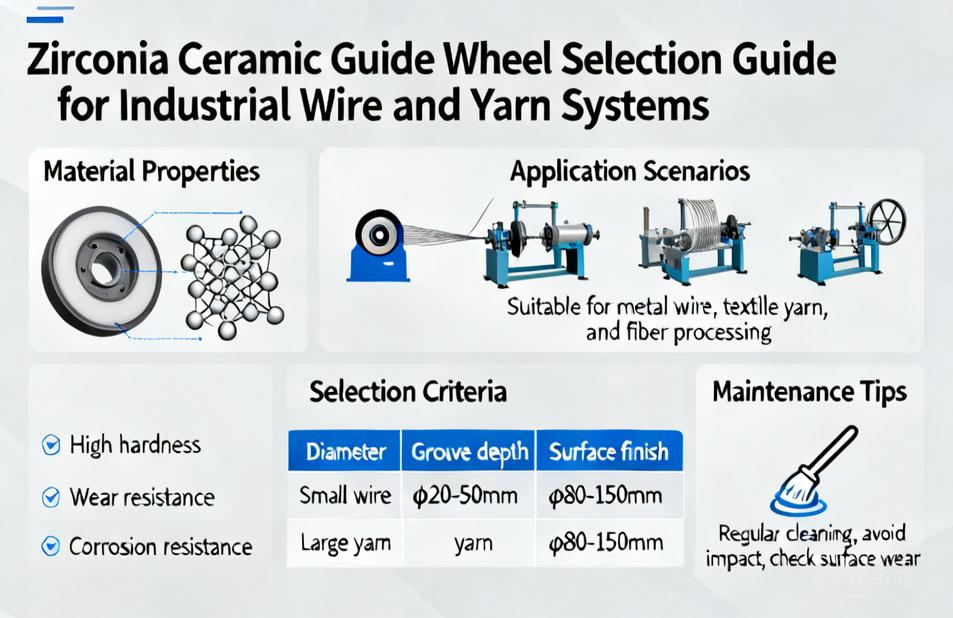
A zirconia ceramic guide wheel is a precision rotating component used to guide, tension, or redirect wire, yarn, thread, cable, and other flexible materials through industrial machinery. Unlike metal guide rollers that can wear, corrode, or scratch the product being processed, a zirconia ceramic guide wheel offers a hard, smooth, and chemically stable surface that helps maintain consistent material path control over long production runs. Engineers and maintenance teams in wire drawing, textile manufacturing, cable production, and automated winding equipment often specify ceramic guide wheels when surface quality, wear resistance, and friction control are critical to product yield.
What Makes Zirconia Ceramic Different from Other Guide Wheel Materials
Guide wheels are commonly made from steel, aluminum, hard chrome plated metal, or technical ceramics such as alumina and zirconia. Zirconia (ZrO2) stands out because it combines high mechanical strength with a very smooth polished surface and good thermal insulation. In practical terms, a zirconia ceramic guide wheel resists abrasive wear from fast-moving wire or yarn far better than most metal alternatives, and it does not introduce the same level of surface contamination that can occur with unprotected steel. It is also non-magnetic and electrically insulating, which can matter in sensitive wire and cable processes.
Wear Resistance and Surface Finish
The fine-grained structure of zirconia allows manufacturers to polish the contact surface to a low roughness value. A smoother groove or flange reduces friction, heat build-up, and the risk of marking delicate materials. This is especially valuable for enameled copper wire, optical fiber, high-tenacity yarns, and coated wires where even minor scratches cause rejects or downstream electrical faults.
Corrosion and Chemical Stability
Zirconia ceramics are generally unaffected by most acids, alkalis, and solvents at ambient temperatures, so guide wheels used in wet processes, cleaning lines, or humid environments maintain their geometry better than many metals. This does not replace a proper material compatibility review for aggressive chemicals, but it does explain the widespread use of ceramic guide wheels in demanding production areas.
Typical Industrial Applications
Purchasing managers and process engineers search for guide wheels by application, not just by material. Common industrial applications include:
- Wire drawing and annealing lines, where the wheel guides copper, aluminum, or alloy wire without scratching.
- Cable and harness manufacturing, including stranding, taping, and take-up systems.
- Textile machinery, such as spinning frames, winding machines, and yarn guides.
- Fiber optic and cable assembly equipment requiring low particle generation.
- 3D printing filament paths, where smooth ceramic guides reduce filament abrasion.
- Robotic wire feeding and automated coil winding systems.
Because these machines run at different speeds, tensions, and environmental conditions, the wheel geometry, bore size, flange profile, and mounting method must match the equipment. A guide wheel that works well on a slow textile line may be unsuitable for a high-speed wire drawing machine if the groove radius or dynamic balance is incorrect.
Key Features Buyers Evaluate
When comparing zirconia guide wheels from different suppliers, technical buyers usually inspect several features:
- Groove or flange profile: U-groove, V-groove, flat, or custom radius to match the material cross-section.
- Surface roughness: a polished contact area helps protect soft or coated products.
- Bore tolerance and concentricity: tight tolerances support stable rotation and reduce vibration.
- Bearing integration: some wheels are supplied with ceramic or hybrid bearings, while others use a plain bore for a shaft or pin.
- Edge chamfering: rounded edges prevent cutting or snagging of fine wire and yarn.
These features are not marketing details. They directly affect tension consistency, material breakage rates, and maintenance intervals on the production floor.
How to Choose the Right Zirconia Ceramic Guide Wheel
Selection should start from the material being processed, not from a catalog number. The following steps help narrow the options efficiently.
1. Define the Material and Contact Conditions
Identify the wire or yarn diameter, surface coating, operating tension, and line speed. Fine enameled wire, for example, needs a very smooth groove and gentle edge radius, while thicker cable may tolerate a more robust profile.
2. Match the Groove Profile and Dimensions
Measure the existing guide wheel or the machine mounting point, including outer diameter, bore diameter, width, and groove shape. If the machine is being modified, provide a drawing or sample so the ceramic supplier can confirm feasibility.
3. Confirm the Mounting and Rotation Method
Decide whether the wheel will rotate on a shaft, use a bearing, or remain fixed as a contact guide. This choice affects bore tolerance, side clearance, and the need for a press-fit or retaining ring.
4. Review Environmental Factors
Consider temperature, humidity, cleaning chemicals, and the presence of dust or metal particles. Zirconia performs well in many of these conditions, but the mounting hardware and bearing selection must also be compatible.
5. Plan for Replacement and Inventory
Guide wheels are wearing components in many lines. Standardizing dimensions across machines can simplify spare parts inventory, while custom profiles may improve performance for a specific product. Balancing these two approaches is a common task for maintenance and procurement teams.
Customization and OEM Options
Many ceramic manufacturers and suppliers offer custom and OEM production for guide wheels. Customization can include outer diameter, bore size, groove radius, flange height, surface finish, and mounting features. OEM projects typically begin with a drawing, a sample, or a detailed specification sheet. Buyers should clarify whether the factory can provide first article samples, dimensional inspection reports, and consistent batch-to-batch tolerances. It is also reasonable to ask how the supplier controls firing, machining, and polishing, because these processes determine the final geometry and surface quality.
Buying Considerations for Overseas Procurement
Price alone is a poor selection criterion for precision ceramic components. A lower-cost wheel with inconsistent bore tolerance or a rough groove can cause wire breaks, yarn damage, and unplanned downtime that far exceeds the component cost. Reliable suppliers usually provide clear drawings, material grade information, and inspection data. Communication about tolerances, packaging, and sample approval also matters, especially for international orders. Buyers should confirm whether the supplier is a manufacturer or a trading company, and whether technical support is available for application questions.
Supplier Selection Checklist
When evaluating a zirconia ceramic guide wheel supplier, consider the following points:
- Experience with ceramic components for wire, cable, or textile machinery.
- Ability to produce both standard and custom profiles.
- Clear tolerance and inspection documentation.
- Capacity for sample development and OEM projects.
- Responsive technical communication during the inquiry stage.
A supplier that asks detailed questions about the application is often better positioned to recommend a suitable guide wheel than one that only quotes a generic size.
Frequently Asked Questions
Can a zirconia ceramic guide wheel replace a metal guide roller directly?
In some cases, yes, if the outer diameter, bore, and groove profile match. However, ceramic wheels are harder and less tolerant of impact, so mounting and handling procedures may need review. It is best to confirm dimensions and load conditions before substitution.
Are zirconia guide wheels suitable for high-speed wire drawing?
Zirconia can be used in high-speed lines because of its wear resistance and smooth surface, but the bearing system, dynamic balance, and groove geometry must be designed for the speed. Application details should be shared with the supplier for review.
Can guide wheels be made to custom dimensions?
Yes. Many ceramic factories offer custom and OEM production based on drawings or samples. Typical custom variables include outer diameter, bore, width, groove shape, and surface finish.
How do I choose between alumina and zirconia for a guide wheel?
Alumina is often selected for general wear and electrical insulation, while zirconia is chosen when higher strength and a smoother, more impact-tolerant surface are needed. The final choice depends on the material being guided, the load, and the environment.
Conclusion
Selecting a zirconia ceramic guide wheel is a matter of matching material properties, wheel geometry, and machine conditions to the actual production requirement. Buyers should focus on groove profile, bore tolerance, surface finish, and the supplier’s ability to support custom or OEM projects. If you are reviewing options for wire, cable, textile, or fiber applications, contact a qualified ceramic guide wheel manufacturer or supplier with your drawing, sample, or application details to discuss specifications and customization.
