

Coating Service Overview
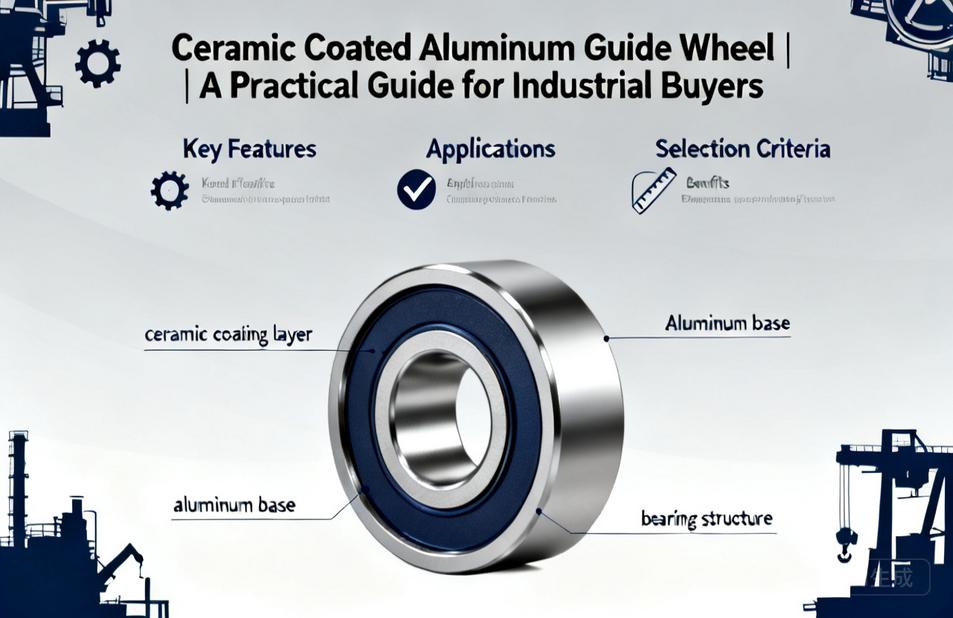
A ceramic coated aluminum guide wheel is a lightweight guiding component used in wire winding, cable handling, textile machinery, packaging lines, and similar industrial motion systems. It combines an aluminum body with a ceramic surface layer that resists wear, reduces friction, and helps protect delicate materials such as wire, thread, film, and optical fiber during continuous running. For overseas buyers, this type of wheel is often specified when weight reduction, corrosion resistance, and extended surface life matter more than the lowest possible unit cost.
Because the wheel sits at the point of contact between the moving material and the machine frame, its surface quality, dimensional accuracy, and dynamic balance directly affect line efficiency. A poorly matched wheel can cause material damage, vibration, or premature replacement. A well-selected ceramic coated aluminum guide wheel helps stabilize tension, reduce downtime, and maintain consistent product quality across shifts.
What Makes This Guide Wheel Different
Standard aluminum guide wheels are light and easy to machine, but bare aluminum wears quickly under continuous contact with hard or abrasive materials. A ceramic coating creates a harder, smoother working surface that resists scratching and reduces the buildup of debris. At the same time, the aluminum core keeps the rotating mass low, which supports faster acceleration and less load on bearings and shafts.
The result is a guide wheel that behaves differently from solid steel or full ceramic alternatives. It is not intended to replace heavy-duty steel pulleys in high-load drive applications. Instead, it is typically used as a non-drive guiding or redirecting wheel where surface protection and low inertia are the main priorities.
Key Features Buyers Usually Look For
When reviewing a ceramic coated aluminum guide wheel specification, purchasing teams and engineers tend to focus on several practical features:
- Low rotating weight: The aluminum body reduces inertia, which helps with rapid start-stop cycles and sensitive tension control.
- Wear-resistant surface: The ceramic layer is designed to withstand continuous contact with wire, cable, thread, and similar materials.
- Corrosion resistance: Aluminum with a ceramic coating can perform well in humid or mildly corrosive environments where bare steel may rust.
- Smooth groove geometry: A polished or precision-formed groove helps prevent marking, flattening, or abrasion of the guided material.
- Custom dimensions: Outside diameter, groove profile, bore size, and width can often be adapted to specific machine requirements.
These features matter because guide wheels are rarely bought as standalone items. They are integrated into existing equipment, so dimensional compatibility is often as important as surface performance.
Materials and Construction
The base material is usually a machined aluminum alloy selected for a balance of strength, machinability, and low weight. After forming, the wheel receives a ceramic coating through processes such as anodizing or ceramic-filled surface treatment, depending on the supplier and the intended application. The exact coating method affects hardness, surface roughness, and dielectric properties, so buyers should confirm the process rather than assuming all ceramic coatings are identical.
Bearings, bushings, or plain bores may be fitted depending on how the wheel mounts. Some designs use sealed bearings for maintenance-free operation, while others use a simple bore that fits onto a shaft or bolt. The groove profile can be flat, V-shaped, U-shaped, or radiused to match the material being guided. Because these variables change performance, a reliable manufacturer will ask about the guided material, line speed, load, and environmental conditions before recommending a configuration.
Industrial Applications
Ceramic coated aluminum guide wheels appear in a wide range of industrial applications where lightweight guidance and surface protection are required:
- Wire and cable machinery: Guiding copper wire, steel wire, and insulated cable without scratching the conductor or insulation.
- Textile equipment: Redirecting yarn, thread, and filament with low friction to avoid fuzz or breakage.
- Optical fiber production: Supporting delicate fiber during drawing, coating, and winding processes.
- Packaging and converting: Guiding film, foil, and paper webs where surface marks are unacceptable.
- 3D printing and automation: Acting as filament guides or motion-system rollers where weight reduction helps performance.
In each case, the wheel is chosen because it reduces wear on both the guide surface and the moving material. That dual protection is often the main reason buyers move away from uncoated aluminum or untreated steel.
How to Choose the Right Guide Wheel
Selecting the correct ceramic coated aluminum guide wheel starts with the material being guided. Abrasive or hard materials call for a harder, smoother coating, while soft or delicate materials require a gentle groove profile and low surface roughness. Next, consider the load and speed. Higher speeds generally favor lower rotating mass, which is where aluminum has an advantage over steel. Higher radial loads may require a larger bore, stronger bearing, or a different material altogether.
Environmental conditions also matter. Humidity, dust, chemicals, and temperature swings can affect both the aluminum body and the ceramic layer. Mounting style is another key factor: shaft-mounted, bearing-mounted, and bolt-on designs are not interchangeable. Finally, dimensional tolerance and dynamic balance should be reviewed for high-speed lines, because even a small imbalance can cause vibration and premature bearing failure.
Customization and OEM Options
Many industrial buyers need a guide wheel that matches an existing machine rather than a catalog item. Custom options commonly include outside diameter, groove shape, groove depth, bore diameter, width, coating thickness, surface finish, and bearing type. Some suppliers also offer color coding or laser marking for identification on the production floor.
For OEM projects, it is helpful to provide drawings, samples, or detailed measurements along with information about the guided material and operating conditions. A manufacturer that asks these questions is usually better positioned to deliver a wheel that performs as expected. Buyers should also clarify whether the supplier produces the aluminum body and applies the ceramic coating in-house or relies on outside processing, as this affects consistency and lead time.
Buying Considerations for Importers
Price should be evaluated together with dimensional accuracy, coating quality, and batch consistency. A low-cost wheel that wears unevenly or damages expensive wire can cost far more than the initial savings. Requesting samples for trial runs is a practical way to verify surface finish and groove geometry before committing to volume orders. Packaging also deserves attention, because ceramic coated surfaces can be chipped if wheels are shipped loose without protection.
Documentation matters for repeat orders. Clear specifications, agreed tolerances, and inspection criteria reduce the risk of receiving wheels that fit differently from the first batch. For buyers sourcing from overseas, confirming communication channels and technical support availability can be as important as the product itself.
How to Evaluate a Supplier or Factory
A capable supplier should be able to discuss coating methods, aluminum alloy selection, bearing options, and groove design in technical terms. Ask how they control roundness, concentricity, and surface roughness, and whether they inspect finished wheels before packing. If the application is sensitive, request references or sample results from similar use cases, but avoid relying on unverifiable claims.
It also helps to understand whether the supplier is a trading company or a factory. A direct manufacturer often has more control over machining and coating, while a trading company may offer broader product ranges. Neither is automatically better, but the answer affects pricing structure, customization flexibility, and response time.
Frequently Asked Questions
What is a ceramic coated aluminum guide wheel used for?
It is used to guide, redirect, or support wire, cable, thread, film, and similar materials in industrial machinery. The ceramic coating protects the contact surface, while the aluminum body keeps the wheel lightweight.
Can ceramic coated aluminum guide wheels be customized?
Yes. Many manufacturers offer custom outside diameters, groove profiles, bore sizes, widths, coatings, and bearing configurations. Providing drawings or samples helps ensure the wheel matches the machine.
How do I choose between ceramic coated aluminum and steel guide wheels?
Choose aluminum with a ceramic coating when low weight, corrosion resistance, and surface protection are priorities. Steel may be more suitable for higher load or heavy-duty drive applications.
What information should I provide to a supplier?
Provide the guided material, material diameter, line speed, load, mounting method, environmental conditions, and any dimensional drawings. This helps the supplier recommend a suitable wheel or propose a custom design.
Conclusion
Choosing a ceramic coated aluminum guide wheel is largely about matching the wheel to the material, machine, and operating environment. Buyers should focus on coating quality, groove geometry, dimensional accuracy, bearing selection, and supplier consistency rather than price alone. For custom or OEM requirements, working with a manufacturer that asks technical questions and supports sample evaluation can reduce rework and downtime. If you are sourcing guide wheels for a specific line, sharing your application details with a qualified supplier is the most practical next step.
