

Coating Service Overview
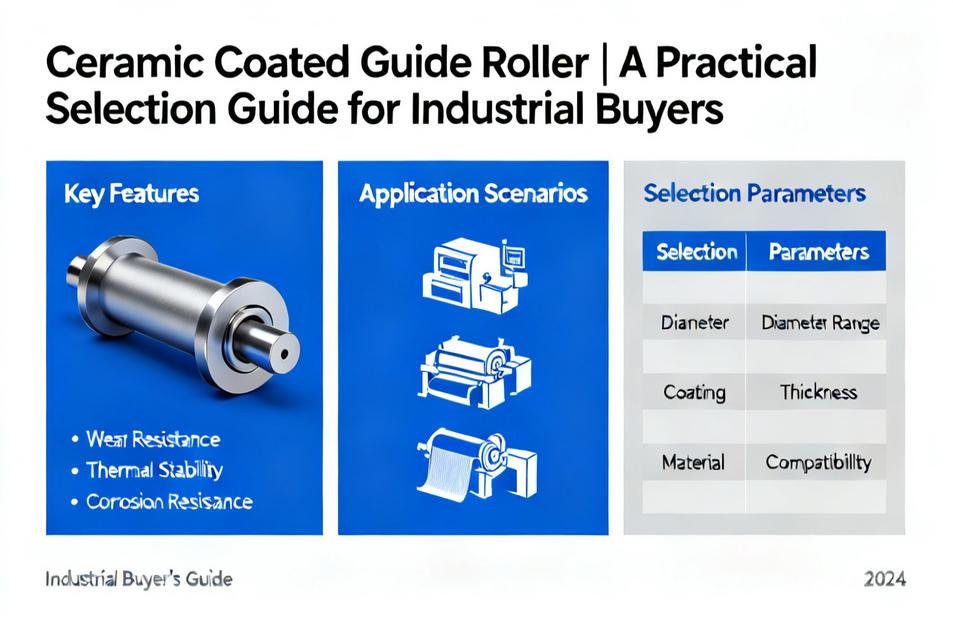
A ceramic coated guide roller is a rotating cylindrical component whose working surface carries a ceramic-based coating to protect the base material from wear, friction, and chemical attack while guiding or tensioning moving webs, films, foils, wires, and other continuous materials. It is commonly found in converting lines, printing presses, coating machines, slitting equipment, textile machinery, and battery electrode production, where consistent web tracking and surface protection directly affect product quality and line uptime.
For overseas buyers, the key questions are usually practical rather than decorative: what the coating actually does, where it makes sense, how to match the roller to the machine, and how to work with a reliable manufacturer or supplier. This guide answers those questions in a purchasing-oriented way, without overstating specifications you should verify with your own application data.
What a Ceramic Coated Guide Roller Does in a Production Line
In most industrial setups, a guide roller does more than keep material moving in a straight line. It controls web tension, reduces lateral drift, and protects the surface of the material being processed. When the roller surface is ceramic coated, the contact face gains a hard, low-friction layer that can resist the abrasive effects of running webs, frequent cleaning, and many process chemicals.
Typical duties include:
- Guiding and stabilizing film, paper, foil, or nonwoven webs
- Supporting tension control in unwind and rewind sections
- Maintaining consistent contact in coating and laminating processes
- Reducing surface marking on delicate or glossy materials
- Extending service life in environments where bare metal would wear quickly
Because the ceramic layer is applied to the roller body rather than replacing it, the underlying shaft, journals, and balancing characteristics remain part of the design. That is why a guide roller should be specified as a complete assembly, not just as a surface treatment.
Key Features Buyers Usually Evaluate
Surface Hardness and Wear Resistance
The primary reason to choose a ceramic coated guide roller is wear resistance. Ceramic coatings are generally harder than many metallic surfaces and can tolerate continuous contact with abrasive webs. However, hardness alone is not enough; the coating must also bond well to the base material and resist chipping under impact or edge loading.
Low Friction and Web Compatibility
Low friction helps prevent drag marks, scuffing, and tension spikes. This matters most when the roller contacts delicate films, optical materials, or coated surfaces. Buyers should confirm that the surface finish matches the web being handled, because a finish that works well for heavy paper may not suit a thin battery electrode or optical film.
Chemical and Corrosion Resistance
Many converting and coating lines expose rollers to solvents, inks, adhesives, or cleaning agents. A ceramic coating can improve resistance to these substances, but the full roller construction, including the base metal and sealing, must also be suitable for the environment.
Balance and Runout
At higher line speeds, balance and runout become critical. A poorly balanced roller can cause vibration, web flutter, and premature bearing failure. When specifying a roller, ask how the supplier controls straightness, concentricity, and dynamic balance.
Materials and Construction
A ceramic coated guide roller typically consists of a metal core, a bonding layer, and a ceramic top layer. The core may be steel, stainless steel, or aluminum depending on strength, weight, and corrosion requirements. The ceramic layer is often applied through a thermal spray process, but the exact method and coating chemistry should be confirmed by the manufacturer for your application.
Other construction details matter as well:
- Shaft and journal design for the bearing or mounting method
- End caps, seals, and fasteners compatible with the process environment
- Surface roughness and finish requirements
- Straightness and dynamic balance tolerances
- Cleaning and maintenance access
Because these details vary by machine and process, a custom roller is often more appropriate than a catalog item. This is especially true when the roller must fit existing bearings, brackets, or drive systems.
Industrial Applications
Ceramic coated guide rollers appear in a wide range of industrial applications. In flexible packaging, they help guide printed film and laminate without scratching the ink or coating. In label and paper converting, they support tension and tracking through slitting, die cutting, and rewinding. In textile and nonwoven production, they can reduce friction on delicate fibers. In battery and electronics manufacturing, they may be used where surface cleanliness and minimal marking are important.
Other common areas include:
- Coating and laminating lines
- Printing and web handling equipment
- Film stretching and orientation lines
- Wire and cable guiding
- Specialty converting machinery
In each case, the roller should be selected against the web material, line speed, tension range, and cleaning method rather than by coating name alone.
How to Choose the Right Ceramic Coated Guide Roller
Start with the machine interface. Confirm the shaft diameter, bearing type, mounting configuration, and available space. Then define the process conditions: web material, width, tension, speed, temperature, and chemical exposure. These inputs determine the base material, coating type, surface finish, and balance class.
Next, consider the failure mode you are trying to solve. If the current problem is wear, a harder coating may help. If the problem is marking, surface finish and friction may be more important. If the problem is corrosion, the base metal and sealing may need as much attention as the coating. A supplier who asks about these points is usually better positioned to recommend a workable roller than one who quotes only a coating thickness.
Finally, ask for dimensional drawings and inspection criteria before production. This reduces the risk of a roller that fits the drawing but not the machine.
Customization and OEM Options
Many guide roller manufacturers offer OEM and custom production for original equipment builders and end users. Customization can include shaft length, journal design, end cap configuration, surface finish, balancing grade, and coating selection. For OEM projects, the supplier may also work from your drawings or reverse-engineer an existing roller, provided the critical dimensions and performance requirements are clearly defined.
When discussing a custom or OEM order, prepare a specification sheet that covers dimensions, tolerances, material, coating, surface finish, balance, and operating conditions. This helps the factory quote accurately and reduces back-and-forth during production.
Buying Considerations and Supplier Selection
Price is only one part of the total cost. A roller that wears quickly or causes web defects can cost far more in downtime and scrap than the initial purchase price. When comparing suppliers, look at their experience with your type of web handling, their ability to control coating quality, and their inspection process.
Useful questions to ask a potential supplier include:
- What base materials and coating options do you offer for this application?
- How do you control straightness, runout, and balance?
- Can you provide dimensional drawings and inspection reports?
- Do you support small batch custom orders and OEM production?
- What information do you need to recommend a suitable roller?
A manufacturer that communicates clearly about these points is generally easier to work with over the life of the equipment.
Frequently Asked Questions
What is the main advantage of a ceramic coated guide roller?
The main advantage is a combination of wear resistance and low friction on the contact surface. This can help extend roller life and reduce surface damage on the moving web, especially in abrasive or chemically exposed processes.
Can a ceramic coated guide roller be customized for my machine?
Yes. Many suppliers offer custom and OEM production based on drawings, samples, or measured dimensions. Shaft design, end caps, surface finish, and balance requirements can usually be adjusted to match the equipment.
How do I know which coating and surface finish to choose?
The choice depends on the web material, line speed, tension, cleaning method, and the problem you are trying to solve. Provide these details to the supplier so they can recommend a suitable combination rather than a generic coating.
What should I include in a request for quotation?
Include dimensions, tolerances, base material, coating requirements, surface finish, balance grade, operating conditions, and quantity. If you have an existing part number or drawing, share it so the factory can review feasibility.
Conclusion
Selecting a ceramic coated guide roller is mainly a matter of matching the roller to the machine and the process. Focus on the base material, coating performance, surface finish, balance, and the supplier’s ability to support custom or OEM requirements. If you are working on a new line or replacing a troublesome roller, contact a qualified manufacturer or supplier with your specifications and application details. They can help you confirm the right configuration and discuss customization options before you place an order.
