

Coating Service Overview
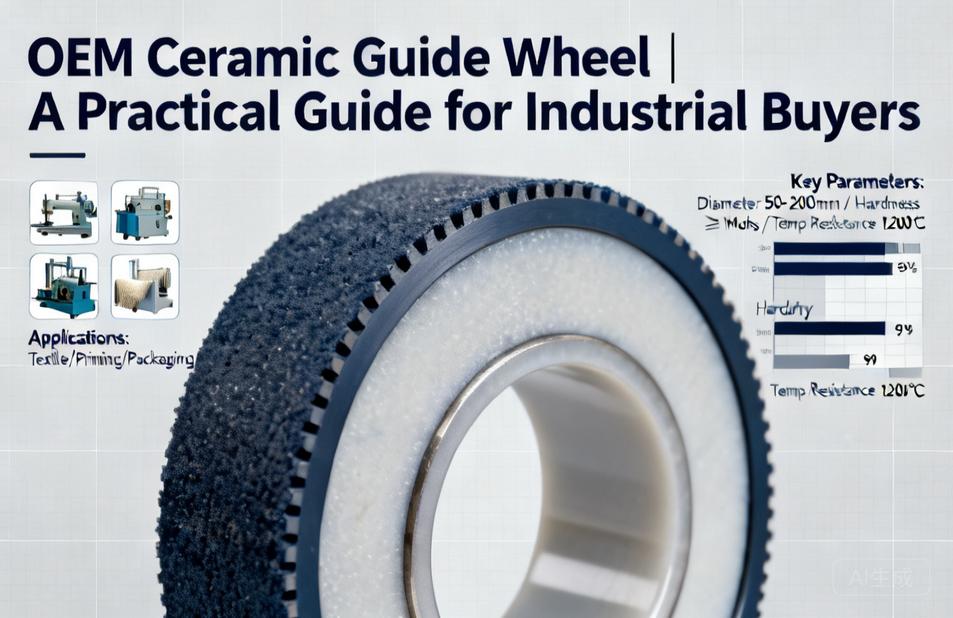
An OEM ceramic guide wheel is a precision-engineered rotating component used to guide, support, tension, or position wire, fiber, tape, film, and other flexible materials in industrial machinery. Unlike standard catalog parts, an OEM ceramic guide wheel is typically produced to a machine builder’s drawing, tolerance, and mounting requirements, making it a critical custom component in wire drawing, textile, cable manufacturing, printing, packaging, and automated handling equipment. For overseas buyers, understanding how these wheels are made, where they are used, and what to confirm before placing an order helps reduce downtime, improve line efficiency, and avoid costly mismatches.
Product Overview
A ceramic guide wheel usually consists of a ceramic ring or groove, a metal hub or insert, and a bearing or bushing system that allows smooth rotation. The ceramic contact surface is chosen because it resists abrasion, maintains a low friction coefficient, and avoids galling or scratching sensitive materials. In many machines, the wheel is not simply a pulley; it controls material path geometry, tension stability, and surface quality. Because every machine platform differs, OEM supply is common: the wheel may be matched to a specific shaft diameter, groove profile, flange height, and load direction.
Buyers often search for an OEM ceramic guide wheel manufacturer or supplier when they need replacement parts, new machine builds, or a custom solution that fits an existing assembly without redesigning the surrounding hardware. The term OEM here means the wheel is made for equipment integration or aftermarket replacement under the buyer’s or machine builder’s specification, not necessarily a consumer product.
Key Features and Performance Expectations
Ceramic guide wheels are selected for a combination of hardness, chemical stability, and low friction. Typical advantages include resistance to wear from continuous wire or fiber contact, reduced risk of material marking, and stable performance in high-speed or high-temperature environments where polymer or metal wheels may degrade. The ceramic surface can also be cleaned more easily in some processes, which matters in wire, cable, and textile lines that accumulate dust or lubricant residue.
However, ceramic is not automatically the right answer for every position. Impact resistance, thermal shock, and mounting stress must be evaluated. A qualified supplier will ask about line speed, load, material being guided, environmental conditions, and cleaning methods before recommending a ceramic grade or wheel design.
Materials and Construction
The ceramic portion may be made from different technical ceramics depending on the application. Alumina is common for general wear resistance, while zirconia is often chosen where higher toughness and smooth surface finish are needed. Silicon nitride and silicon carbide may suit specific high-wear or high-temperature duties. The metal hub is usually stainless steel or another corrosion-resistant alloy, and the bearing system can be a precision ball bearing, a plain bushing, or a custom spindle arrangement.
Construction details matter. The groove radius, V-angle, flat width, flange diameter, and concentricity all influence how the material tracks. A poorly matched groove can cause the wire or fiber to climb, oscillate, or wear unevenly. For OEM projects, the buyer should provide a drawing or sample, plus tolerance requirements for bore, outer diameter, runout, and rotating torque where relevant.
Industrial Applications
OEM ceramic guide wheels appear in many material-handling and processing machines. Common industrial applications include:
- Wire drawing and wire winding equipment
- Cable and wire harness manufacturing lines
- Textile spinning, twisting, and yarn guiding systems
- Optical fiber and cable production
- Printing, coating, and film converting machinery
- Packaging and label handling equipment
- Robotic and automated material feeding systems
In each case, the wheel’s role is to maintain a controlled path while minimizing friction and surface damage. In high-speed wire or fiber lines, even small improvements in wheel concentricity and surface finish can affect tension consistency and product quality.
How to Choose the Right Guide Wheel
Choosing an OEM ceramic guide wheel starts with the material being guided. Wire diameter, fiber type, tape width, and surface sensitivity determine the ideal groove profile and ceramic finish. Next, review the mechanical load: radial load, axial load, and starting torque influence bearing selection and hub design. Then consider the operating environment, including temperature, humidity, lubricants, cleaning chemicals, and dust.
Mounting compatibility is equally important. Confirm shaft diameter, fastening method, available space, and replacement access. If the wheel is part of a tension control system, the rotating resistance and inertia may need to match the original design. Buyers should also clarify expected service life and maintenance intervals, because a ceramic wheel may last longer than a polymer or metal alternative but still require correct installation to achieve that benefit.
Customization and OEM Options
A capable ceramic guide wheel factory can usually support custom dimensions, groove profiles, hub materials, bearing types, and surface finishes. OEM customization may include private labeling, special packaging, and drawing-based production for machine builders or distributors. Some suppliers also offer prototype or small-batch runs before mass production, which helps verify fit and performance on the actual machine.
When requesting a custom quote, provide clear 2D or 3D drawings, material specifications, quantity, and any existing sample. If the original drawing is unavailable, a sample wheel plus key measurements can often be used to reverse-engineer a replacement. Avoid assuming that a catalog wheel will fit; small differences in groove geometry or bore tolerance can cause tracking problems and premature wear.
Buying Considerations for Importers
For importers and equipment builders, the purchasing decision is not only about unit price. Consistency, tolerances, and communication matter. Ask how the supplier controls ceramic density, surface finish, and hub concentricity. Confirm whether inspection reports are available and how deviations are handled. Clarify packaging to prevent chipping during transport, since ceramic edges can be damaged by impact.
It is also useful to discuss the total cost of ownership. A lower-cost wheel that wears quickly or marks the product may cost more in downtime and scrap than a well-made OEM ceramic guide wheel. Buyers should request samples or trial quantities for critical positions and evaluate performance under real line conditions.
Supplier Selection
When evaluating a ceramic guide wheel supplier, look for experience with industrial customers, the ability to work from drawings, and a clear process for samples, production, and quality checks. A manufacturer that understands wire, cable, textile, or film processing can often suggest design improvements that reduce wear or simplify installation. Communication speed and technical feedback are good indicators of a supplier’s fit for OEM projects.
Request details about ceramic grade options, bearing sourcing, and available customization. If a supplier cannot explain the difference between alumina and zirconia or ask about your line speed and load, that may be a warning sign. A reliable partner will treat the guide wheel as an engineering component rather than a commodity.
Frequently Asked Questions
What information is needed to quote an OEM ceramic guide wheel?
Provide the drawing or sample, dimensions, groove profile, material being guided, load, speed, operating environment, quantity, and any bearing or hub preferences. If a drawing is unavailable, photos and key measurements help the supplier propose a matching design.
Can ceramic guide wheels be customized for existing machinery?
Yes. Many suppliers offer custom dimensions, groove shapes, hub materials, and bearing arrangements to match existing shafts and mounting points. Prototype or sample runs are often used to verify fit before full production.
How do I choose between alumina and zirconia ceramic?
The choice depends on wear resistance, toughness, surface finish needs, and cost. Alumina is common for general wear applications, while zirconia may be preferred where higher toughness or a smoother contact surface is required. The supplier should recommend based on the actual application.
What should I check when comparing suppliers?
Compare drawing capability, tolerance control, ceramic grade options, inspection process, sample policy, and technical communication. A supplier experienced in your industry can often identify potential tracking or wear issues before production.
Conclusion
An OEM ceramic guide wheel is a small but important component that affects material tracking, surface quality, and machine uptime. Buyers should focus on application details, groove and bearing design, customization capability, and supplier technical support rather than price alone. If you are sourcing guide wheels for wire, cable, textile, film, or automated handling equipment, share your drawing, sample, or operating conditions with a qualified manufacturer to confirm the right ceramic grade, dimensions, and OEM options for your project.
