

Coating Service Overview
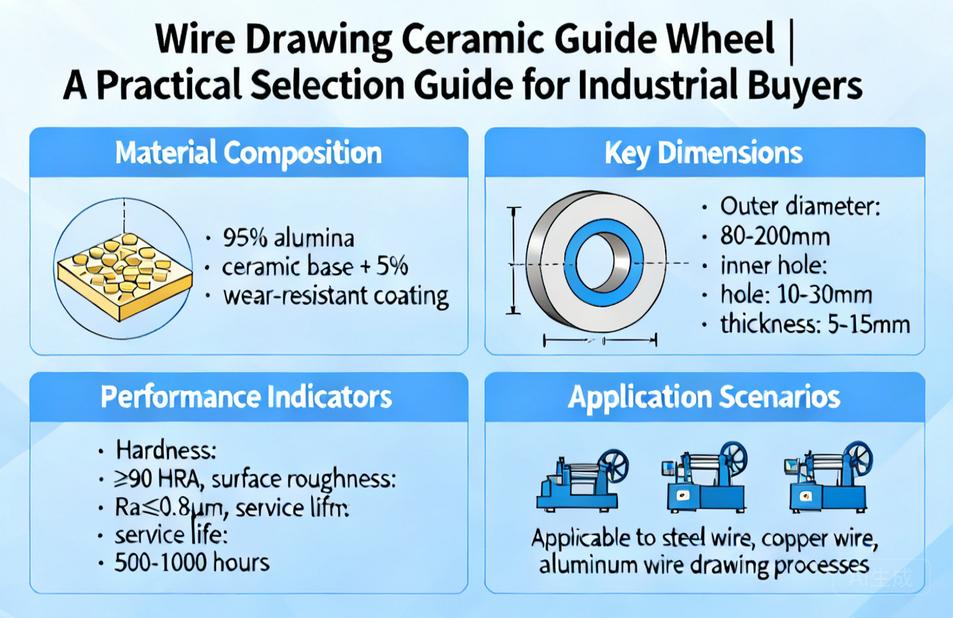
A wire drawing ceramic guide wheel is a precision wear part used to guide, support and redirect wire as it passes through drawing machines, pay-off and take-up systems, stranding lines and related wire processing equipment. Instead of sliding the wire against a fixed surface, the wheel uses a ceramic grooved rim to reduce friction and protect the wire surface while maintaining a stable wire path. For overseas buyers sourcing wire drawing consumables, understanding how these wheels work, where they are used and how to match them to a machine is the first step toward reducing downtime and scrap.
What a Ceramic Guide Wheel Does in a Wire Drawing Line
In a typical wire drawing process, metal wire is pulled through a series of dies that progressively reduce its diameter. Between the dies, and at entry and exit points, the wire must change direction or maintain tension without being damaged. A ceramic guide wheel performs this function by rotating with the wire rather than forcing the wire to slide. The ceramic rim, usually formed with a V-groove, U-groove or flat profile, keeps the wire centered and reduces contact stress. This is especially important for fine wire, soft metals and coated wire, where surface marks, scratches or flattening can lead to rejects downstream.
Ceramic guide wheels are also used in related processes such as wire stranding, cabling, coil winding, spring making and cable assembly. In many of these lines, the wheel is a small but critical component: if it wears unevenly or seizes, the wire path changes, tension fluctuates, and product quality suffers. For this reason, procurement teams often treat guide wheels as a consumable that must be matched carefully to the machine and the material being run.
Key Features Buyers Look For
When evaluating a ceramic guide wheel, buyers typically focus on a few practical characteristics rather than marketing claims. The most important is the groove profile, because it determines how the wire sits in the wheel and how much lateral guidance is provided. A V-groove is common for centering wire of a specific diameter range, while a U-groove or radius groove may be preferred for softer wire or where a larger contact area is acceptable. The rim material and surface finish also matter: a smooth, dense ceramic surface reduces friction and resists wire wear, while a poorly finished surface can abrade the wire or shed particles.
Other features include the bearing type and sealing. Many guide wheels use precision ball bearings to allow smooth rotation at line speeds, and some designs include shields or seals to keep dust and metal particles out. The wheel body may be made from ceramic, or it may combine a ceramic rim with a metal or composite hub. Each construction has trade-offs in weight, inertia, corrosion resistance and repairability, so the right choice depends on the operating environment and the wire being processed.
Materials and Construction
Ceramic guide wheels are commonly made from alumina-based ceramics, although other ceramic grades may be used where specific properties are required. Alumina offers good wear resistance, electrical insulation and resistance to many industrial chemicals. Zirconia-toughened ceramics can provide higher toughness in applications where impact or thermal shock is a concern. The ceramic rim is often ground and polished to a controlled surface finish, then assembled with a bearing and a hub. In some designs, the ceramic is press-fitted or bonded into a metal ring, while in others the entire wheel is ceramic.
For buyers, the construction detail that matters most is how the wheel will behave in the actual line. A wheel with a metal hub and ceramic rim can be easier to handle and may dissipate heat better, while a full-ceramic wheel can be lighter and more resistant to corrosion. The bearing selection is equally important: a smooth-running, properly sealed bearing keeps the wheel rotating freely and prevents wire drag. When requesting quotations, it helps to share the wire material, wire diameter, line speed and existing wheel dimensions so the supplier can recommend a suitable construction.
Industrial Applications
Wire drawing ceramic guide wheels appear in many industrial applications beyond basic wire drawing. In the cable and wire industry, they guide conductors through stranding and bunching machines, where multiple wires are combined into a single conductor. In the spring and fastener industry, they help control wire feeding into coiling and forming equipment. In welding wire production, they guide the wire through cleaning, coating and spooling stages. Other uses include textile machinery, optical fiber processing and general wire handling where low friction and surface protection are required.
Because these wheels are often exposed to metal dust, lubricants and coolant, the operating environment can affect service life. A wheel that performs well in a clean cable plant may not last as long in a dirty drawing shop unless it is properly sealed. Buyers should therefore match the wheel to the environment, not just to the wire diameter. For high-speed lines, low inertia and dynamic balance become more important, while for heavy wire, load capacity and impact resistance may take priority.
How to Choose the Right Guide Wheel
Choosing a wire drawing ceramic guide wheel starts with the wire itself. Record the wire material, diameter range, surface condition and any coating. Then note the machine interface: shaft diameter, mounting method, wheel outer diameter, groove profile and available space. Line speed and tension also affect the choice, because a wheel that rotates too slowly or too fast can cause slip, heat or vibration. If the existing wheel has a part number or drawing, that is the best starting point, but buyers should still confirm the groove geometry and bearing type.
It is also useful to consider the expected service life and maintenance schedule. Some plants prefer to replace guide wheels on a fixed interval, while others inspect them based on wire quality. A supplier who understands wire drawing can help compare options and suggest a wheel that balances performance and cost. When several wheels are used on the same line, standardizing on a few proven sizes can simplify inventory and reduce the risk of mismatched parts.
Customization and OEM Options
Many wire drawing ceramic guide wheel suppliers offer custom and OEM production for machine builders and end users. Customization can include specific outer diameters, bore sizes, groove profiles, ceramic grades, bearing types and hub materials. For OEM projects, the supplier may work from drawings, samples or a detailed specification, and can produce wheels with specific markings or packaging. Buyers should clarify whether the supplier can hold tolerances on the groove profile, because that dimension directly affects wire tracking and surface quality.
When requesting a custom wheel, provide as much detail as possible: a drawing or sample, the wire material and diameter, operating speed, load direction and environmental conditions. If a sample is not available, a clear sketch with key dimensions and a description of the application can still help the supplier propose a suitable design. It is also wise to ask about the production process, inspection method and available documentation, so expectations are aligned before ordering.
Buying Considerations and Supplier Selection
For B2B buyers, the total cost of a guide wheel includes more than the unit price. Downtime, wire scrap and replacement labor can quickly outweigh a small price difference. A reliable manufacturer or supplier should be able to explain the ceramic grade, bearing specification and recommended operating limits, and should provide consistent dimensions from lot to lot. It also helps to work with a factory that has experience in wire drawing or a closely related industry, because they understand the practical problems that guide wheels are expected to solve.
When comparing suppliers, ask for dimensional drawings, material descriptions and packing details. If the order is for OEM or custom wheels, confirm the approval process and whether samples can be provided for trial. A supplier who communicates clearly and asks about your application is often a better long-term partner than one who only quotes a price. For repeat orders, discuss how the supplier controls quality and whether they can hold inventory for fast replenishment.
Frequently Asked Questions
What is the difference between a ceramic guide wheel and a metal guide wheel?
Ceramic guide wheels generally offer lower friction, better wear resistance and less risk of marking the wire than metal guide wheels. Metal wheels may be more resistant to impact, but they can wear faster and may transfer heat differently. The best choice depends on the wire material, line speed and operating environment.
How do I determine the correct groove profile for my wire?
Start with the wire diameter range and the existing wheel drawing. A V-groove is often used for centering a specific wire size, while a U-groove or radius groove may suit softer wire or applications where a larger contact area is acceptable. Sharing a sample or detailed dimensions with the supplier helps confirm the right profile.
Can ceramic guide wheels be customized for my machine?
Yes, many suppliers offer custom and OEM production. Customization can include outer diameter, bore size, groove profile, ceramic grade, bearing type and hub material. Providing a drawing, sample or detailed specification allows the supplier to propose a suitable design.
What information should I provide when requesting a quotation?
Provide the wire material and diameter, line speed, tension, machine mounting details, existing wheel dimensions and the operating environment. If available, include a part number, drawing or sample. This information helps the supplier recommend a wheel that fits the application and reduces the risk of trial and error.
Conclusion
Selecting a wire drawing ceramic guide wheel is a practical engineering decision rather than a simple price comparison. Focus on the wire, the machine interface and the operating environment, then confirm the groove profile, ceramic grade and bearing type with the supplier. Whether you need standard wheels or a custom OEM design, working with an experienced manufacturer or supplier who understands wire drawing applications can help you improve wire quality and reduce unplanned downtime. If you are reviewing your current guide wheel setup or planning a new line, sharing your specifications with a qualified supplier is a straightforward way to compare options and identify a suitable solution.
