

Coating Service Overview
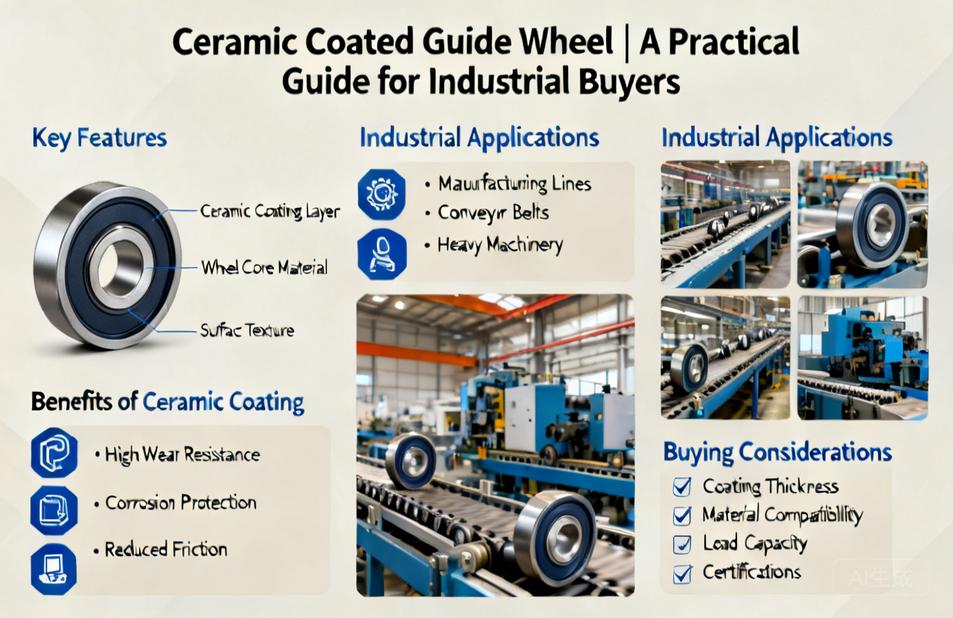
A ceramic coated guide wheel is a precision guidance component whose rolling surface or groove is protected by a thin ceramic layer, usually applied over a metal substrate such as aluminum, steel, or stainless steel. It is used in wire and cable machinery, textile equipment, packaging lines, printing presses, automated handling systems, and other industrial applications where a standard metal or plastic wheel would wear too quickly, generate excessive friction, or fail under continuous contact with the moving material. For overseas buyers sourcing guidance hardware, understanding how these wheels are built, where they perform best, and what to confirm before ordering helps avoid costly mismatches on the production floor.
Product Overview and Working Principle
A guide wheel itself is a rotating element that keeps wire, thread, film, tape, strip, or rope on a defined path. The ceramic coating changes the surface behavior. Ceramic materials typically offer high hardness, low friction, and good resistance to abrasion and many chemicals. When applied as a coating, they create a hard outer layer that protects the softer metal beneath and reduces the tendency of the guide groove to develop wear tracks. In practice, the wheel rotates as the running material contacts the groove, directing it without cutting or abrading the surface. The coating is not a separate sleeve that can slip off; it is bonded to the base material and becomes the functional contact surface.
Key Features Buyers Look For
Purchasing teams evaluating a ceramic coated guide wheel often compare several performance characteristics rather than a single specification.
- Wear resistance: The ceramic layer helps the groove hold its profile longer under continuous wire or thread contact.
- Low friction: Reduced drag can lower drive load and help maintain consistent tension.
- Surface smoothness: A polished ceramic surface reduces the risk of marking delicate materials.
- Chemical and temperature tolerance: Depending on the coating type, the wheel may tolerate lubricants, solvents, and elevated temperatures better than uncoated alternatives.
- Corrosion resistance: When the substrate is stainless steel or a treated aluminum alloy, the assembly can suit humid or wash-down environments.
These features matter most in high-speed lines where even small changes in friction or groove geometry affect product quality and downtime. Buyers should treat these as selection criteria, not universal guarantees, and confirm actual values with the manufacturer for the specific coating and substrate offered.
Materials and Construction
The base body is usually machined from aluminum alloy, carbon steel, stainless steel, or engineering plastic. Aluminum keeps weight low and is common in moving carriages and dancer systems. Stainless steel is selected where corrosion resistance is a priority. The ceramic coating may be applied through processes such as plasma spraying, anodizing-type ceramic conversion, or other thermal spray methods, depending on the supplier and the required surface properties. Bearing selection is equally important: shielded or sealed ball bearings suit dusty environments, while plain bushings may be used in low-speed or wash-down applications. The groove profile, often U-shaped, V-shaped, or flat, must match the material being guided. A supplier with in-house machining and coating capability can usually control concentricity, runout, and surface finish more consistently than a trading company that outsources every step.
Typical Industrial Applications
Ceramic coated guide wheels appear across many production environments. In wire drawing and cable making, they guide conductor and strand without introducing scratches. In textile machinery, they route yarn and thread where friction and wear would otherwise cause breaks. Packaging equipment uses them to control film, foil, and label webs. Printing and converting lines rely on them to maintain web tension. Automation and material handling systems use them in linear guidance, belt tracking, and cable management. Because different industries define performance differently, buyers should describe the moving material, speed range, load, and environment when requesting a quote.
How to Choose the Right Guide Wheel
Selection starts with the material being guided. Abrasive wire demands a harder, more wear-resistant coating, while delicate film needs a smooth surface and a gentle groove radius. Next, confirm the wheel dimensions: outer diameter, groove profile, bore size, and width must fit the existing shaft or bracket without modification. Load and speed determine bearing type and mounting method. Environmental factors such as moisture, dust, temperature, and chemical exposure influence both substrate and coating choice. Finally, consider maintenance: a wheel that can be re-coated or easily replaced reduces long-term cost. Buyers who provide drawings, samples, or clear application details usually receive more accurate recommendations from a factory than those who order by generic size alone.
Customization and OEM Options
Many suppliers offer OEM and custom manufacturing for guide wheels. Customization can include non-standard outer diameters, specific groove geometries, alternative bore sizes, special hub designs, and selected bearing configurations. Coating thickness and surface finish may also be adjusted within the supplier’s process capability. For branded equipment builders, private labeling and custom packaging are common requests. When evaluating a custom project, ask for a sample or first-article inspection before committing to volume production, and clarify which dimensions are critical to function. A manufacturer that can machine, coat, assemble, and inspect in one facility generally shortens the sample-to-production cycle and reduces communication errors.
Buying Considerations and Supplier Selection
Price should be weighed against total cost of ownership. A lower-priced wheel that wears quickly and causes line stops may cost more than a durable ceramic coated guide wheel over a year of operation. Ask potential suppliers about their quality control process, dimensional inspection, and coating consistency. Request material certificates for the substrate if corrosion resistance is important. Confirm whether the supplier is a direct manufacturer or a trading company, because this affects lead time, customization flexibility, and technical support. For repeat orders, discuss packaging, labeling, and inventory arrangements. A reliable guide wheel supplier should be able to answer application questions, recommend suitable configurations, and provide samples for evaluation.
Frequently Asked Questions
What is the difference between a ceramic coated guide wheel and a standard metal guide wheel?
The main difference is the contact surface. A ceramic coating adds hardness and reduces friction compared with an uncoated metal surface, which can extend service life and reduce marking or wear on the running material. The base wheel still provides the structural strength and mounting interface.
Can ceramic coated guide wheels be customized for my machine?
Yes. Many manufacturers accept custom dimensions, groove profiles, bore sizes, and bearing options. Provide a drawing, sample, or detailed application information so the factory can recommend a suitable configuration.
How do I choose the right groove profile?
Match the groove to the material being guided. Round or U-shaped grooves suit wire, cable, and yarn, while V-grooves are common for certain wire and strand applications. Flat or shallow profiles may be used for film and tape. The supplier can advise based on material size and line speed.
What information should I include in a request for quotation?
Include the material being guided, its diameter or width, line speed, load, environment, mounting dimensions, and any required bearing type. If you have an existing part number or drawing, share it to reduce back-and-forth.
Conclusion
Choosing a ceramic coated guide wheel comes down to matching the coating, substrate, groove geometry, and bearing configuration to the real operating conditions of your line. Buyers who focus on wear resistance, friction behavior, and dimensional accuracy rather than price alone tend to get better long-term performance. If you are sourcing guide wheels for a specific application, contact a manufacturer or supplier with your drawing, sample, or application details, and discuss OEM or custom options directly so the wheel you order fits the machine and the material it guides.
