

Coating Service Overview
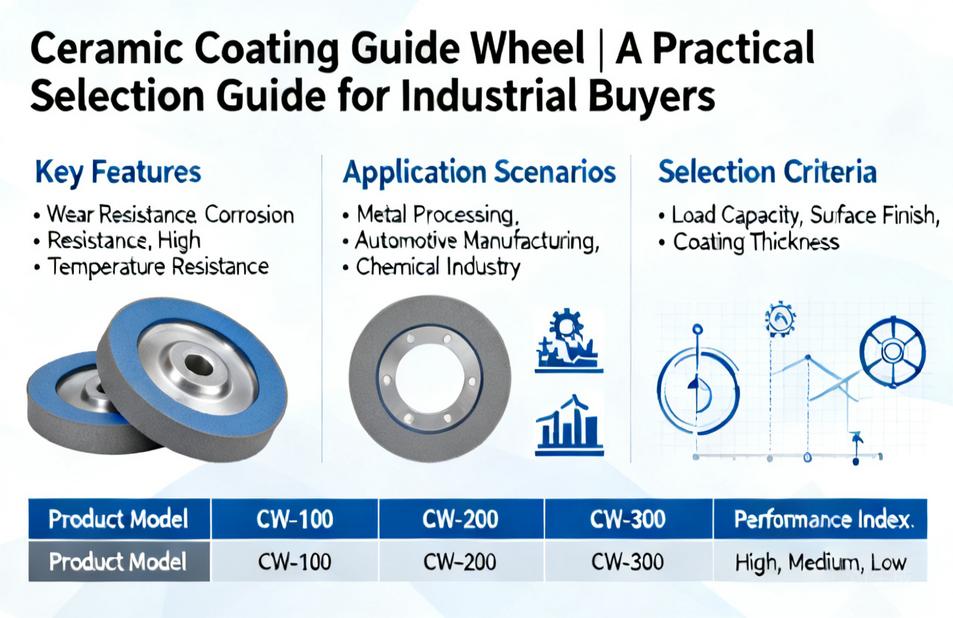
A ceramic coating guide wheel is a precision wire guide component used to control wire or thread travel in coil winding, wire drawing, cable forming, textile machinery, and automated wire handling equipment. The ceramic coating refers to a hard, wear-resistant ceramic layer applied to the outer groove of the wheel, while the wheel body is usually made of metal or engineering plastic. This combination gives the guide wheel a smooth wire contact surface, low friction, and long service life in continuous industrial operation. For purchasing teams, the key task is not simply finding a low-cost guide wheel, but selecting a ceramic coating guide wheel that matches the wire diameter, machine speed, and environmental conditions of the application.
What the Product Does in a Wire Handling System
A guide wheel acts as a routing and tension control point. When wire, cable, optical fiber, or textile yarn passes through a machine, the guide wheel keeps the material aligned and prevents sideways movement. The ceramic coating on the wheel groove reduces friction between the wire and the wheel surface. This is important because friction can cause wire surface damage, coating scratches, or tension fluctuations. In coil winding equipment, for example, a poorly matched guide wheel can create uneven winding and increase downtime. A properly selected ceramic guide wheel helps maintain consistent wire positioning and reduces wear on both the wheel and the wire.
Key Features Buyers Should Evaluate
Several features distinguish one ceramic coating guide wheel from another. The groove profile must match the wire shape and diameter, otherwise the wire may jump or wear unevenly. The surface finish of the ceramic layer affects friction and wire marking. The wheel bearing or bushing design determines rotational smoothness under high speed. The wheel body material influences weight, corrosion resistance, and mechanical stability. Buyers should also consider the hardness and bonding quality of the ceramic coating, because a coating that chips or separates will expose the base material and shorten service life. In many industrial applications, a smooth-running wheel with a well-formed groove is more valuable than a wheel with a thick but uneven coating.
Materials and Construction
Ceramic coating guide wheels generally consist of a metal or plastic body and a ceramic outer layer. Common body materials include aluminum alloy, stainless steel, and engineering plastics. The ceramic layer is often applied by thermal spraying or other coating processes, depending on the manufacturer. The choice of body and coating should be based on the operating environment. For example, stainless steel bodies are often selected for humid or mildly corrosive environments, while aluminum alloy bodies help reduce rotating mass in high-speed wire handling. The bearing system can be a precision ball bearing, a ceramic bearing, or a simple bushing, depending on speed and load requirements. Because these variables affect performance, buyers should confirm the actual construction with the supplier rather than assume that all ceramic guide wheels are interchangeable.
Industrial Applications
Ceramic coating guide wheels are used in a wide range of industrial applications. In wire and cable manufacturing, they guide conductors and strands through drawing, stranding, and cabling lines. In coil winding, they route enameled wire into winding heads. In textile machinery, they guide yarn and thread with minimal damage. In optical fiber production, they help control fiber tension and prevent surface scratches. Other applications include welding wire feed systems, 3D printing filament guides, and automated wire processing equipment. Each application has different requirements for wire diameter, speed, tension, and environmental exposure. A guide wheel that works well in a slow textile line may not be suitable for a high-speed cable stranding machine. Therefore, application details should always be shared with a potential supplier before ordering.
How to Choose the Right Ceramic Coating Guide Wheel
Choosing the right guide wheel starts with the wire or material being processed. Buyers should identify the wire diameter, material type, and surface sensitivity. Next, confirm the machine speed and tension range, because these factors affect bearing selection and wheel balance. The mounting method is equally important: shaft diameter, wheel width, and fixing style must match the equipment. Environmental conditions such as temperature, humidity, dust, and chemical exposure should also be considered. If the wire is delicate, a smooth ceramic groove with a gentle radius is usually preferred. If the wire is abrasive, a harder ceramic coating and a robust body may be more suitable. A practical approach is to prepare a specification sheet that includes these details and request recommendations from a qualified manufacturer.
Customization and OEM Options
Many industrial buyers need custom guide wheels rather than standard catalog items. Customization can include groove profile, wheel diameter, bore size, body material, coating thickness, and bearing type. Some suppliers also offer OEM production with buyer-branded packaging or private labeling. When discussing customization, it is important to provide drawings or samples whenever possible. A reliable factory will review the application and suggest feasible tolerances and materials. Buyers should avoid requesting custom features that are not supported by the supplier’s actual production capability. Instead, ask for a clear explanation of what can be customized and what remains standard. This reduces the risk of mismatched parts and unexpected production issues.
Buying Considerations for Overseas Purchasers
When sourcing ceramic coating guide wheels from an overseas supplier, purchasing teams should evaluate several practical points. First, confirm the supplier’s production scope and whether they are a manufacturer or a trading company. Second, request dimensional drawings and material descriptions for the specific model under consideration. Third, ask how the ceramic coating is applied and inspected, without assuming any certification or test result that has not been provided. Fourth, discuss packaging and labeling requirements, especially for OEM orders. Fifth, clarify the minimum order quantity, sample availability, and expected production planning. Finally, compare several suppliers based on technical response quality, not only on price. A supplier that asks detailed questions about wire diameter, speed, and mounting conditions is often more capable of providing a suitable guide wheel than one that quotes immediately without technical review.
Supplier Selection and Quality Consistency
Consistency is critical for guide wheels used in continuous production. A supplier that can maintain stable groove dimensions, coating quality, and bearing performance from batch to batch helps reduce machine downtime and replacement frequency. Buyers may request sample evaluation before bulk orders and should inspect critical dimensions and surface condition upon receipt. If the guide wheel is used in a high-volume line, it is wise to keep a small inventory of approved spare parts. Working with a supplier that understands industrial applications and can communicate in technical terms makes the procurement process more efficient. For OEM and custom projects, clear communication about drawings, tolerances, and inspection criteria helps prevent misunderstandings.
Frequently Asked Questions
What wire materials can a ceramic coating guide wheel handle?
Ceramic coating guide wheels are commonly used with copper wire, aluminum wire, steel wire, cable strands, optical fiber, textile yarn, and some plastic filaments. The suitability depends on wire diameter, surface sensitivity, and tension. Buyers should confirm compatibility with the supplier based on the actual material being processed.
Can I order custom groove profiles and sizes?
Yes, many manufacturers offer custom groove profiles, wheel diameters, bore sizes, and body materials. Providing a drawing or sample helps the supplier evaluate feasibility. Customization scope should be confirmed before placing an order.
How do I match the guide wheel to my machine?
Check the mounting shaft diameter, wheel width, groove shape, and the wire path in the machine. Machine speed and tension also affect bearing selection. Sharing these details with the supplier allows them to recommend a suitable configuration.
What should I check when comparing suppliers?
Compare technical response quality, dimensional consistency, coating appearance, bearing smoothness, and willingness to support OEM or custom requirements. Avoid selecting a supplier based only on low price, because guide wheel performance directly affects production efficiency.
Conclusion
Selecting a ceramic coating guide wheel is a technical decision that affects wire quality, machine uptime, and long-term operating cost. Buyers should focus on groove design, ceramic coating quality, body material, bearing performance, and application match rather than price alone. For custom or OEM projects, clear specifications and drawings are essential. If you are reviewing options for coil winding, cable production, textile, or other wire handling equipment, contact a qualified manufacturer or supplier to discuss your wire size, machine conditions, and customization needs. A practical technical conversation is the best way to identify a guide wheel that fits your process.
