

Coating Service Overview
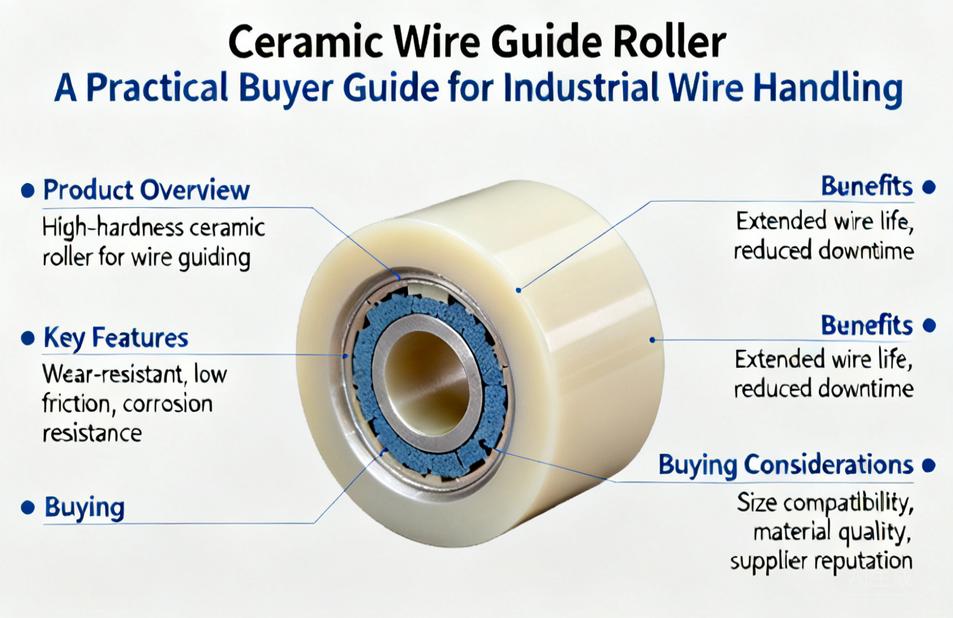
A ceramic wire guide roller is a small but critical component used to guide, tension, and protect wire as it moves through winding, drawing, coating, and processing equipment. In industries such as wire and cable manufacturing, textile machinery, electronics production, and metal processing, these rollers help maintain precise wire path alignment while reducing friction and wear on both the wire and the machine. For overseas buyers sourcing replacement parts or building new equipment, understanding how ceramic guide rollers work and how to select the right specification can directly affect production uptime and product quality.
What Is a Ceramic Wire Guide Roller?
A ceramic wire guide roller is a rotating or stationary guide element made from technical ceramic materials, often alumina (Al2O3) or zirconia (ZrO2), mounted on a metal shaft or bearing assembly. The ceramic surface contacts the moving wire, providing a smooth, hard, and wear-resistant path. Unlike metal guides, ceramic rollers resist abrasion from high-speed wire contact and do not easily develop grooves that can damage the wire surface.
These rollers are commonly used in wire drawing machines, cable stranding equipment, coil winding systems, optical fiber production, and textile yarn guides. They may be grooved, flat, or flanged depending on the wire path requirement and the type of machine.
How Ceramic Wire Guide Rollers Work in Wire Handling Systems
In a typical wire handling setup, the ceramic roller is positioned at a point where the wire changes direction or requires tension control. The wire passes over or through the roller, which rotates on a bearing or fixed axle. The low friction coefficient of the ceramic surface minimizes drag, helping maintain consistent wire tension and reducing the risk of stretching or breaking.
Because ceramic resists heat and wear, the roller continues to perform in continuous-duty applications where metal guides might fail. The smooth surface also reduces the chance of scratching or marking delicate wire, which is important in enameled wire, precious metal wire, and fine electronic wire production.
Key Features Buyers Should Evaluate
When evaluating ceramic wire guide rollers for a specific application, procurement teams and engineers typically look at several performance factors:
- Surface finish: A polished ceramic surface helps prevent wire damage and reduces friction.
- Material grade: Alumina offers good wear resistance and cost efficiency, while zirconia provides higher toughness and thermal shock resistance.
- Bearing type: Some rollers use precision bearings for smooth rotation; others are fixed guides for simple redirection.
- Groove profile: The shape and radius of the groove must match the wire diameter and path angle.
- Mounting configuration: Shaft diameter, thread type, and bracket compatibility affect installation and replacement.
These features are not universal; the right combination depends on wire material, speed, tension, and environmental conditions.
Materials and Construction
Technical ceramics used in wire guide rollers are chosen for hardness, chemical inertness, and thermal stability. Alumina ceramic is widely used because it balances wear resistance with cost. Zirconia ceramic is preferred where higher mechanical strength or thermal cycling is present. Silicon nitride is another option for certain high-performance applications.
The roller body may be pressed and sintered, then precision-ground to achieve the required dimensional tolerance and surface roughness. The metal shaft or bearing insert is typically stainless steel or another corrosion-resistant alloy, assembled with the ceramic body to form a durable unit. Some designs include a ceramic-coated metal core, while others are fully ceramic for maximum wear life.
Typical Industrial Applications
Ceramic wire guide rollers appear in many wire and thread handling processes:
- Wire drawing and annealing lines
- Cable stranding and bunching machines
- Coil winding equipment for motors and transformers
- Textile yarn guiding and tensioning systems
- Optical fiber and cable production
- Welding wire feed systems
- Electronic component winding and testing
In each case, the roller helps maintain wire position, reduce vibration, and protect surface quality. Because different machines use different wire diameters and speeds, the roller specification must be matched to the equipment rather than selected generically.
How to Choose the Right Ceramic Wire Guide Roller
Choosing a guide roller is not simply a matter of matching dimensions. Buyers should consider the full operating context:
Wire diameter and material
Fine wire requires a smoother, more precisely grooved roller to avoid deformation or scratching. Heavier wire may need a larger groove radius and a more robust bearing assembly.
Line speed and tension
Higher speeds generate more friction and heat. In these conditions, a low-friction ceramic surface and a reliable bearing are important. Tension levels also affect how the wire contacts the roller.
Environmental factors
Temperature, humidity, dust, and chemical exposure can influence material choice. Ceramic is generally resistant to many chemicals, but the bearing and shaft materials must also be compatible.
Mounting and replacement
Check shaft diameter, mounting thread, and space envelope. A roller that fits mechanically but changes the wire path angle can cause tension problems. Standardized mounting can simplify maintenance and spare parts inventory.
Customization and OEM Options
Many ceramic wire guide roller manufacturers and suppliers offer customization for specific equipment. Custom options may include non-standard groove profiles, specific shaft lengths, alternative bearing types, and material grades suited to a particular wire process. OEM production is common for machine builders that need guide rollers branded or packaged for their equipment.
When requesting a custom roller, provide the wire diameter, machine speed, tension range, mounting dimensions, and any environmental constraints. A supplier with in-house ceramic machining and assembly capabilities can often recommend a suitable design without over-specifying.
Buying Considerations for Overseas Procurement
For importers and equipment manufacturers, several practical points affect total cost and reliability:
- Dimensional consistency: Rollers should be interchangeable with existing parts to avoid machine downtime.
- Surface quality: Inspect for chips, cracks, or rough areas that could damage wire.
- Bearing performance: Smooth rotation and axial play should match the application.
- Packaging: Ceramic parts require protective packaging to prevent breakage during shipping.
- Documentation: Material grade, dimensional drawings, and inspection reports support quality control.
It is also wise to confirm whether the supplier manufactures the ceramic body in-house or sources it externally, as this affects lead time and customization flexibility.
Selecting a Reliable Supplier or Manufacturer
Working with an experienced ceramic wire guide roller supplier or factory can reduce sourcing risk. Look for a manufacturer that understands wire handling applications and can discuss technical details rather than only quoting a catalog number. A good supplier will ask about wire type, speed, and mounting before recommending a product. If you need OEM or custom production, confirm their engineering support, sample capability, and quality control process. Visiting or auditing a factory may be appropriate for larger orders.
Frequently Asked Questions
What is the difference between alumina and zirconia ceramic guide rollers?
Alumina ceramic is hard, wear-resistant, and cost-effective for many wire guiding applications. Zirconia ceramic offers higher toughness and better thermal shock resistance, which can be useful in higher-load or temperature-cycling environments. The choice depends on wire material, speed, and operating conditions.
Can ceramic wire guide rollers be customized for my machine?
Yes. Many manufacturers offer custom groove profiles, shaft dimensions, bearing types, and material grades. Provide drawings or samples along with application details so the supplier can match the roller to your equipment.
How do I know if a ceramic guide roller is suitable for fine wire?
Fine wire requires a smooth surface and a groove radius matched to the wire diameter. A poorly finished or incorrectly sized groove can cause scratches, breaks, or tension variations. Review the surface specification and request samples when possible.
What information should I provide when requesting a quote?
Include wire diameter and material, machine speed, tension range, mounting dimensions, environmental conditions, and required quantity. If you need OEM or custom production, mention that as well so the supplier can respond with a suitable proposal.
Conclusion
Selecting the right ceramic wire guide roller involves matching material, groove profile, bearing design, and mounting to the specific wire handling process. Buyers should focus on dimensional consistency, surface quality, and supplier technical support rather than only comparing unit price. For custom or OEM requirements, working with a manufacturer that understands industrial wire applications can help ensure reliable performance and easier maintenance. If you are sourcing ceramic guide rollers for a new machine or replacement program, contact a qualified supplier to discuss your specifications and application details.
