

Coating Service Overview
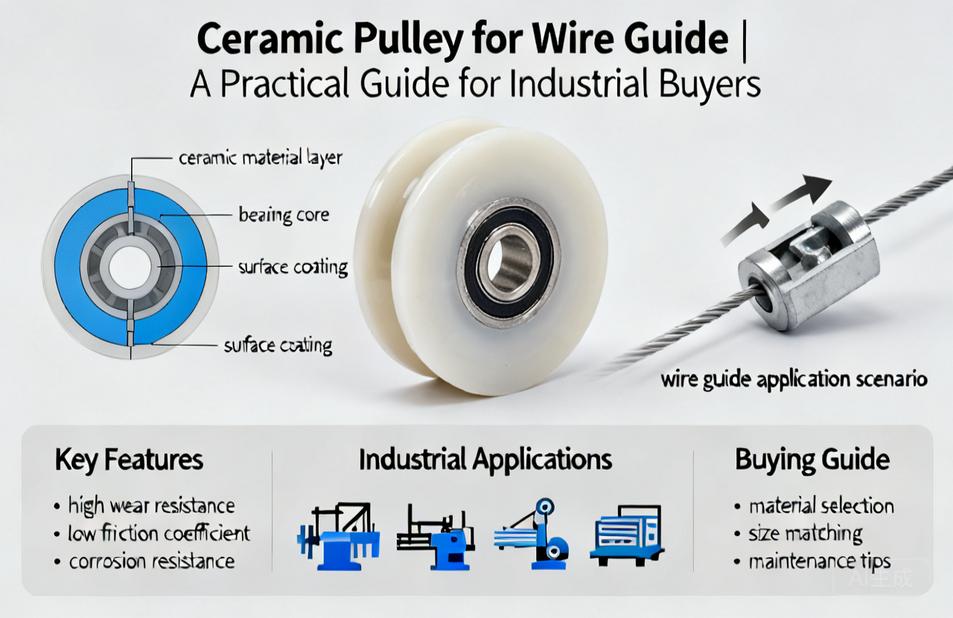
A ceramic pulley for wire guide is a precision-engineered component used to route, tension, and protect wire, cable, and filament as it moves through production or processing equipment. Unlike metal pulleys, the ceramic contact surface reduces friction and wear while resisting abrasion from fast-moving wire, which makes it a common choice in wire drawing, cable manufacturing, coil winding, textile machinery, and automated wire handling systems. For overseas buyers, understanding how these pulleys work, where they are used, and what to evaluate before ordering helps ensure a better match with existing equipment and long-term operating needs.
Product Overview
A wire guide pulley generally consists of a ceramic insert or ceramic ring mounted on a metal body or bearing assembly. The ceramic surface contacts the wire and guides it along a defined path. Depending on the design, the pulley may be a simple stationary guide, a rotating sheave, or a grooved roller integrated into a wire tensioning or dereeling unit. Ceramic wire guide pulleys are often selected when metal contact would cause scratching, cold welding, or premature wear on the wire surface.
These pulleys are available in different outer diameters, groove profiles, and mounting configurations. Some are designed for light-duty guiding in electronic wire processing, while others are built for continuous operation in heavy industrial wire and cable lines. Buyers should clarify the wire diameter, line speed, load, and environmental conditions before choosing a specific type.
Key Features and Working Principle
The main advantage of a ceramic pulley for wire guide applications is the low-friction, hard ceramic contact surface. It helps maintain a smooth wire path, reduces the risk of surface damage, and can extend the service life of the guide compared with softer materials. The ceramic ring is typically polished or fine-ground to minimize abrasion and wire marking.
Common features include:
- Hard, wear-resistant ceramic contact surface
- Smooth groove to reduce friction and wire damage
- Compatibility with high-speed wire and cable lines
- Options for rotating or fixed mounting
- Available in various bore sizes and groove shapes
In operation, the wire runs through the groove of the ceramic pulley. If the pulley rotates, the ceramic ring or insert turns with the wire, reducing sliding friction. If it is a fixed guide, the low-friction ceramic surface still helps the wire pass smoothly. The choice between rotating and fixed designs depends on wire speed, tension, and the acceptable level of contact friction.
Materials and Construction
Ceramic wire guide pulleys are usually made with an alumina-based ceramic, although other technical ceramics may be used depending on the application. The ceramic part is often combined with a metal housing, shaft, or bearing. Key construction considerations include the ceramic grade, surface finish, groove radius, concentricity, and the bonding method between ceramic and metal components.
Because ceramic is brittle compared with metal, proper mounting and handling are important. A well-designed pulley should distribute contact stress and protect the ceramic edge from impact. Buyers should request drawings or samples when matching a pulley to a specific machine, especially if the existing guide has a unique groove profile or mounting flange.
Industrial Applications
Ceramic pulleys for wire guiding appear in many wire and cable processes. Typical industrial applications include:
- Wire drawing machines and annealing lines
- Cable twisting, stranding, and cabling equipment
- Coil winding and spooling machinery
- Textile and synthetic filament processing
- Welding wire feeding systems
- Wire cutting, stripping, and terminal processing
In these settings, the pulley helps control wire position and tension while minimizing surface defects. For manufacturers running fine wire or coated wire, a smooth ceramic contact surface can be especially useful because it reduces the chance of scratches or coating damage. In heavier cable lines, the pulley must handle greater loads and may require a robust bearing and metal body.
How to Choose the Right Ceramic Pulley
Choosing a ceramic pulley for wire guide use starts with the wire itself. Wire diameter, material, surface finish, and tension determine the ideal groove size and contact pressure. A groove that is too narrow can pinch or damage the wire, while one that is too wide may allow the wire to wander. Line speed and direction also matter: high-speed lines often benefit from a rotating pulley to reduce friction and heat.
Other selection factors include:
- Mounting type and shaft or bore dimensions
- Load capacity and expected service life
- Environmental conditions such as dust, moisture, or temperature
- Available space and alignment with adjacent guides
- Maintenance access and replacement frequency
When replacing an existing pulley, buyers should compare the groove profile, outer diameter, bore, and mounting holes. If the original part number is available, it can help a supplier identify a suitable match or propose a custom design.
Customization and OEM Options
Many ceramic pulley suppliers offer customization for specific wire handling requirements. Custom options may include special groove profiles, non-standard outer diameters, alternative bore sizes, different ceramic grades, and integrated shafts or bearings. OEM production is common in this category, where the pulley is made to a buyer’s drawing or sample.
For custom projects, it is helpful to provide the wire diameter, line speed, load direction, available space, and any drawing or photo of the current part. A factory experienced in ceramic wire guide components can review these details and recommend a suitable ceramic insert, housing, and mounting method. Buyers should confirm tolerances and surface finish requirements before production.
Buying Considerations and Supplier Selection
When sourcing ceramic pulleys, buyers should evaluate the supplier’s production capability, quality control, and experience with wire guide applications. A manufacturer that understands wire handling can often suggest improvements to groove design or ceramic selection. Ask for dimensional drawings, material specifications, and inspection reports where applicable.
It is also useful to discuss packaging and labeling for export, as ceramic parts require protection during transport. For repeat orders, consistent quality and lead time reliability are often more important than a single low price. Buyers working with an OEM factory should clarify drawing approval, sample approval, and change notification procedures.
Frequently Asked Questions
What is a ceramic pulley for wire guide used for?
It is used to guide and route wire, cable, or filament through industrial machinery while reducing friction and protecting the wire surface. Common equipment includes wire drawing machines, cable lines, coil winders, and welding wire feeders.
How do I choose the correct groove size?
The groove should match the wire diameter and application. A supplier can recommend a profile based on the wire size, line speed, and tension. Providing a sample or drawing of the existing guide is often the fastest way to get an accurate match.
Can ceramic wire guide pulleys be customized?
Yes. Many manufacturers offer custom groove profiles, dimensions, bore sizes, and mounting designs. OEM production based on drawings or samples is common for wire and cable equipment.
What should I check before placing an order?
Confirm the wire diameter, line speed, load, mounting dimensions, and environmental conditions. Also review the supplier’s material specifications, dimensional tolerances, and quality control process to ensure the pulley suits your equipment.
Conclusion
Selecting the right ceramic pulley for wire guide applications comes down to matching the pulley design with the wire, machine, and operating conditions. Focus on groove profile, ceramic surface quality, mounting compatibility, and the supplier’s ability to support custom or OEM requirements. If you are reviewing options for a new line or replacing an existing guide, sharing your specifications with a qualified manufacturer can help you compare suitable designs and move forward with a practical solution.
Related Reading
- Ceramic Pulley for Cable Machine | A Buyer’s Guide to Materials, Applications, and Custom Sourcing
- Ceramic Pulley for Wire Drawing Machine | A Buyer’s Guide to Selection, Customization, and Supplier Evaluation
- Ceramic Guide Wheel for Cable Production | Selection Guide for Wire and Cable Manufacturers
