

Coating Service Overview
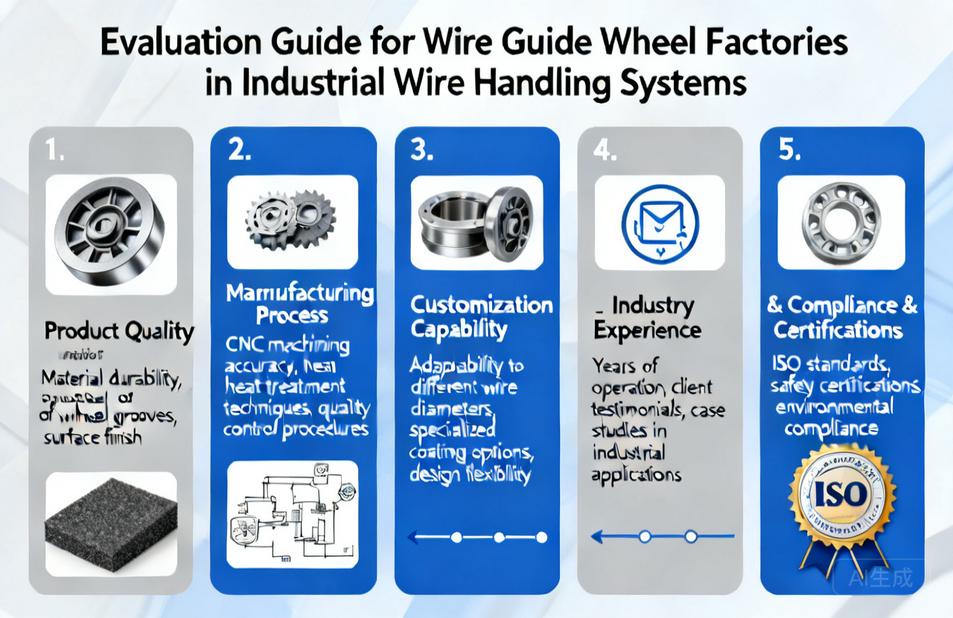
A wire guide wheel factory produces the precision pulleys, sheaves, and rollers used to guide, tension, and redirect wire, cable, and filament in industrial machinery. These components are common in wire drawing lines, cable manufacturing, wire forming machines, coil winding equipment, welding wire feeders, and automated wire processing systems. When buyers search for a wire guide wheel factory, they are usually looking for a manufacturing partner that can supply consistent geometry, suitable bearing or bushing options, and customized groove profiles that match their existing equipment. This article explains what these wheels do, how they are made, what to consider during selection, and how to work with a supplier on OEM and custom projects.
What a Wire Guide Wheel Does in a Production Line
A guide wheel is a rotating component that controls the path of a moving wire without causing damage to the surface or introducing unnecessary resistance. In practice, it performs several functions at once: it changes wire direction, maintains tension, reduces friction at contact points, and protects the wire from sharp bends that could cause breakage or surface defects. Depending on the machine, the wheel may rotate freely on a bearing, run on a fixed shaft with a bushing, or be part of a dynamic tension control assembly.
Because wire handling is continuous and often high speed, the wheel surface and internal bearing arrangement directly affect machine uptime and product quality. A poorly matched guide wheel can lead to wire slippage, tracking errors, excessive wear, or vibration that transfers to the finished product.
Common Types and Configurations
Wire guide wheels are not a single standard product. They vary by groove shape, mounting style, and load capacity. A factory that understands wire handling will usually offer several configurations:
- V-groove wheels for centering and guiding wire along a fixed path
- U-groove or radius groove wheels for softer contact with coated or delicate wire
- Flat-faced pulleys used where wire alignment is controlled elsewhere
- Single or double flange wheels to prevent lateral wire movement
- Wheels with sealed ball bearings for higher speed and lower maintenance
- Bushing-mounted wheels for lower speed or higher radial load conditions
Some applications also require ceramic or coated contact surfaces to reduce wear when handling abrasive wire or to avoid contamination in clean processes. The correct choice depends on wire diameter, line speed, tension range, and the surrounding machine design.
Materials and Construction
Most industrial guide wheels use a metal body such as alloy steel, stainless steel, or aluminum, depending on the required strength, corrosion resistance, and weight. The groove surface may be machined directly into the body or formed on a replaceable insert. Bearings are typically selected from standard industrial series, and the bore, outer diameter, and width are machined to match the customer’s shaft and mounting bracket.
Surface finish matters as much as material. A smooth, concentric groove reduces friction and helps maintain consistent wire tension. Hardened or coated contact surfaces can improve wear resistance in high-cycle operations, but the specific treatment should be selected based on the wire material and production environment rather than by default.
Industrial Applications
Wire guide wheels appear in many sectors where continuous wire or cable movement is part of the process. Typical industrial applications include:
- Wire drawing and annealing lines
- Cable twisting, stranding, and taping machines
- Welding wire feed systems and spooling equipment
- Spring making and wire forming machines
- Coil winding and transformer manufacturing
- Textile and filament processing equipment
- Automated wire cutting, stripping, and terminal machines
In each case, the guide wheel is a small but critical part of the wire path. Buyers often need replacements that match original equipment dimensions or new wheels designed for a specific machine modification.
How to Choose the Right Guide Wheel
Selecting a guide wheel starts with the wire itself. Consider wire diameter, material, surface finish, and whether the wire is bare, coated, or insulated. Next, review the machine parameters: line speed, tension range, available mounting space, and shaft or bore dimensions. The groove profile should match the wire diameter closely enough to guide it without pinching or allowing lateral movement.
Bearing selection follows from speed and load. Higher speeds generally require precision bearings with proper sealing, while lower-speed or high-load positions may use plain bearings or bushings. Environmental factors such as dust, coolant, or humidity also influence the choice of seals and body material. When replacing an existing wheel, it is helpful to provide the original drawing, sample, or key dimensions so the factory can confirm fit and function.
Customization and OEM Options
Many wire guide wheel projects require more than a catalog part. A capable factory can produce custom groove profiles, non-standard bore sizes, specific flange diameters, and special surface treatments. OEM production is common when equipment builders need wheels branded or packaged for their own machines. Custom work may also include material substitution, weight reduction, or the addition of mounting features such as keyways, set screw flats, or retaining grooves.
For custom and OEM orders, clear communication of dimensions, tolerances, and operating conditions is essential. A factory that asks about wire type, speed, and load before quoting is generally better prepared to deliver a wheel that performs correctly in the field.
Buying Considerations for Overseas Procurement
When sourcing from an overseas supplier, buyers should focus on dimensional consistency, material traceability, and the supplier’s ability to handle repeat orders. Request detailed drawings or specification sheets for approval before production. Confirm how the factory controls groove concentricity, bore tolerance, and surface finish. If the wheels will be used in a critical position, ask for samples to test under actual line conditions.
Packaging and labeling also matter for international shipping. Wheels should be protected against rust and impact during transit, and cartons should be clearly marked with part numbers and quantities. For ongoing supply, discuss minimum order quantities, lead time expectations, and whether the factory can hold inventory for fast replenishment.
Supplier Selection
A reliable wire guide wheel supplier should demonstrate experience with wire handling equipment rather than general metal machining alone. Look for a manufacturer that can explain groove design, bearing selection, and material behavior in practical terms. Ask how they handle drawing reviews, first article inspection, and change control. If your company needs OEM or custom guide wheels, confirm that the factory has the engineering support to review samples and propose manufacturable solutions.
It is also useful to understand the factory’s production equipment and quality process. CNC turning, milling, and grinding capability, along with disciplined inspection, are signs of a supplier that can maintain consistency across batches. Rather than relying on broad claims, ask specific questions about how dimensions are verified and how non-conforming parts are handled.
Frequently Asked Questions
What information is needed to quote a custom wire guide wheel?
Provide the wire diameter and material, line speed, tension range, mounting dimensions, bore size, and groove profile if available. A drawing or sample of the existing wheel helps the factory confirm fit and propose a suitable design.
Can a wire guide wheel factory produce OEM parts for equipment builders?
Yes. Many factories support OEM production with customer-specific dimensions, packaging, and labeling. The key is to share complete specifications and agree on inspection criteria before production begins.
How do I choose between a bearing wheel and a bushing wheel?
Bearing wheels are generally preferred for higher speeds and lower friction, while bushing wheels may suit lower speeds or higher radial loads. The final choice depends on the actual operating conditions of the machine.
What should I check when receiving a shipment of guide wheels?
Verify part numbers, quantities, bore and outer dimensions, groove profile, and surface condition. Check for rust, shipping damage, and free rotation where bearings are used. Keep inspection records for future orders.
Conclusion
Choosing the right wire guide wheel factory is about matching technical requirements with manufacturing discipline. Focus on groove design, material and bearing selection, dimensional consistency, and the supplier’s ability to support custom and OEM projects. If you are evaluating options for a new wire handling system or need replacement wheels, contact a manufacturer with your specifications, application details, and drawings. A practical discussion of wire size, speed, and mounting will help you identify a guide wheel solution that fits your equipment and production needs.
