

Coating Service Overview
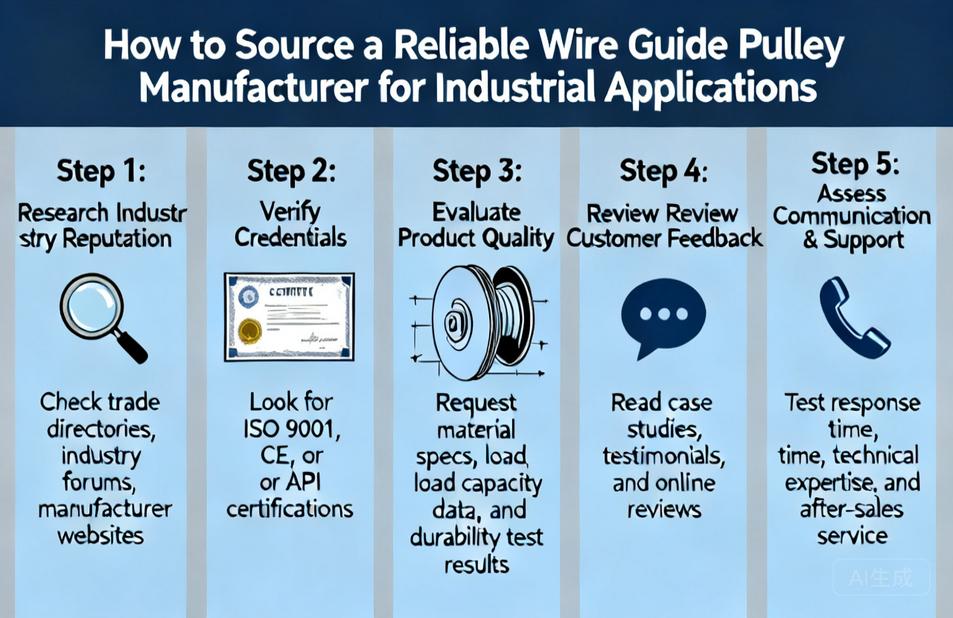
A wire guide pulley is a critical component used to control the path, tension, and alignment of wire, cable, or rope in industrial machinery. It is commonly found in wire drawing lines, cable manufacturing equipment, automated winding systems, and general material handling setups. For buyers searching for a wire guide pulley manufacturer, understanding the product, its design variations, and the supplier evaluation process is essential to ensuring smooth integration and long-term performance. This article provides practical guidance for procurement teams, engineers, and equipment builders who need to source wire guide pulleys that match their specific operational requirements.
Product Overview: What Is a Wire Guide Pulley?
A wire guide pulley, sometimes called a wire sheave or cable guide roller, is a grooved wheel designed to guide and redirect flexible lines without causing abrasion or deformation. The pulley typically consists of a machined or formed groove that matches the wire or cable diameter, a central bore for mounting on a shaft or bearing, and a durable outer rim. Depending on the application, it may rotate freely on a bearing or be fixed to act as a static guide. These pulleys are used in wire drawing machines, stranders, bunchers, cable laying equipment, textile machinery, and various automated tension control systems. When sourced from a qualified wire guide pulley supplier, the component should maintain consistent groove geometry and surface finish to prevent wire damage and extend service life.
Key Design Features That Affect Performance
Groove Profile and Tolerance
The groove profile is arguably the most important feature. A properly matched radius or V-groove ensures the wire sits correctly, minimizing contact stress and preventing flattening or scratching. Poorly formed grooves can lead to wire slippage, increased friction, and premature wear. Buyers should request dimensional drawings and tolerance specifications from the manufacturer to confirm compatibility with their wire diameter and line speed.
Bearing and Mounting Configuration
Wire guide pulleys may use plain bearings, ball bearings, or sealed roller bearings. The choice depends on load, speed, and environmental conditions. Sealed bearings are often preferred in dusty or high-moisture environments. Mounting options include fixed bore, keyed bore, or integrated shaft designs. Understanding how the pulley will be mounted in the existing equipment is critical before placing an order.
Surface Finish and Hardness
Surface roughness and hardness influence friction and wear resistance. A smooth, polished groove reduces wire abrasion, while controlled hardness helps the pulley resist grooving over time. However, hardness must be balanced with toughness to avoid cracking under shock loads. Procurement teams should discuss the expected wire material and line tension with the supplier to select an appropriate surface treatment or material grade.
Materials and Construction Options
Wire guide pulleys are manufactured from a range of materials to suit different applications. Common options include:
- Steel and alloy steel: Suitable for high-load and high-speed applications; can be heat-treated for wear resistance.
- Stainless steel: Preferred in corrosive environments or cleanroom applications where rust prevention is essential.
- Aluminum: Lightweight and corrosion-resistant; often used in low-to-medium load systems where inertia reduction matters.
- Engineering plastics (e.g., nylon, POM, UHMWPE): Provide low friction and noise, and can be used where metal contact may damage the wire.
- Ceramic or ceramic-coated: Used in specialized high-wear or high-temperature applications, though these are less common and should be specified only when necessary.
The construction method also matters. Some pulleys are machined from solid stock, while others are formed or assembled. Machined pulleys generally offer better concentricity and balance, which is important for high-speed rotation. A reputable wire guide pulley factory should be able to explain the trade-offs between different materials and manufacturing methods for your specific use case.
Typical Industrial Applications
Wire guide pulleys are used across many industries, each with unique demands:
- Wire and cable manufacturing: Guiding wire through drawing, annealing, stranding, and rewinding processes.
- Textile and fiber production: Managing yarn and thread tension in spinning and weaving equipment.
- Automotive and aerospace assembly: Routing cables and harnesses during automated production.
- Material handling: Guiding ropes and cables in cranes, hoists, and lifting systems.
- 3D printing and CNC machinery: Directing filament or wire in additive manufacturing and wire EDM equipment.
- Energy and offshore: Guiding cables in harsh environments where corrosion resistance is critical.
Because each application places different demands on the pulley, buyers should share details about line speed, wire diameter, load, environmental conditions, and maintenance intervals with the manufacturer. This information allows the supplier to recommend the most suitable design and material combination.
How to Choose the Right Wire Guide Pulley for Your Equipment
Selecting the correct pulley involves more than matching a part number. Consider the following factors:
- Wire or cable diameter: The groove radius must be compatible to avoid pinching or excessive clearance.
- Line speed: High speeds require balanced, low-inertia pulleys and appropriate bearing selection.
- Load and tension: Determine the radial and axial loads the pulley will experience.
- Environmental conditions: Temperature, moisture, dust, and chemicals influence material and bearing choices.
- Mounting interface: Confirm shaft diameter, keyway, and space constraints.
- Maintenance and replacement: Consider how easily the pulley can be inspected and replaced to minimize downtime.
Working with an experienced wire guide pulley manufacturer during the selection phase can help avoid costly mismatches and ensure the component integrates smoothly into your machinery.
Customization and OEM Options
Many industrial buyers require custom wire guide pulleys rather than standard catalog items. A capable supplier can offer OEM and custom manufacturing services, including:
- Custom groove profiles and dimensions.
- Specific bore sizes, keyways, and mounting flanges.
- Material selection and heat treatment.
- Surface coatings for wear or corrosion resistance.
- Branding and packaging requirements for OEM programs.
When requesting custom pulleys, provide detailed drawings or samples and clarify acceptable tolerances. A trustworthy factory will review the design for manufacturability and suggest improvements where needed. Avoid suppliers that cannot provide clear feedback on custom requirements or that promise unrealistic capabilities without engineering review.
Buying Considerations and Supplier Selection
When evaluating potential suppliers, focus on capability, consistency, and communication. Key questions include:
- What materials and manufacturing processes do you use in-house?
- Can you provide dimensional inspection reports or material certificates?
- How do you control groove profile accuracy and surface finish?
- What is your experience with similar industrial applications?
- Can you support small trial orders before full production?
- How do you handle packaging to prevent damage during shipping?
It is also wise to request samples or small batch orders to verify quality before committing to larger volumes. A reliable wire guide pulley supplier will be transparent about lead times, minimum order quantities, and customization costs. Avoid making decisions based solely on price, as low-cost pulleys may compromise groove accuracy, bearing life, or material integrity, leading to higher downtime and replacement costs.
Frequently Asked Questions
What information should I provide to a wire guide pulley manufacturer for a quote?
Provide the wire or cable diameter, line speed, load conditions, environmental factors, mounting dimensions, and any drawing or sample. If you have an existing pulley, share its specifications and photos. This helps the manufacturer recommend the right material, groove profile, and bearing type.
Can wire guide pulleys be customized for OEM equipment?
Yes, many manufacturers offer OEM and custom production. Customization can include groove geometry, bore size, material, surface treatment, and branding. It is important to discuss tolerances and testing requirements upfront.
How do I evaluate the quality of a wire guide pulley supplier?
Look for in-house machining and inspection capabilities, consistent documentation, and experience with your industry. Request samples, ask for dimensional reports, and check how the supplier handles communication and after-sales support.
What materials are best for high-speed wire guiding?
High-speed applications often benefit from lightweight, balanced pulleys such as aluminum or engineered plastics with low inertia. Bearing selection is equally important; sealed precision bearings help maintain smooth rotation and reduce vibration.
Conclusion
Sourcing the right wire guide pulley requires a clear understanding of your application, careful evaluation of materials and design features, and a supplier that can support both standard and custom requirements. By focusing on groove accuracy, bearing quality, and manufacturer capability rather than price alone, you can reduce maintenance issues and improve line efficiency. If you are reviewing specifications for an upcoming project or need OEM or custom wire guide pulleys, contacting a qualified manufacturer to discuss your application details is a practical next step.
