

Coating Service Overview
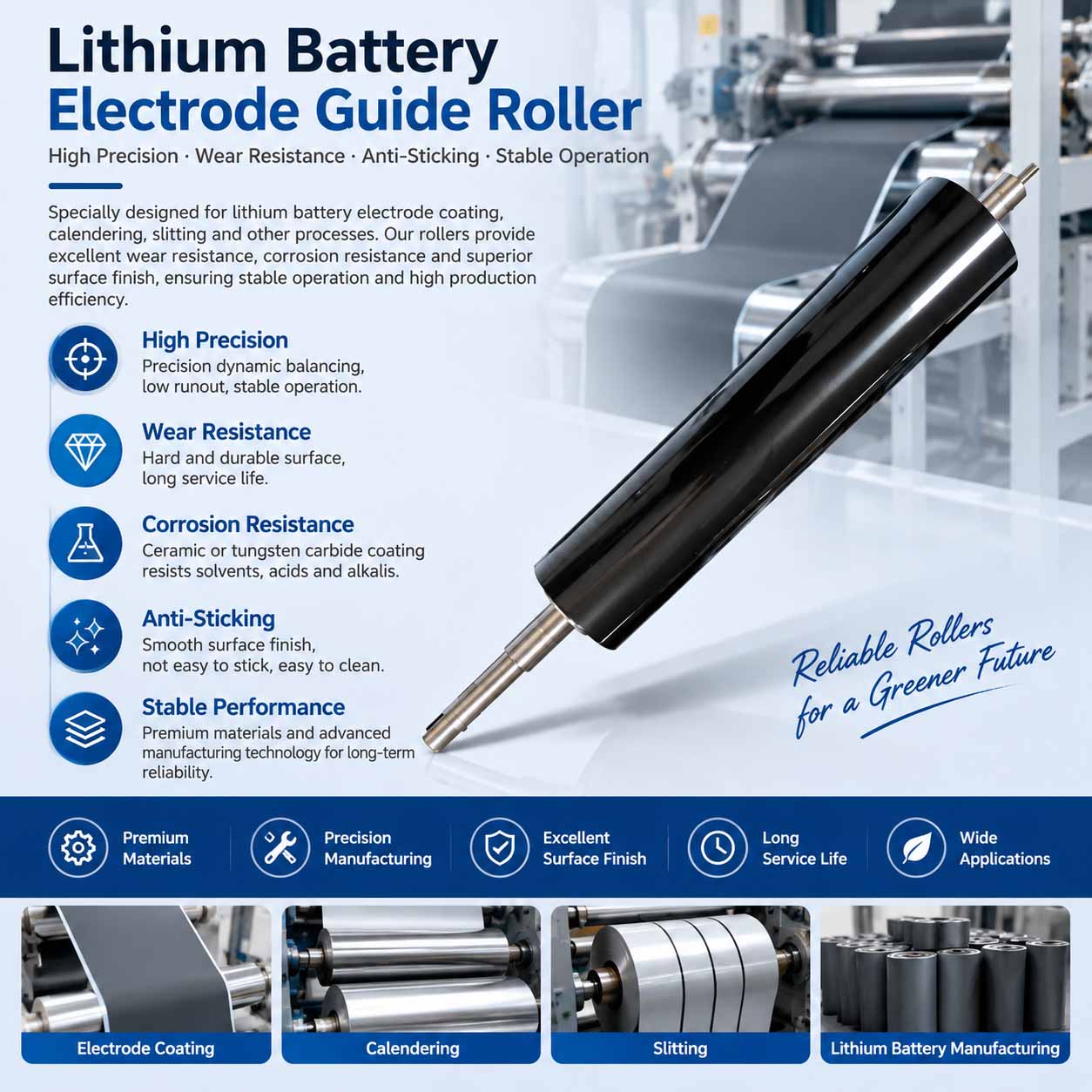
In lithium battery electrode manufacturing, film stretching, printing, and packaging industries, the surface performance of rollers directly affects product quality and production efficiency. Electrode rollers and heating rollers operate under high friction, high temperature, and corrosive conditions for long periods. Conventional metal rollers may suffer from wear, material adhesion, corrosion, and surface damage, resulting in frequent maintenance and production downtime.
By applying advanced thermal spray coating technology, ceramic or tungsten carbide coatings can be deposited on roller surfaces to significantly improve wear resistance, corrosion resistance, and anti-stick performance. These coatings extend roller service life, reduce maintenance costs, and improve production stability.
Common Coating Materials and Technologies
Ceramic Coating
Ceramic coatings are typically applied using plasma spraying or HVOF (High Velocity Oxygen Fuel) spraying technology. Common materials include chromium oxide (Cr₂O₃) and alumina-titania (Al₂O₃-TiO₂) ceramic coatings.
Ceramic coatings feature high hardness, low friction coefficient, excellent chemical stability, and high-temperature resistance. They are widely used for lithium battery electrode guide rollers, helping prevent metal contamination and protecting electrode surfaces. For heating rollers, ceramic coatings reduce material adhesion and improve surface cleanliness during high-temperature processing.
Tungsten Carbide Coating
Tungsten carbide coatings are mainly applied through HVOF spraying technology, providing high bonding strength, extremely low porosity, and outstanding wear resistance. The coating hardness can exceed HV1200, making it ideal for heavy-duty applications such as slitting rollers, tension rollers, and high-load industrial rollers.
Tungsten carbide coatings also provide excellent corrosion resistance and can withstand harsh environments, including exposure to chemical residues and electrolytes in battery manufacturing processes.
Applications and Selection Guide
The appropriate coating should be selected according to operating conditions:
Electrode Guide Roller
Ceramic coating is generally recommended because it provides a clean, stable surface and helps prevent metal particle contamination. Tungsten carbide coating can also be selected for applications requiring higher wear resistance, but electrical and surface requirements should be considered.
Heating Roller
Ceramic coatings provide excellent high-temperature resistance and anti-stick performance, making them suitable for film heat treatment and battery material processing. Tungsten carbide coatings are preferred where higher wear resistance and mechanical strength are required.
Slitting Roller and Tension Roller
Tungsten carbide coating is an ideal solution for high-pressure and high-friction applications. Compared with traditional hard chrome plating, tungsten carbide coatings offer longer service life and better wear performance.
Coating Performance and Precision Requirements
When selecting coated rollers, key parameters include:
- Coating thickness: typically 0.1–0.3 mm
- High bonding strength and low porosity
- Adjustable surface roughness: Ra 0.2–0.8 μm
- Precision grinding after coating to achieve required dimensions
Professional finishing processes ensure smooth roller surfaces, stable operation, and consistent product quality.
Roller Maintenance and Repair
To maximize service life:
- Avoid mechanical impact or scratches on the coating surface.
- Regularly inspect roller wear, cracks, and surface conditions.
- Minor wear can be restored through polishing and grinding.
- Damaged coatings can be removed and recoated to restore original dimensions and performance.
- Severely worn rollers can be refurbished through surface preparation, thermal spraying, and precision machining.
Reconditioning coated rollers is often more cost-effective than manufacturing new rollers and helps reduce equipment downtime.
Frequently Asked Questions
Will ceramic coatings peel off?
With proper surface preparation and professional spraying processes, ceramic coatings provide strong adhesion and reliable performance. Under normal operating conditions, peeling is unlikely. Improper preparation or overload operation may cause coating failure.
What are the advantages of tungsten carbide coating over hard chrome plating?
Tungsten carbide coatings offer higher hardness, superior wear resistance, and better corrosion protection. Their wear resistance can be 3–5 times higher than hard chrome plating, while avoiding hydrogen embrittlement issues associated with chrome plating.
Will coating affect heating roller temperature uniformity?
High-quality coatings are applied with controlled thickness and good bonding. The impact on temperature uniformity is minimal. Ceramic coatings may slightly reduce heat transfer, which should be considered during design.
Can old rollers be refurbished?
Yes. Used rollers can be restored by removing damaged layers, surface preparation, thermal spraying, and precision grinding. This provides a cost-effective alternative to replacing the entire roller.
How is coating quality tested?
Common inspection methods include coating thickness measurement, hardness testing, bonding strength testing, metallographic analysis, porosity evaluation, and surface roughness measurement.
Advanced Coating Solutions for Battery Manufacturing Rollers
With professional thermal spray technology, ceramic coating and tungsten carbide coating provide reliable surface protection solutions for lithium battery electrode rollers, heating rollers, tension rollers, and industrial precision rollers. These technologies help manufacturers achieve longer service life, higher production efficiency, and improved product consistency.
