

Coating Service Overview
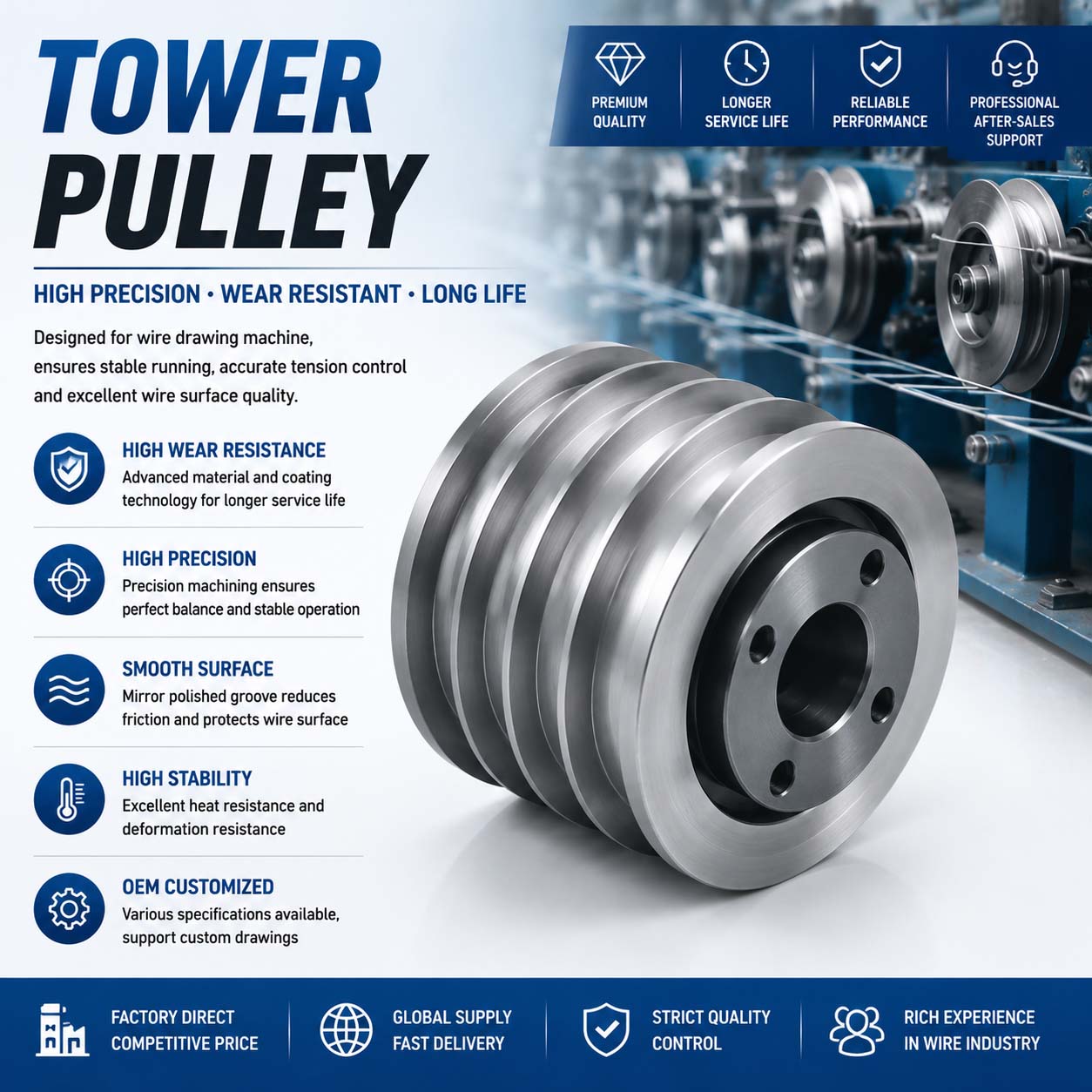
In the wire and cable manufacturing industry, Tower Pulley is one of the most important transmission and guiding components in wire drawing machines. Its performance directly affects wire surface quality, production efficiency, and equipment stability.
During high-speed wire drawing processes, the tower pulley must withstand continuous friction, high tension, and long-term operation. Traditional pulleys may suffer from surface wear, groove deformation, and reduced accuracy after extended use. Therefore, high-performance tower pulleys with advanced materials and precision manufacturing technology have become essential for modern wire drawing production lines.
What Is a Tower Pulley?
A Tower Pulley, also known as a wire drawing machine tower wheel or drawing machine pulley, is a stepped pulley system used in wire drawing equipment to control wire speed, tension, and drawing passes.
It is commonly installed on multi-stage wire drawing machines, where each groove corresponds to a different drawing stage. By changing the contact position of the wire, the tower pulley helps achieve continuous reduction of wire diameter while maintaining stable production.
Tower pulleys are widely used for:
- Copper wire drawing machines
- Aluminum wire drawing machines
- Steel wire drawing equipment
- Cable manufacturing lines
- Fine wire processing systems
Key Advantages of Tower Pulley
1. High Wear Resistance and Long Service Life
During wire drawing operations, the pulley surface is constantly exposed to high-speed wire friction. Low-quality materials may quickly develop grooves or surface damage, affecting wire accuracy.
High-quality tower pulleys are manufactured using wear-resistant materials such as:
- Tungsten carbide
- Ceramic coating
- Hardened steel
- Special alloy materials
These materials provide excellent hardness and abrasion resistance, allowing the pulley to maintain stable dimensions and extend service life.
2. Precision Machining for Stable Wire Drawing
Wire drawing requires extremely high dimensional accuracy. Even small deviations in pulley diameter or groove size may cause uneven wire tension and affect final product quality.
Professional tower pulleys are manufactured through precision machining processes, ensuring:
- Accurate groove dimensions
- Excellent concentricity
- Smooth rotation
- Reduced vibration
This helps maintain stable wire speed and improves production consistency.
3. Smooth Surface Protects Wire Quality
The surface finish of a tower pulley directly influences wire appearance and performance.
A precision-polished surface reduces friction between the wire and pulley, helping to prevent:
- Wire scratches
- Surface defects
- Uneven drawing marks
- Wire breakage
For fine wire production, ceramic-coated and tungsten carbide tower pulleys provide superior surface protection.
4. Excellent Performance Under High-Speed Operation
Modern wire drawing machines operate at increasingly higher speeds. Tower pulleys must maintain stable performance under continuous mechanical stress.
A high-quality tower pulley provides:
- Good dynamic balance
- Low friction operation
- Stable heat resistance
- Reliable long-term performance
This reduces downtime and improves overall production efficiency.
Materials and Surface Treatments
Different production conditions require different pulley materials.
Ceramic Coated Tower Pulley
Ceramic coating provides:
- High hardness
- Low friction
- Excellent corrosion resistance
- Smooth surface finish
It is suitable for applications requiring wire surface protection and long operating life.
Tungsten Carbide Tower Pulley
Tungsten carbide offers extremely high wear resistance and is ideal for heavy-duty wire drawing applications.
Aluminum Alloy Tower Pulley
Aluminum alloy pulleys feature:
- Lightweight structure
- Good rotational performance
- Easy installation
They are commonly used in applications requiring reduced mechanical load.
Applications of Tower Pulley
Tower pulleys are widely used in:
Copper Wire Drawing
Maintains stable wire reduction and improves copper wire surface quality.
Aluminum Wire Production
Provides reliable guidance and reduces wire deformation during drawing.
Fine Wire Manufacturing
High-precision tower pulleys support small-diameter wire production with strict quality requirements.
Cable Industry
Used in various cable processing equipment to ensure smooth wire transportation.
How to Choose the Right Tower Pulley?
When selecting a tower pulley, manufacturers should consider:
Wire Material
Copper, aluminum, steel, and alloy wires have different hardness and friction characteristics. The pulley material should match the wire type.
Machine Speed
High-speed drawing lines require pulleys with excellent balance, precision, and wear resistance.
Groove Design
The number of grooves, groove diameter, and profile must match the equipment specifications.
Surface Requirements
For sensitive wire products, choose polished ceramic or carbide surfaces to reduce wire damage.
Customization Requirements
Professional manufacturers can provide OEM tower pulleys according to:
- Machine model
- Customer drawings
- CAD files
- Technical specifications
Maintenance Tips for Tower Pulley
Proper maintenance can significantly extend pulley service life:
- Regularly inspect groove wear and surface condition.
- Remove metal particles and contaminants from the pulley surface.
- Check bearing operation and lubrication.
- Replace pulleys when grooves become oversized or surface damage affects wire quality.
Conclusion
As wire drawing technology continues to develop toward higher speed and precision, the demand for reliable Tower Pulley solutions is increasing. A high-quality tower pulley improves wire drawing stability, reduces maintenance costs, and enhances production efficiency.
By selecting the right material, surface treatment, and manufacturing process, manufacturers can achieve better wire quality and longer equipment service life. Professional tower pulley suppliers with OEM customization capabilities can provide optimized solutions for different wire drawing applications.
