

- Service: Titanium Ceramic and Tungsten Carbide Coating Processing
- Category: Ceramic Products
Coating Service Overview
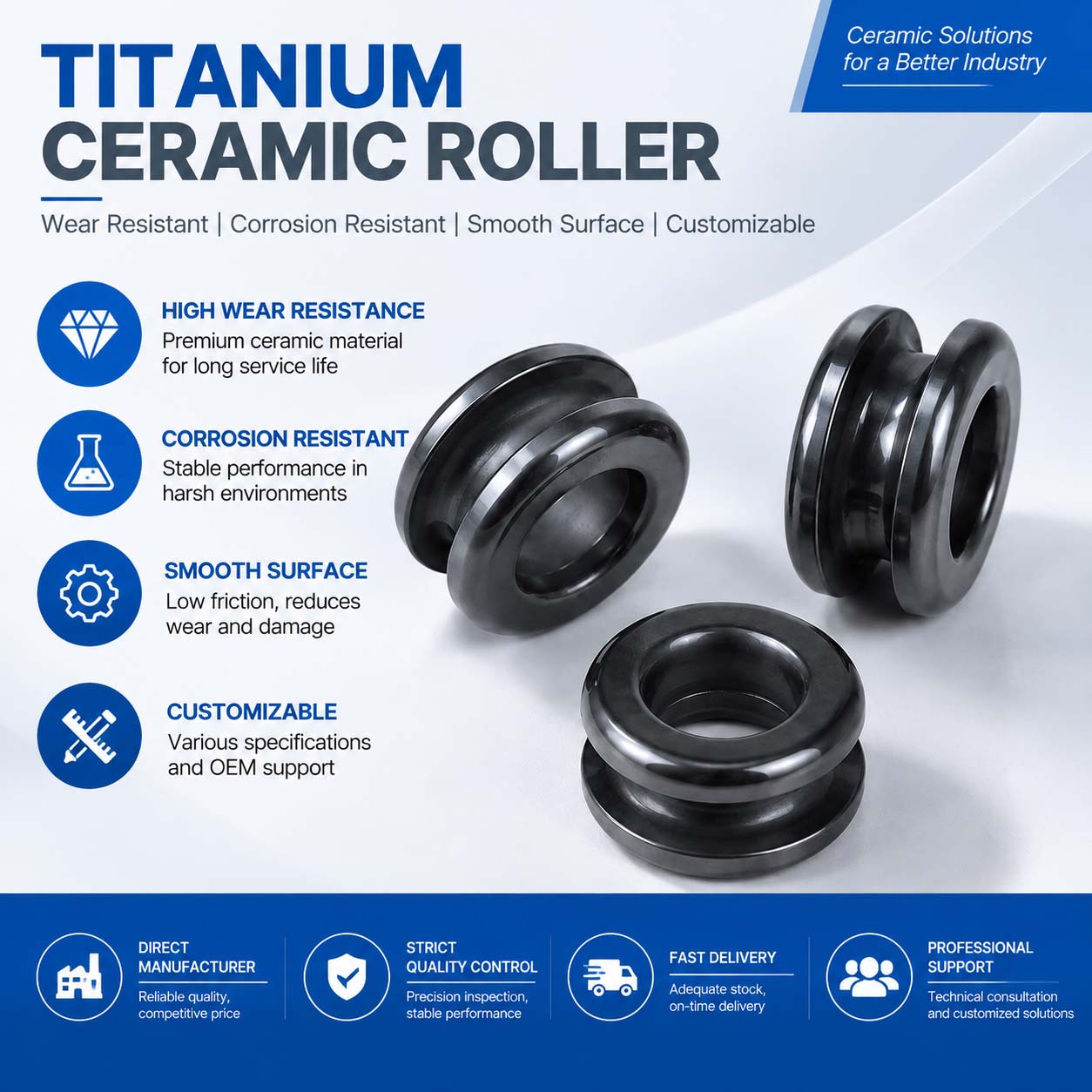
In modern industries, surface performance directly determines equipment reliability and service life. Alumina-titania ceramic coatings and tungsten carbide coatings are two important surface engineering technologies that provide excellent wear resistance, corrosion protection, high-temperature resistance, and insulation performance.
Whether for new component protection or refurbishment of worn parts, selecting the right coating technology can significantly reduce maintenance costs and improve equipment performance.
Coating Technology and Characteristics
Tungsten Carbide Coating
Tungsten carbide coatings are commonly applied using HVOF (High Velocity Oxygen Fuel) spraying or plasma spraying. Tungsten carbide powder is accelerated onto the component surface at high speed, forming a dense coating with high hardness and strong bonding strength.
Typical properties:
- Hardness: 1100–1300 HV
- Porosity: Less than 1%
- Coating thickness: 0.1–0.5 mm (adjustable)
Tungsten carbide coatings are ideal for components exposed to severe wear conditions, providing excellent resistance against abrasion, impact, and sliding friction.
Titanium Ceramic (Alumina-Titania) Coating
Titanium ceramic coating is a ceramic composite coating that combines ceramic wear resistance with good toughness and insulation performance.
It provides:
- Excellent wear resistance
- High-temperature resistance
- Good electrical insulation
- Strong chemical stability
Typical coating thickness is 0.2–0.4 mm, and the surface can be precision-finished to achieve roughness below Ra 0.4 μm.
Typical Applications
Tungsten Carbide Coating Applications
Widely used for:
- Paper machine rollers and calender rolls
- Oil drilling components such as drill joints and stabilizers
- Steel industry tension rollers and conveyor rollers
- Aerospace landing gear components
Titanium Ceramic Coating Applications
Commonly applied to:
- Textile machine yarn guides, ceramic thread eyes, and guide hooks
- Chemical pump and valve sealing surfaces
- Electronic insulation components
- Food processing equipment requiring clean and wear-resistant surfaces
For worn components, thermal spray repair can restore dimensions and improve surface performance without replacing the entire part.
Coating Selection and Process Comparison
The correct coating should be selected according to operating conditions, substrate materials, and performance requirements.
| Property | Tungsten Carbide Coating | Titanium Ceramic Coating |
|---|---|---|
| Hardness | Very high (>1100 HV) | High (800–1000 HV) |
| Wear Resistance | Excellent | Good |
| Corrosion Resistance | Good (depends on binder material) | Excellent |
| Electrical Insulation | No | Excellent |
| Operating Temperature | Generally below 500°C | Up to 800°C |
| Typical Process | HVOF / Plasma Spray | Plasma Spray / Thermal Spray |
For applications involving both wear and corrosion, tungsten carbide coatings with sealing treatment can provide improved protection.
For applications requiring insulation or high-temperature performance, titanium ceramic coatings are generally more suitable.
Thermal Spray Processing and Quality Control
The typical coating process includes:
1. Surface Preparation
Cleaning, degreasing, and sandblasting are performed to improve coating adhesion.
2. Thermal Spraying
Automated equipment controls spraying parameters to ensure uniform coating thickness and stable quality.
3. Finishing
Grinding and polishing are performed to achieve required dimensions and surface smoothness.
4. Inspection
Quality inspection includes:
- Hardness testing
- Bond strength testing
- Porosity analysis
- Coating thickness measurement
Strict process control ensures consistent coating performance for every batch.
Maintenance Recommendations
During operation:
- Avoid severe impact and local overheating.
- Regularly inspect coating surfaces for cracks or peeling.
- Repair damaged areas promptly to prevent further substrate damage.
- Use neutral cleaning agents and avoid long-term exposure to strong acids or alkalis.
For tungsten carbide coatings used in corrosive environments, sealing treatment can further improve service life.
Frequently Asked Questions
How thick can tungsten carbide coatings be applied?
Standard thickness is usually 0.1–0.5 mm. Special applications may require thicker coatings, but bonding strength and internal stress must be evaluated.
Can titanium ceramic coatings be used for food-contact applications?
Titanium ceramic materials are generally stable and non-toxic, but specific coating composition and certification requirements must be confirmed before food-contact use.
What information is needed for old part refurbishment?
Please provide component drawings, substrate material, wear condition photos, and operating parameters to develop a suitable repair solution.
What bonding strength can thermal spray coatings achieve?
With proper surface preparation and optimized spraying parameters, coating bonding strength can typically exceed 70 MPa.
What is the delivery time?
Delivery time depends on component size, quantity, and process complexity. Standard orders usually require approximately 5–10 working days. Urgent processing can be discussed.
Are sample tests available?
Yes. Process samples and testing can be provided to verify coating performance before mass production.
