

Coating Service Overview
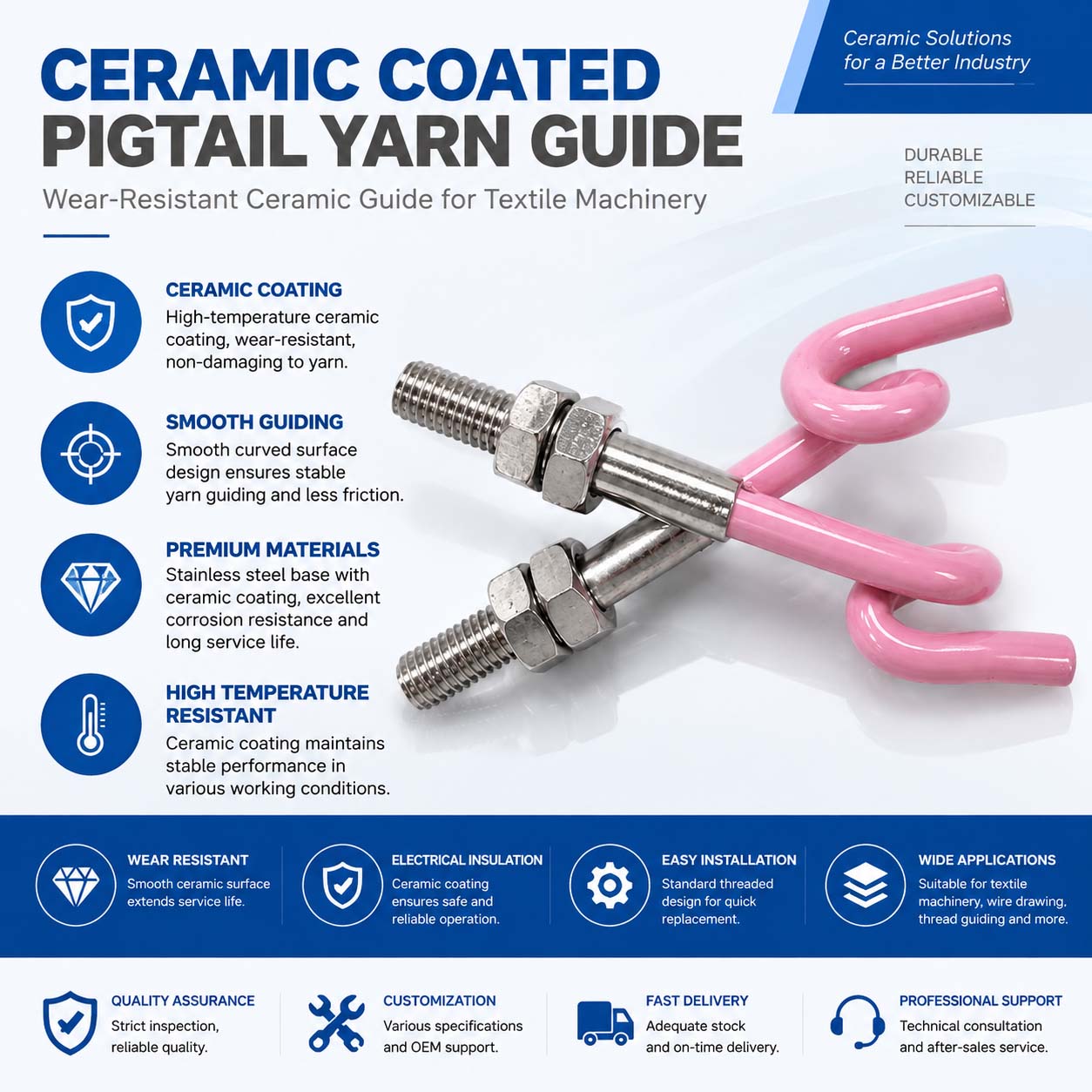
In textile, chemical, machinery, and other industries, metal components are often exposed to friction, corrosion, and high temperatures. Conventional surface treatments may not provide sufficient durability under demanding conditions. Thermal spray ceramic coating forms a high-performance protective layer on metal surfaces, providing excellent wear resistance, corrosion resistance, heat resistance, and electrical insulation.
Our ceramic coating services are suitable for steel, stainless steel, aluminum, aluminum alloys, and other industrial metal components.
What Is Ceramic Coating for Metal Parts?
Ceramic thermal spraying uses a high-temperature heat source to melt or semi-melt ceramic powders and spray them at high velocity onto a pre-treated metal substrate.
Common coating materials include:
- Aluminum Oxide (Al₂O₃): High hardness, wear resistance, and electrical insulation
- Chromium Oxide (Cr₂O₃): Excellent wear and corrosion resistance
- Zirconium Oxide (ZrO₂): High-temperature resistance and thermal barrier performance
- Alumina-Titania (Al₂O₃-TiO₂): Good wear resistance and toughness
Typical coating thickness is 0.1–0.5 mm and can be customized according to operating conditions.
Suitable Substrates and Components
Ceramic coating can be applied to various metal substrates:
- Carbon steel
- Stainless steel
- Aluminum and aluminum alloys
- Copper alloys
- Titanium alloys
Typical coated components include:
- Yarn guides and wire guides
- Guide rollers and multi-wire rollers
- Bushings and sleeves
- Sealing rings
- Plungers
- Pump and valve components
- Industrial hardware and mechanical parts
The ceramic surface provides high hardness while the metal substrate retains its strength and toughness.
Ceramic Coating for Aluminum Components
Aluminum and aluminum alloys are lightweight and have excellent thermal conductivity, but their relatively low hardness makes them susceptible to wear.
Applying a ceramic coating provides several advantages:
Higher Surface Hardness
Alumina coatings can achieve approximately HV 800–1200, significantly improving scratch and wear resistance.
Improved Corrosion Resistance
Dense ceramic coatings help isolate the aluminum substrate from corrosive media.
Electrical Insulation
Alumina coatings provide excellent insulation for electrical and electronic applications.
Thermal Protection
Zirconia coatings can reduce heat transfer and protect aluminum components from high-temperature environments.
Because aluminum has a relatively low melting point, spray parameters and substrate temperature must be carefully controlled to prevent deformation.
Thermal Spray Ceramic Coating Process
A typical processing procedure includes:
- Surface Preparation
Degreasing, cleaning, and grit blasting remove contaminants and create a suitable rough surface for coating adhesion. - Preheating
Controlled preheating removes moisture and reduces thermal stress. - Thermal Spraying
Plasma spraying or other suitable thermal spray processes are used to deposit ceramic powder uniformly onto the component. - Post-Treatment
Sealing can reduce coating porosity and improve corrosion resistance. Precision grinding or polishing can achieve the required dimensions and surface finish. - Quality Inspection
Coating thickness, hardness, bonding strength, porosity, and surface quality can be inspected according to customer requirements.
How to Select the Right Ceramic Coating
For wear-resistant applications, alumina and chromium oxide coatings are commonly recommended.
For corrosive environments, chromium oxide provides excellent chemical stability, while alumina also offers good resistance to many industrial media.
For high-temperature applications, zirconia coatings provide excellent thermal stability and thermal barrier performance.
For electrical insulation, high-purity alumina coating is an ideal choice.
For aluminum alloy substrates, alumina-titania coatings can provide a good combination of wear resistance and toughness while helping manage thermal stress.
The final coating system should be selected according to substrate material, temperature, wear mechanism, corrosion environment, and dimensional requirements.
Maintenance Recommendations
Ceramic-coated components should be handled carefully because ceramic coatings are hard but relatively brittle.
- Avoid severe impact during installation and operation.
- Inspect regularly for cracks, peeling, or abnormal wear.
- Clean with neutral detergents and soft materials.
- Consider coating thickness when designing assembly tolerances.
- Store components in a dry, non-corrosive environment.
Damaged coatings can often be removed and reapplied, allowing expensive components to be refurbished rather than replaced.
Frequently Asked Questions
Will ceramic coatings peel off?
With proper surface preparation and controlled spraying parameters, ceramic coatings provide strong adhesion and remain stable during normal operation. Excessive impact, substrate deformation, or improper coating thickness may cause localized failure.
Can ceramic-coated aluminum parts be precision machined?
Yes. Ceramic coatings can be ground and polished to achieve the required dimensions and surface roughness. Diamond grinding tools are generally recommended.
What are the advantages over electroplating or anodizing?
Thermal spray ceramic coatings generally provide higher hardness, better wear resistance, higher temperature capability, and superior electrical insulation. Electroplating and anodizing may be more economical when only thin protective layers are required.
Which parts are unsuitable for ceramic spraying?
Components with extremely deep or complex internal geometries may be difficult to coat uniformly. Parts subjected to severe impact, bending, or deformation should also be evaluated before coating.
How long does processing take?
Lead time depends on component size, quantity, coating material, and finishing requirements. Small batches can typically be completed within several working days.
How is coating quality inspected?
Common methods include coating thickness measurement, hardness testing, bond strength testing, metallographic examination, and porosity analysis. Inspection reports can be provided according to customer requirements.
